Häftad, Engelska, 2019
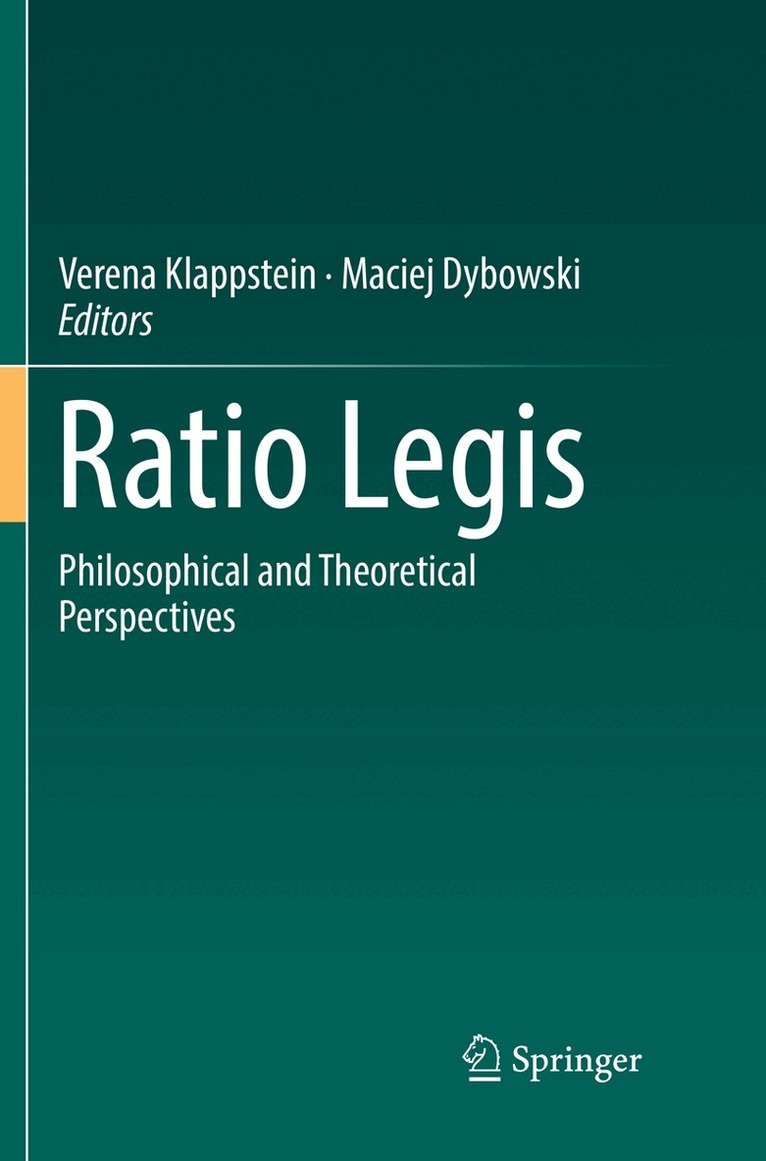
Ratio Legis
Av Verena Klappstein, Maciej Dybowski
1013 kr
Beställningsvara. Skickas inom 10-15 vardagar. Fri frakt över 249 kr.
Beskrivning
The book is dedicated to the theoretical problems concerning ratio legis. In the contexts of legal interpretation and legal reasoning, the two most important intellectual tools employed by lawyers, ratio legis would seem to offer an extremely powerful argument. Declaring the ratio legis of a statute can lead to a u-turn argumentation throughout the lifespan of the statute itself – in parliament, or in practice during court sessions, when it is tested against the constitution.Though the ratio legis argument is widely used, much about it warrants further investigation. On the general philosophical map there are many overlapping areas that concern different approaches to human rationality and to the problems of practical reasoning. Particular problems with ratio legis arise in connection with different perspectives on legal philosophy and theory, especially in terms of the methods that lawyers use for legal interpretation and argumentation. These problems can be further subdivided into particular aspects of activities undertaken by lawyers and officials who use the ratio legis in their work, and the underlying theories. In short, this book examines what ratio legis is, what it could be, and its practical implications.
Produktinformation
- Utgivningsdatum: 2019-01-12
- Mått: 155 x 235 x 12 mm
- Vikt: 335 g
- Format: Häftad
- Språk: Engelska
- Antal sidor: 205
- Förlag: Springer Nature Switzerland AG
- ISBN: 9783030089511
Utforska kategorier
Betyg & recensioner
0 recensioner
Inga recensioner tillgängliga.