Häftad, Engelska, 2020
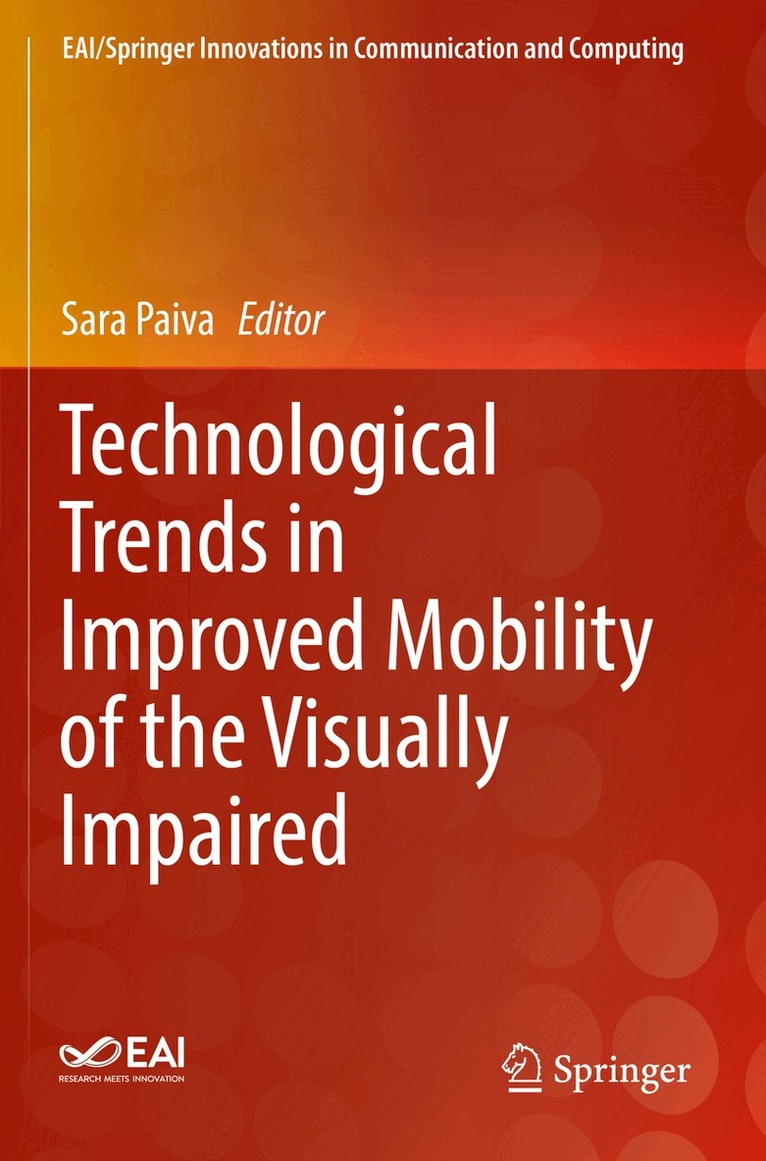
Technological Trends in Improved Mobility of the Visually Impaired
Av Sara Paiva
1127 kr
Beställningsvara. Skickas inom 10-15 vardagar. Fri frakt över 249 kr.
Beskrivning
This book provides an insight into recent technological trends and innovations in mobility solutions and platforms to improve mobility of visually impaired people. The authors' goal is to help to contribute to the social and societal inclusion of the visually impaired. The book’s topics include, but are not limited to, obstacle detection systems, indoor and outdoor navigation, transportation sustainability systems, and hardware/devices to aid visually impaired people. The book has a strong focus on practical applications, tested in a real environment. Applications include city halls, municipalities, and companies that can keep up to date with recent trends in platforms, methodologies and technologies to promote urban mobility. Also discussed are broader realms including education, health, electronics, tourism, and transportation. Contributors include a variety of researchers and practitioners around the world.Features practical, tested applications of technological mobility solutions for visual impaired people;Presents topics such as obstacle detection systems, urban mobility, smart home services, and ambient assisted living;Includes a number of application examples in education, health, electronics, tourism, and transportation.
Produktinformation
- Utgivningsdatum: 2020-08-14
- Mått: 155 x 235 x 24 mm
- Vikt: 651 g
- Format: Häftad
- Språk: Engelska
- Serie: EAI/Springer Innovations in Communication and Computing
- Antal sidor: 424
- Förlag: Springer Nature Switzerland AG
- ISBN: 9783030164522
Utforska kategorier
Betyg & recensioner
0 recensioner
Inga recensioner tillgängliga.