• Fri frakt över 249 kr
  • •
  • Snabba leveranser
  • •
  • Billiga böcker
Kundservice

Du är på sajten för privatpersoner.

Företag, bibliotek eller offentlig verksamhet?

Du handlar på classic.bokus.com, där alla dina funktioner finns intakta.
Till classic.bokus.com
Bokus logotyp. Gå till startsidan.
  • Erbjudanden
  • Nyheter
  • Student
  • Topplistor
  • Barn & ungdom
  • Bokus Play
  • E-böcker
  • Pocketböcker
  • Spel & pussel

10% rabatt på allt med kod: NYSTART10 →

Sidfot

Mina sidor

    Hjälp

    • Kundservice
    • Vanliga frågor och svar
    • Frakt och leverans
    • Retur vid ångerrätt
    • Reklamera vara
    • Betalning
    • Köpvillkor
    • Allmänna villkor
    • Information om webbplatsens tillgänglighet

    Om Bokus

    • Om oss
    • Pressrum
    • För studenter
    • För företag
    • För bibliotek och offentlig verksamhet
    • För leverantörer
    • Hållbarhet

    Populärt

    • Aktuella erbjudanden
    • Presentkort
    • Studentlitteratur
    • Nya böcker
    • Topplistor
    • Signerade böcker
    • Engelska böcker

    Inspiration

    • Boktips
    • BookTok
    • Populära bokserier
    • Barnbokskaraktärer
    • Populära författare
    Logotyp för Bokus
    Följ oss på Facebook (extern länk)Följ oss på Instagram (extern länk)Följ oss på YouTube (extern länk)Följ oss på TikTok (extern länk)
    bokus @ CookiesAnpassa cookiesIntegritetspolicyKöpvillkor
    Till Citymail hemsida (extern länk)Till Budbee hemsida (extern länk)Till Postnord hemsida (extern länk)Till Schenker hemsida (extern länk)Till Early Bird hemsida (extern länk)Till Walleys hemsida (extern länk)
    1. Naturvetenskap och teknik
    2. Matematik och naturvetenskap
    3. Fysik
    4. Klassisk mekanik

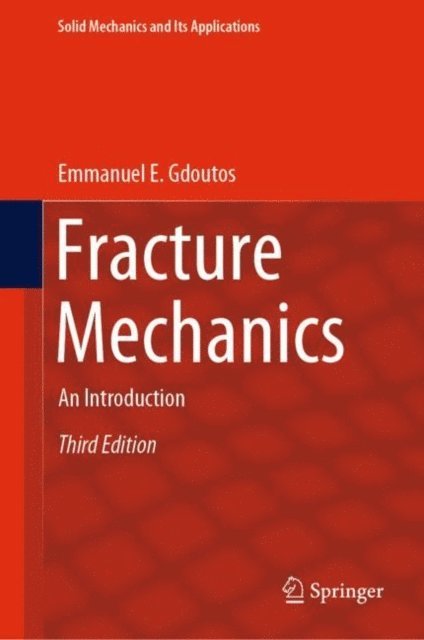
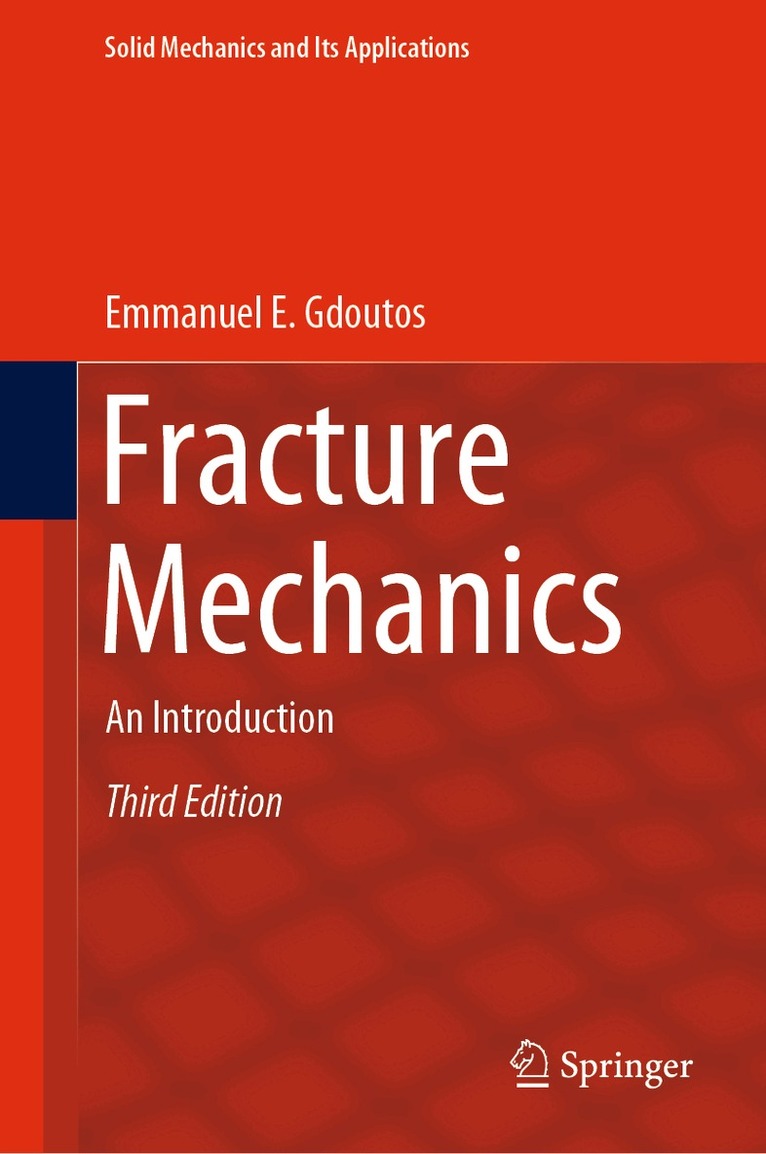
    Fracture Mechanics

    An Introduction

    AvEmmanuel E. Gdoutos

    Häftad, Engelska, 2021

    Del i serien Solid Mechanics and Its Applications

    708 kr

    Beställningsvara. Skickas inom 10-15 vardagar. Fri frakt över 249 kr.

    Fler format och utgåvor

    Inbunden

    1 086 kr

    E-bok

    868 kr

    Beskrivning

    This book discusses the basic principles and traditional applications of fracture mechanics, as well as the cutting-edge research in the field over the last three decades in current topics like composites, thin films, nanoindentation, and cementitious materials.Experimental methods play a major role in the study of fracture mechanics problems and are used for the determination of the major fracture mechanics quantities such as stress intensity factors, crack tip opening displacements, strain energy release rates, crack paths, crack velocities in static and dynamic problems. These methods include electrical resistance strain gauges, photoelasticity, interferometry techniques, geometric and interferometry moiré, and the optical method of caustics.Furthermore, numerical methods are often used for the determination of fracture mechanics parameters. They include finite and boundary element methods, Green’s function and weight functions, boundary collocation, alternating methods, and integral transforms continuous dislocations.This third edition of the book covers the basic principles and traditional applications, as well as the latest developments of fracture mechanics. Featuring two new chapters and 30 more example problems, it presents a comprehensive overview of fracture mechanics, and includes numerous examples and unsolved problems. This book is suitable for teaching fracture mechanics courses at the undergraduate and graduate levels. A “solutions manual” is available for course instructors upon request.

    Produktinformation

    • Utgivningsdatum:2021-03-24
    • Mått:155 x 235 x 31 mm
    • Vikt:796 g
    • Format:Häftad
    • Språk:Engelska
    • Serie:Solid Mechanics and Its Applications
    • Antal sidor:477
    • Upplaga:3
    • Förlag:Springer Nature Switzerland AG
    • ISBN:9783030351007

    Utforska kategorier

    • Klassisk mekanik inom Naturvetenskap och teknik
    • Maskinteknik och material inom Naturvetenskap och teknik

    Mer om författaren

    Dr. Emmanuel E. Gdoutos is a member of the Academy of Athens, the most prestigious academic institute in Greece; a Professor Emeritus of the Democritus University of Thrace, Greece; Adjunct Professor at Northwestern University, USA; and Distinguished Clark Millikan Visiting Professor at California Institute of Technology, USA. He is member of the European Academy of Sciences and Arts, of Academia Europaea, and of the European Academy of Sciences. He is a foreign member of the Russian Academy of Engineering, the International Academy of Engineering, and the Russian and Bulgarian Academies of Sciences. He is a fellow and honorary member of various international societies. He was awarded a Doctorate Honoris Causa from the Russian Academy of Sciences and from the University of Nis, Serbia, and has received numerous international awards. He is an honorary citizen of the prefecture of Lesvos, Greece. He was the President of theEuropean Structural Integrity Society, the European Society for Experimental Mechanics, and the Society for Experimental Mechanics. He has taught in several universities in Greece and USA. His research interests include experimental mechanics, fracture mechanics, advanced composite materials, sandwich construction, and nanotechnology. He has authored/co-authored more than 300 papers in refereed journals and conference proceedings and 40 books.

    Innehållsförteckning

    • Chapter 1. Introduction.- Chapter 2. Linear Elastic Stress Field in Cracked Bodies.- Chapter 3. Elastic-Plastic Stress Field in Cracked Bodies.- Chapter 4. Crack Growth Based on Energy Balance.- Chapter 5. Critical Stress Intensity Factor Fracture Criterion.- Chapter 6. J-Integral and Crack Opening Displacement Fracture Criteria.- Chapter 7. Strain Energy Density Failure Criterion: Mixed-Mode Crack Growth.- Chapter 8. Dynamic Fracture.- Chapter 9. Fatigue and Environment-Assisted Fracture.- Chapter 10. Micromechanics of Fracture.- Chapter 11. Composite Materials.- Chapter 12. Thin Films.- Chapter 13. Nanoindentation.- Chapter 14. Cementitious Materials.- Chapter 15. Experimental Methods.- Chapter 16. Numerical Methods.