• Fri frakt över 249 kr
  • •
  • Snabba leveranser
  • •
  • Billiga böcker
Kundservice

Du är på sajten för privatpersoner.

Företag, bibliotek eller offentlig verksamhet?

Du handlar på classic.bokus.com, där alla dina funktioner finns intakta.
Till classic.bokus.com
Bokus logotyp. Gå till startsidan.
  • Erbjudanden
  • Nyheter
  • Student
  • Topplistor
  • Barn & ungdom
  • Bokus Play
  • E-böcker
  • Pocketböcker
  • Spel & pussel

10% studentrabatt med kod TERM26

Sidfot

Mina sidor

    Hjälp

    • Kundservice
    • Vanliga frågor och svar
    • Frakt och leverans
    • Retur vid ångerrätt
    • Reklamera vara
    • Betalning
    • Köpvillkor
    • Allmänna villkor
    • Information om webbplatsens tillgänglighet

    Om Bokus

    • Om oss
    • Pressrum
    • För studenter
    • För företag
    • För bibliotek och offentlig verksamhet
    • För leverantörer
    • Hållbarhet

    Populärt

    • Aktuella erbjudanden
    • Presentkort
    • Studentlitteratur
    • Nya böcker
    • Topplistor
    • Signerade böcker
    • Engelska böcker

    Inspiration

    • Boktips
    • BookTok
    • Populära bokserier
    • Barnbokskaraktärer
    • Populära författare
    Logotyp för Bokus
    Följ oss på Facebook (extern länk)Följ oss på Instagram (extern länk)Följ oss på YouTube (extern länk)Följ oss på TikTok (extern länk)
    bokus @ CookiesAnpassa cookiesIntegritetspolicyKöpvillkor
    Till Citymail hemsida (extern länk)Till Budbee hemsida (extern länk)Till Postnord hemsida (extern länk)Till Schenker hemsida (extern länk)Till Early Bird hemsida (extern länk)Till Walleys hemsida (extern länk)
    1. Kultur
    2. Scenkonst och film
    3. Film

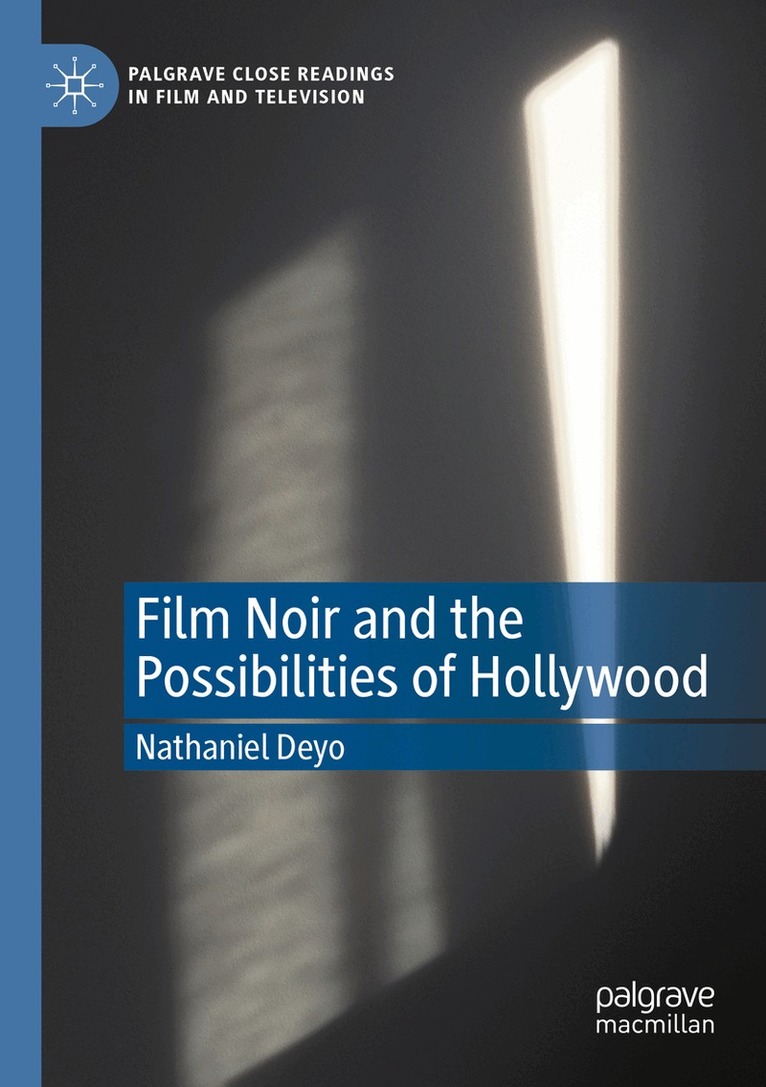
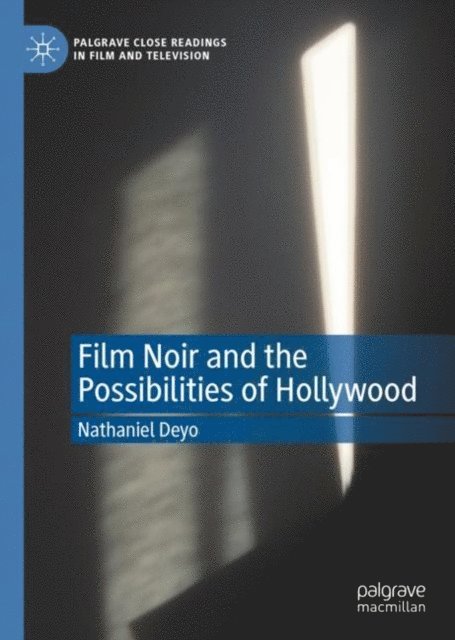
    Film Noir and the Possibilities of Hollywood

    AvNathaniel Deyo

    Inbunden, Engelska, 2020

    Del i serien Palgrave Close Readings in Film and Television

    981 kr

    Beställningsvara. Skickas inom 10-15 vardagar. Fri frakt över 249 kr.

    Fler format och utgåvor

    E-bok

    1 248 kr

    Häftad

    981 kr

    Beskrivning

    Built around close readings of 11 noir films, this book seeks to refresh our understanding of “film noir” by returning to the films themselves. Pushing against totalizing or generalizing approaches, which may have the unintended effect of flattening out significant distinctions and differences between individual approaches, Film Noir and the Possibilities of Hollywood argues for the importance of staying attuned the varied and variegated formal, aesthetic and thematic strategies at work in individual films. By focusing on these strategies, the book invites readers to consider anew the enabling possibilities of Hollywood filmmaking in the studio era.

    Produktinformation

    • Utgivningsdatum:2020-05-24
    • Mått:148 x 210 x 21 mm
    • Vikt:430 g
    • Format:Inbunden
    • Språk:Engelska
    • Serie:Palgrave Close Readings in Film and Television
    • Antal sidor:213
    • Förlag:Springer Nature Switzerland AG
    • ISBN:9783030370572

    Utforska kategorier

    • Film inom Kultur

    Mer om författaren

    Nathaniel Deyo is a lecturer in the Composition Program at the University of Miami, Florida, USA.

    Recensioner i media

    “While Film Noir and the Possibilities of Hollywood should be of special interest to scholars of film noir, the book also proves to be a meaningful addition to the broader field of film and media studies.” (Heather Duerre Humann, Journal of Popular Film and Television, Vol. 48 (3), 2020)

    Innehållsförteckning

    • 1. Introduction: The Case of the Missing Films.- Part I: Paradigmatic and Conventional.- 2. The Maltese Falcon, Double Indemnity, Scarlet Street, & Out of the Past: Paradigm Cases.- 3. The Narrow Margin: Convention as Deception.- Part II: Auteurist Noir.- 4. Ministry of Fear: Fritz Lang’s De-Suturing Operations.- 5. The Big Sleep: Howard Hawks’s Hollywood Fantasy.- 6. Laura: Otto Preminger’s Statement of Purpose.- Part III: Noir and History.- 7. Act of Violence: Articulating the Spaces of Modernity.- 8. Reign of Terror & The Tall Target: Theses on the Philosophy of History.- Part IV: Conclusion.- 9. Conclusion: Reflections on Method