• Fri frakt över 249 kr
  • •
  • Snabba leveranser
  • •
  • Billiga böcker
Kundservice

Du är på sajten för privatpersoner.

Företag, bibliotek eller offentlig verksamhet?

Du handlar på classic.bokus.com, där alla dina funktioner finns intakta.
Till classic.bokus.com
Bokus logotyp. Gå till startsidan.
  • Erbjudanden
  • Student
  • Topplistor
  • Barn & ungdom
  • Bokus Play
  • E-böcker
  • Ljudböcker
  • Pocketböcker
  • Spel och pussel

5% studentrabatt – använd koden KURSBOK27 →

Sidfot

Mina sidor

    Hjälp

    • Kundservice
    • Vanliga frågor och svar
    • Frakt och leverans
    • Retur vid ångerrätt
    • Reklamera vara
    • Betalning
    • Köpvillkor
    • Allmänna villkor
    • Information om webbplatsens tillgänglighet

    Om Bokus

    • Om oss
    • Pressrum
    • För studenter
    • För företag
    • För bibliotek och offentlig verksamhet
    • För leverantörer
    • Hållbarhet

    Populärt

    • Aktuella erbjudanden
    • Presentkort
    • Studentlitteratur
    • Nya böcker
    • Topplistor
    • Signerade böcker
    • Engelska böcker

    Inspiration

    • Boktips
    • BookTok
    • Barnbokskaraktärer
    • Populära författare
    Logotyp för Bokus
    Följ oss på Facebook (extern länk)Följ oss på Instagram (extern länk)Följ oss på YouTube (extern länk)Följ oss på TikTok (extern länk)
    bokus @ CookiesAnpassa cookiesIntegritetspolicyKöpvillkor
    Till Citymail hemsida (extern länk)Till Budbee hemsida (extern länk)Till Postnord hemsida (extern länk)Till Schenker hemsida (extern länk)Till Early Bird hemsida (extern länk)Till Walleys hemsida (extern länk)
    1. Data och IT
    2. Informationsteknik: allmänt

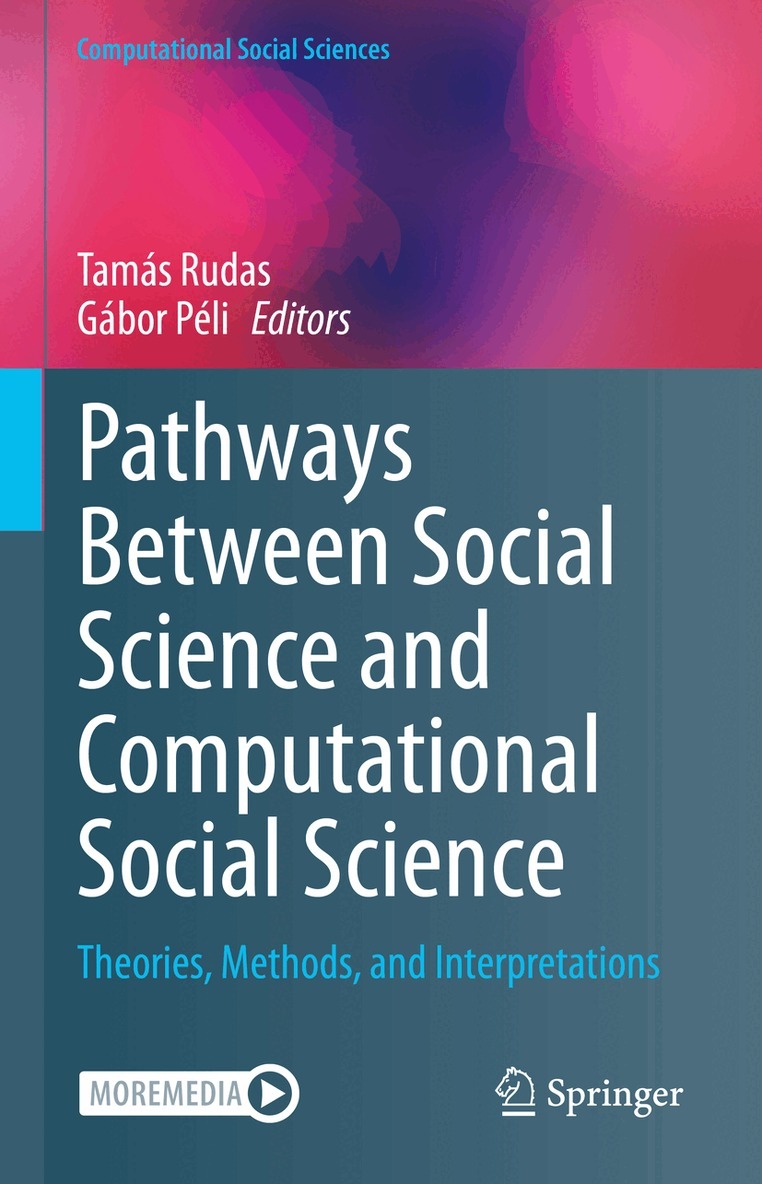
    Pathways Between Social Science and Computational Social Science

    Theories, Methods, and Interpretations

    AvTamás Rudas,Gábor Péli

    Inbunden, Engelska, 2021

    Del i serien Computational Social Sciences

    971 kr

    Beställningsvara. Skickas inom 10-15 vardagar. Fri frakt över 249 kr.

    Beskrivning

    This volume shows that the emergence of computational social science (CSS) is an endogenous response to problems from within the social sciences and not exogeneous. The three parts of the volume address various pathways along which CSS has been developing from and interacting with existing research frameworks. The first part exemplifies how new theoretical models and approaches on which CSS research is based arise from theories of social science. The second part is about methodological advances facilitated by CSS-related techniques. The third part illustrates the contribution of CSS to traditional social science topics, further attesting to the embedded nature of CSS. The expected readership of the volume includes researchers with a traditional social science background who wish to approach CSS, experts in CSS looking for substantive links to more traditional social science theories, methods and topics, and finally, students working in both fields.

    Produktinformation

    • Utgivningsdatum:2021-01-23
    • Mått:155 x 235 x 24 mm
    • Vikt:576 g
    • Format:Inbunden
    • Språk:Engelska
    • Serie:Computational Social Sciences
    • Antal sidor:275
    • Förlag:Springer Nature Switzerland AG
    • ISBN:9783030549350

    Utforska kategorier

    • Informationsteknik: allmänt inom Data och IT
    • Sociologi inom Samhälle och politik
    • Klassisk mekanik inom Naturvetenskap och teknik

    Mer om författaren

    Tamás Rudas is Professor of Statistics in the Faculty of Social Sciences of the Eötvös Loránd University, Budapest. His main field of research is the development of methods of  mathematical statistics and their applications in the social sciences. Gábor L. Péli is a senior researcher at the Centre for Social Sciences, Hungarian Academy of Sciences Centre for Excellence and professor of sociology at the Károli Gáspár University of the Reformed Church in Hungary. His research interests are in the logical analysis of organizational discourse and behavior along with network approaches to organizations.

    Innehållsförteckning

    • Introduction.- Theory: Dilemmas of Model Building and Interpretation.- Methodological Toolsets.- New Look on Old Issues: Research Domains Revisited by Computational Social Science.- Epilogue.