• Fri frakt över 249 kr
  • •
  • Snabba leveranser
  • •
  • Billiga böcker
Kundservice

Du är på sajten för privatpersoner.

Företag, bibliotek eller offentlig verksamhet?

Du handlar på classic.bokus.com, där alla dina funktioner finns intakta.
Till classic.bokus.com
Bokus logotyp. Gå till startsidan.
  • Erbjudanden
  • Student
  • Topplistor
  • Barn & ungdom
  • Bokus Play
  • E-böcker
  • Ljudböcker
  • Pocketböcker
  • Spel och pussel

Pocketfynda! Hundratals böcker för 49 kr/st →

Sidfot

Mina sidor

    Hjälp

    • Kundservice
    • Vanliga frågor och svar
    • Frakt och leverans
    • Retur vid ångerrätt
    • Reklamera vara
    • Betalning
    • Köpvillkor
    • Allmänna villkor
    • Information om webbplatsens tillgänglighet

    Om Bokus

    • Om oss
    • Pressrum
    • För studenter
    • För företag
    • För bibliotek och offentlig verksamhet
    • För leverantörer
    • Hållbarhet

    Populärt

    • Aktuella erbjudanden
    • Presentkort
    • Studentlitteratur
    • Nya böcker
    • Topplistor
    • Signerade böcker
    • Engelska böcker

    Inspiration

    • Boktips
    • BookTok
    • Barnbokskaraktärer
    • Populära författare
    Logotyp för Bokus
    Följ oss på Facebook (extern länk)Följ oss på Instagram (extern länk)Följ oss på YouTube (extern länk)Följ oss på TikTok (extern länk)
    bokus @ CookiesAnpassa cookiesIntegritetspolicyKöpvillkor
    Till Citymail hemsida (extern länk)Till Budbee hemsida (extern länk)Till Postnord hemsida (extern länk)Till Schenker hemsida (extern länk)Till Early Bird hemsida (extern länk)Till Walleys hemsida (extern länk)
    1. Ekonomi och Ledarskap
    2. Företagsekonomi
    3. Entreprenörskap

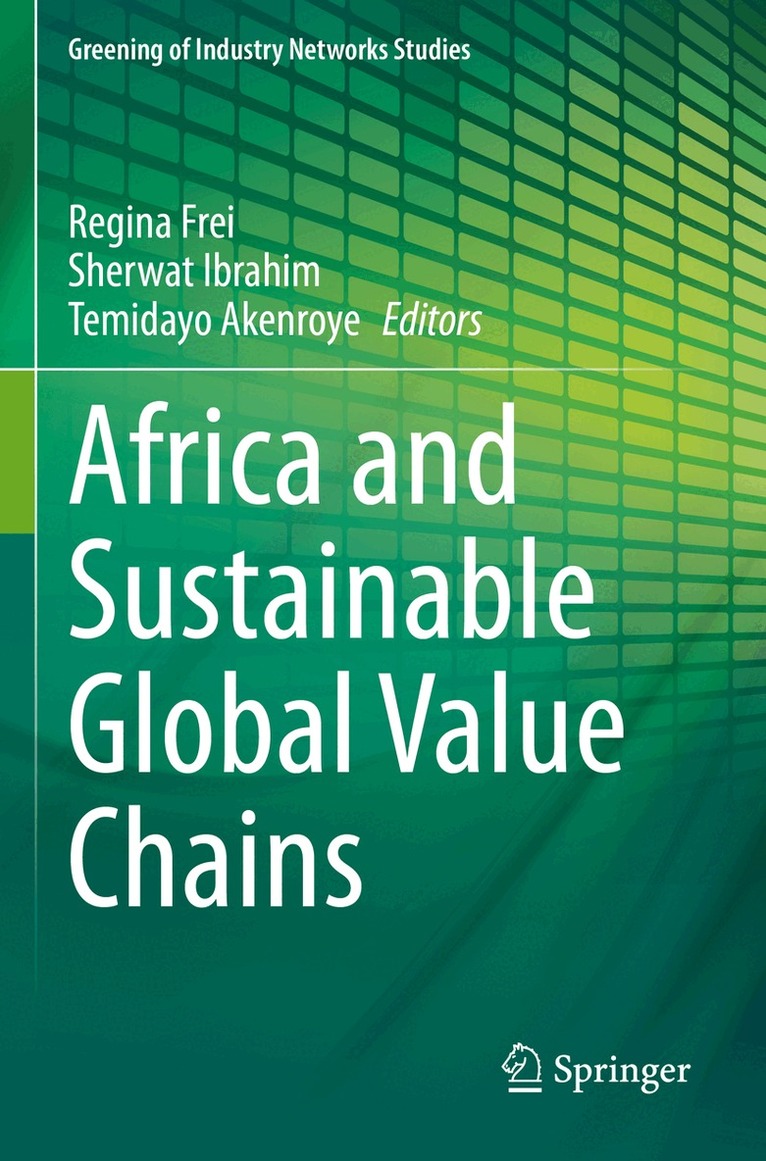
    Africa and Sustainable Global Value Chains

    AvRegina Frei,Sherwat Ibrahim

    Häftad, Engelska, 2023

    Del 9 i serien Greening of Industry Networks Studies

    882 kr

    Beställningsvara. Skickas inom 5-8 vardagar. Fri frakt över 249 kr.

    Beskrivning

    This book contains a collection of studies on the interactions between businesses in Africa and Global Value Chains (GVCs) in terms of social, environmental and economic sustainability. This is particularly pertinent given the asymmetrical power distribution between the global buyer and the African supplier, their governance relationships and the ongoing competitive pressures to reduce costs and increase flexibility to meet GVC demands. Rather than focusing on the sustainability of a single organization, GVCs address the sustainability of inter-firm value chains and global industries as a whole. With little differentiation between value chain creation and social / environmental degradation extending to people and raw material extraction (upstream) and disposal or recycling (downstream), sustainability issues need to be at the forefront of African business research interests. Nowadays, sustainability is considered a competitive advantage for a firm looking to join a GVC. Whether sustainability is approached from the viewpoint of an exporting firm motivated to join a GVC in its respective industry or whether a firm’s continuing contractual or collaborative relationship with a buyer depends on its compliance with sustainability standards, both approaches focus on the ability of firms in Africa to benefit from joining sustainable GVCs.

    Produktinformation

    • Utgivningsdatum:2023-02-08
    • Mått:155 x 235 x 19 mm
    • Vikt:528 g
    • Format:Häftad
    • Språk:Engelska
    • Serie:Greening of Industry Networks Studies
    • Antal sidor:325
    • Förlag:Springer Nature Switzerland AG
    • ISBN:9783030787936

    Utforska kategorier

    • Entreprenörskap inom Ekonomi och Ledarskap
    • Miljöekonomi inom Ekonomi och Ledarskap
    • Geografi inom Naturvetenskap och teknik

    Mer om författaren

    Dr Regina Frei is a Chartered Engineer and Associate Professor of Operations and Supply Chain Management at Southampton Business School, University of Southampton, UK. She leads the Product Returns Research Group. Her research interests include sustainable business, sustainable value chains, reverse supply chains, product returns in retail, plastics recycling, and the Circular Economy. She is a member of the Institution of Engineering and Technology and a Friend of the African Circular Economy Network (ACEN).    Dr Sherwat E. Ibrahim is an Associate Professor of Operations Management and Director of the MBA programs at the School of Business, American University in Cairo (AUC), Egypt. Her research interests include Africa sustainability, global value chains, supply chain governance, strategic outsourcing, and technology adoption. She is a council member of the International Forum on Sustainable Value Chains (ISVC) and a founding member of PRME Africa Chapter.  Dr Temidayo Akenroye is a Senior Lecturer in Supply Chain Management at Liverpool Business School, Liverpool John Moores University, UK.  His research interests cover circular economy, sustainable procurement, agricultural value chain, health supply chain and international logistics. He is a Member of the Board of Directors (Trustees) at Agritech and Social Innovation Hub, Nigeria, and sits on the Research Advisory Panel for Africa Resource Centre, South Africa.

    Recensioner i media

    “Africa and Sustainable Global Value Chains has many merits. … it offers many distinct approaches to and perspectives on GVCs and sustainability in Africa. The inroads built by it are informative. They have the potential to inspire future research on the topic.” (Sören Scholvin, Africa Spectrum, November 4, 2022)

    Innehållsförteckning

    • Part 1: Background and motivation - Why do global buyers engage in GVCs with Africa?. Chapter1. Sustainable practices of African big firms in Global Value Chain (April Bai and Matthew Quayson).- Chapter2. Sustainability for Global Value Chains: A bibliometric review on African based studies (Jamal elBaz, Saadia Iddik and Fedwa Jebli).- Chapter3. Embodied land resources trade in major African countries: A global trade and supply chains perspective ( Joseph Sarkis and Xu Tian (Mini)).- Chapter4. Risk assessment for global buyers in GVCs with Africa (Lanre Jawando).- Part 2:  Why do African suppliers engage in GVCs?. Chapter5. Maatian Philosophical Perspective of Sustainability ( David B. Zoogah).- Chapter6.  Adoption of Supplier Codes of Conduct through the lens of Innovation Diffusion Theory ( Johannes Heller).- Chapter7. Practical insights to developing sustainability conscientious African Firms (Ekpen Owie).- Chapter8. Exploring the barriers to adoption of sustainable agriculture practices in the process of coffee farming: implications for global value chain ( Temidayo Akenroye).- Chapter9.  An explorative study of the extent to which multinational buyer firms’ sustainability requirements include/exclude Zambian Contractors and suppliers ( Progress Choongo, Christine Chanda Nakamba, Peter Lubosi Simasiku).- Part 3:  How do African suppliers engage in GVCs?. Chapter10.        Assessing Lean readiness in a pharmaceutical manufacturing environment in Sudan ( Mohammed Hassan Sayed and Alfatih H. Ismail).- Chapter11. The buyers’ response to bridge the gap across markets: a case of exporting agricultural products from Nigeria ( Frank Ojadi).- Chapter12. Sustainability in Ethiopian Textile Supply Chains (Marcus Brandenburg, Berihun Bizuneh, Taame Berhanu and Ambachew Maru Woubou).- Chapter13. Handcraft Export business in Ghana ( Audrey Forson).- Part 4:  How do global buyers engage in GVCs with Africa?. Chapter14.  The Impact of EPA on West Africa: The mediating role of an intra-African Trade Policy for Africa’s sustainable growth in the Global Value Chain (Peter Adjei-Bamfo, Emmanuel Lartey, Bernard Odoi, Stephanie Adjei-Bamfo and Emmanuel Baiden).- Chapter15. Governance mechanisms and Sustainability compliance in Egypt Food Chains (Yasmine Elhenawy).- Chapter16. Danish-Nigerian dairy supply chains -(Natalie Heinisch).- Chapter17. Re-imagining corporate sustainability in sub-saharan Africa: Evidence from the maize supply chain of a leading Nigerian commodities business (Lanre Jawando).- Conclusion - Regina Frei, Sherwat Ibrahim and Temidayo Akenroye.