

Emergence of Institutions
An Aesthetic-Affective Perspective
Inbunden, Engelska, 2022
556 kr
Beställningsvara. Skickas inom 10-15 vardagar. Fri frakt över 249 kr.
Fler format och utgåvor
Beskrivning
This book presents an experiential, aesthetic-affective approach to the study of institutions. Drawing on institutional sociology, hermeneutics, phenomenology and process philosophy, it conceptualises institutions as collective experiences with their own self-promoting and self-propelling powers. Instead of seeing institutional emergence, change and decline as the result of actors’ interests and manipulations, this book re-establishes the importance of factors beyond human design and intervention. Drawing on process theory, it shows how ideas, norms and values can form self-stabilising configurations that affect people without conscious realisation. It complements current thinking about institutions by showing how institutions constitute people long before people constitute them. With the help of authors as diverse as Antonio Damasio, A.N. Whitehead, J.W. von Goethe and Max Weber, Elke Weik crafts a perspective that allows us to understand institutions as aesthetic and affective powersin their own right. This book is for researchers interested in process theory, institutional and organisational studies, hermeneutics, and aesthetics.
Produktinformation
Utforska kategorier
Mer om författaren
Innehållsförteckning
Hoppa över listan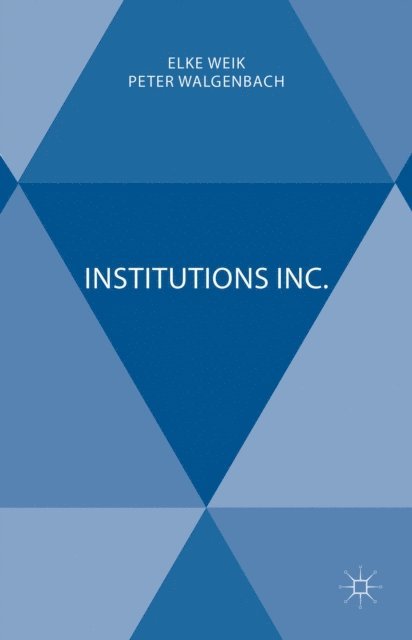

Mer från samma författare
Handbook of Organizing Economic, Ecological and Societal Transformation
Elke Weik, Chris Land, Ronald Hartz
E-bok
20241 905 kr
Handbook of Organizing Economic, Ecological and Societal Transformation
Ronald Hartz, Chris Land, Elke Weik
E-bok
20241 905 kr
Handbook of Organizing Economic, Ecological and Societal Transformation
Elke Weik, Chris Land, Ronald Hartz
Inbunden, 2024
2 513 kr
Hoppa över listan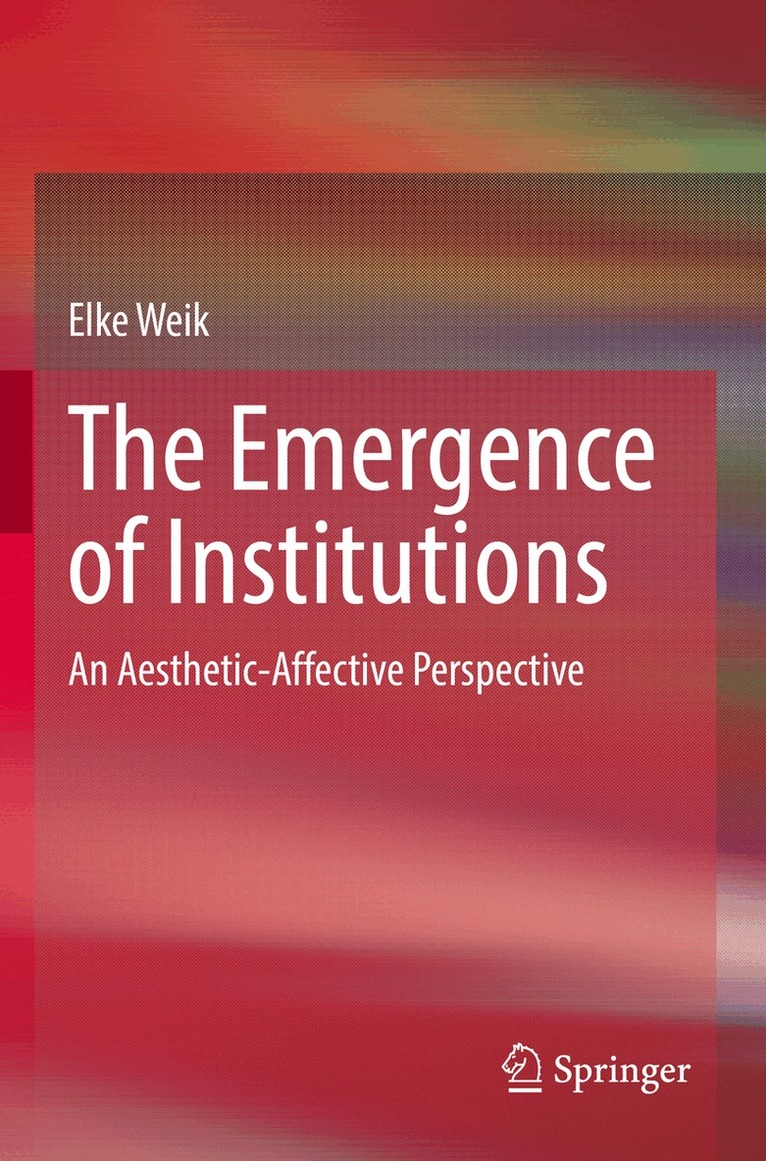
Du kanske också är intresserad av
Handbook of Organizing Economic, Ecological and Societal Transformation
Ronald Hartz, Chris Land, Elke Weik
E-bok
20241 905 kr
Handbook of Organizing Economic, Ecological and Societal Transformation
Elke Weik, Chris Land, Ronald Hartz
E-bok
20241 905 kr
Handbook of Organizing Economic, Ecological and Societal Transformation
Elke Weik, Chris Land, Ronald Hartz
Inbunden, 2024
2 513 kr