• Fri frakt över 249 kr
  • •
  • Snabba leveranser
  • •
  • Billiga böcker
Kundservice

Du är på sajten för privatpersoner.

Företag, bibliotek eller offentlig verksamhet?

Du handlar på classic.bokus.com, där alla dina funktioner finns intakta.
Till classic.bokus.com
Bokus logotyp. Gå till startsidan.
  • Erbjudanden
  • Student
  • Topplistor
  • Barn & ungdom
  • Bokus Play
  • E-böcker
  • Ljudböcker
  • Pocketböcker
  • Spel & pussel

10% rabatt på allt med kod NYSTART10 →

Sidfot

Mina sidor

    Hjälp

    • Kundservice
    • Vanliga frågor och svar
    • Frakt och leverans
    • Retur vid ångerrätt
    • Reklamera vara
    • Betalning
    • Köpvillkor
    • Allmänna villkor
    • Information om webbplatsens tillgänglighet

    Om Bokus

    • Om oss
    • Pressrum
    • För studenter
    • För företag
    • För bibliotek och offentlig verksamhet
    • För leverantörer
    • Hållbarhet

    Populärt

    • Aktuella erbjudanden
    • Presentkort
    • Studentlitteratur
    • Nya böcker
    • Topplistor
    • Signerade böcker
    • Engelska böcker

    Inspiration

    • Boktips
    • BookTok
    • Populära bokserier
    • Barnbokskaraktärer
    • Populära författare
    Logotyp för Bokus
    Följ oss på Facebook (extern länk)Följ oss på Instagram (extern länk)Följ oss på YouTube (extern länk)Följ oss på TikTok (extern länk)
    bokus @ CookiesAnpassa cookiesIntegritetspolicyKöpvillkor
    Till Citymail hemsida (extern länk)Till Budbee hemsida (extern länk)Till Postnord hemsida (extern länk)Till Schenker hemsida (extern länk)Till Early Bird hemsida (extern länk)Till Walleys hemsida (extern länk)
    1. Data och IT
    2. Systemvetenskap och AI
    3. Artificiell intelligens

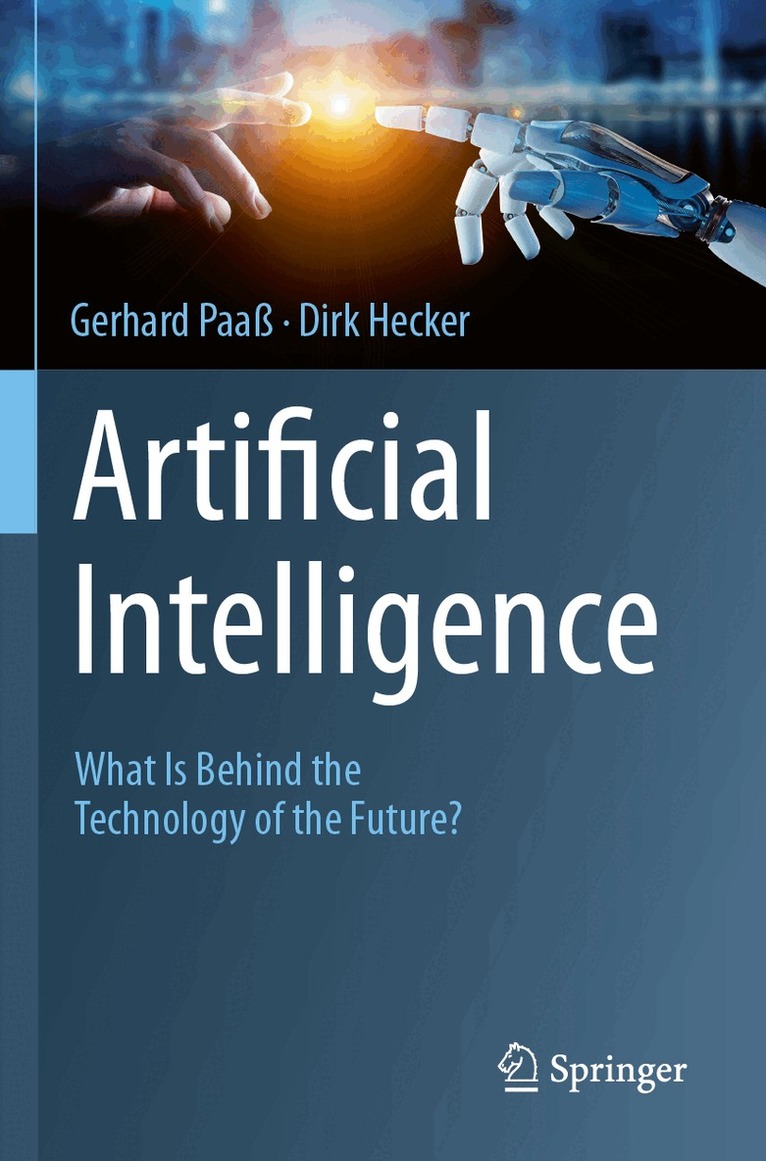
    Artificial Intelligence

    What Is Behind the Technology of the Future?

    AvGerhard Paaß,Dirk Hecker

    Häftad, Engelska, 2025

    516 kr

    Beställningsvara. Skickas inom 10-15 vardagar. Fri frakt över 249 kr.

    Fler format och utgåvor

    Inbunden

    516 kr

    Beskrivning

    Artificial Intelligence (AI) is already present in our daily routines, and in the future, we will encounter it in almost every aspect of life – from analyzing X-rays for medical diagnosis, driving autonomous cars, maintaining complex machinery, to drafting essays on environmental problems and drawing imaginative pictures. The potentials of AI are enormous, while at the same time many myths, uncertainties and challenges circulate that need to be tackled. The English translation of the book “Künstliche Intelligenz – Was steckt hinter der Technologie der Zukunft?” originally published in German (Springer Vieweg, 2020), this book is addressed to the general public, from interested citizens to corporate executives who want to develop a better and deeper understanding of AI technologies and assess their consequences. Mathematical basics, terminology, and methods are explained in understandable language. Adaptations to different media such as images, text, and speech and the corresponding generative models are introduced. A concluding discussion of opportunities and challenges helps readers evaluate new developments, demystify them, and assess their relevance for the future.

    Produktinformation

    • Utgivningsdatum:2025-05-16
    • Mått:155 x 235 x 31 mm
    • Vikt:752 g
    • Format:Häftad
    • Språk:Engelska
    • Antal sidor:474
    • Förlag:Springer International Publishing AG
    • ISBN:9783031506079
    • Originaltitel:Künstliche Intelligenz – Was steckt hinter der Technologie der Zukunft?

    Utforska kategorier

    • Artificiell intelligens inom Data och IT
    • Systemvetenskap och AI inom Data och IT

    Mer om författaren

    ​Dr. Gerhard Paaß is a Lead Scientist at the Fraunhofer Institute for Intelligent Analysis and Information Systems (IAIS). With a background in Mathematics, he is a recognized expert in the field of Artificial Intelligence, particularly in the area of Natural Language Processing. Dr. Paaß has previously worked at UC Berkeley in California and the University of Technology in Brisbane. He has served as reviewer and conference chair at various international conferences, including NeurIPS, CIKM, ECML/PKDD, ICDM, and KDD, where he regularly is a member of the program committee. Dr. Paaß has received a “best paper” award on probabilistic logic, is the author of about 70 publications for international conferences and journals and he is co-author of the best-selling Open Access book “Foundation Models for Natural Language Processing” (Springer, 2023). He is currently involved in the creation of a computer center for Foundation Models. Besides experimental researchon Foundation Models, he holds lectures for Deep Learning and Natural Language Understanding at the University of Bonn and in industry. Dr. Dirk Hecker is deputy director of the Fraunhofer Institute for Intelligent Analysis and Information Systems IAIS and managing director of the Fraunhofer Big Data and Artificial Intelligence Alliance, the largest alliance of the Fraunhofer-Gesellschaft with more than 30 member institutes. In addition, Dr. Hecker is a member of the board of directors of the Fraunhofer Academy, which is a further education institution of the Fraunhofer-Gesellschaft aimed at specialists and executives of technology-driven companies. Dr. Hecker has many years of experience in leading research and industrial projects in the field of data mining and Machine Learning. His current work focuses on Big Data Analytics, Predictive Analytics, Deep Learning and Explainable AI. He studied geo-informatics at the Universities of Cologne and Bonn and received his PhD from the University of Cologne. Dr. Hecker is the author of numerous publications in the above-mentioned fields and is active as a subject matter expert and auditor on the topic of Artificial Intelligence in a wide variety of committees.

    Innehållsförteckning

    • Preface.- About the Authors.- 1. What Is Intelligent About Artificial Intelligence?.- 2 What Are the Capabilities of Artificial Intelligence?.- 3. Some Basic Concepts of Machine Learning.- 4. Deep Learning Can Recognize Complex Relationships.- 5. Image Recognition with Deep Neural Networks.- 6. Capturing the Meaning of Written Text.- 7. Understanding Spoken Language.- 8. Learning Optimal Policies.- 9. Creative Artificial Intelligence and Emotions.- 10. AI and Its Opportunities, Challenges and Risks.- Appendix.- Index.