E-bok, Engelska, 2024
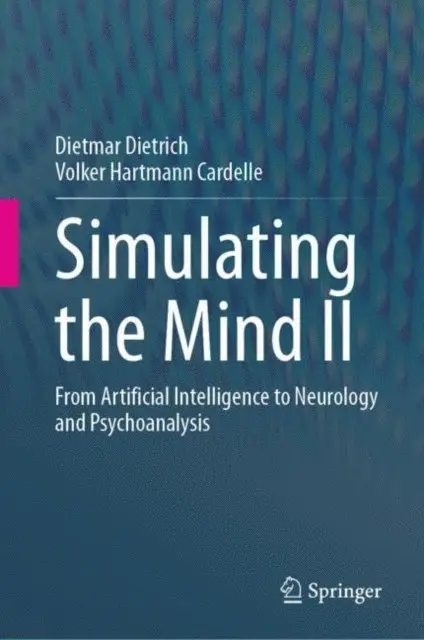
Simulating the Mind II
Av Volker Hartmann Cardelle, Dietmar Dietrich
868 kr
Läs direkt i Bokus Reader – eller ladda ned till din enhet
Beskrivning
The declared goal of this book, an extended and revised translation of the German edition (2021), is to show how a unified model of the psyche and body can be developed via insights from psychoanalysis, neurology and computer technology. On the one hand, such a model allows for the testing of psychological and social theories on a scientific basis with the help of simulation experiments. On the other hand, the model developed according to the functional structures of the human brain and psyche provides the basis for artificial intelligence systems. These are systems with cognitive capabilities that can save human lives, save energy, ensure safety at airports, provide support in old-age care and in the medical field; in other words and generally speaking, systems that can simplify our lives in a relevant way and on a broad basis.
A great deal of time and money is invested in genetic engineering and neurology, but research into the mental apparatus in the context of the neurological part, i.e., modeling the brain in a holistic way, is sparse in every respect. However, the results of the scientific project SiMA, of which the first author has been a driving force, show that the research of this organ, which in the authors’ understanding includes the mental apparatus, as a whole, is quite feasible today. This is also the main message of the book, which addresses topics such as artificial intelligence, the brain, psychoanalysis, behavioral models, complexity, bionics of the mental, emotions and feelings, consciousness and awareness, preconscious and unconscious, the functional (and not only behavioral) description and modeling of the brain and especially of the mental apparatus, and some more.
In the world of technology, there is generally little interest in psychoanalysis, whereas in the world of psychoanalysis, people usually refuse to deal with mathematics and technology, especially computer technology. Is there an information theory of the brain on the one hand, and of computer technology on the other hand? The authors attempt to answer this question from both sides. With the goal to reach as many readers as possible and to provoke, the authors break with traditions and give space to new forms of thinking and argue that it is crucial to take a new path in automation, in artificial intelligence and in (technical) cognitive science, but also in psychoanalysis and neurology, in order to create a common basis for scientific and technical possibilities that have been previously inaccessible.
Produktinformation
- Utgivningsdatum: 2024-10-04
- Språk: Engelska
- Filformat: EPUB
- Kopieringsskydd: LCP
- ISBN: 9783031695308
- Förlag: Springer Nature Switzerland
Utforska kategorier
Betyg & recensioner
0 recensioner
Inga recensioner tillgängliga.