Inbunden, Engelska, 2025
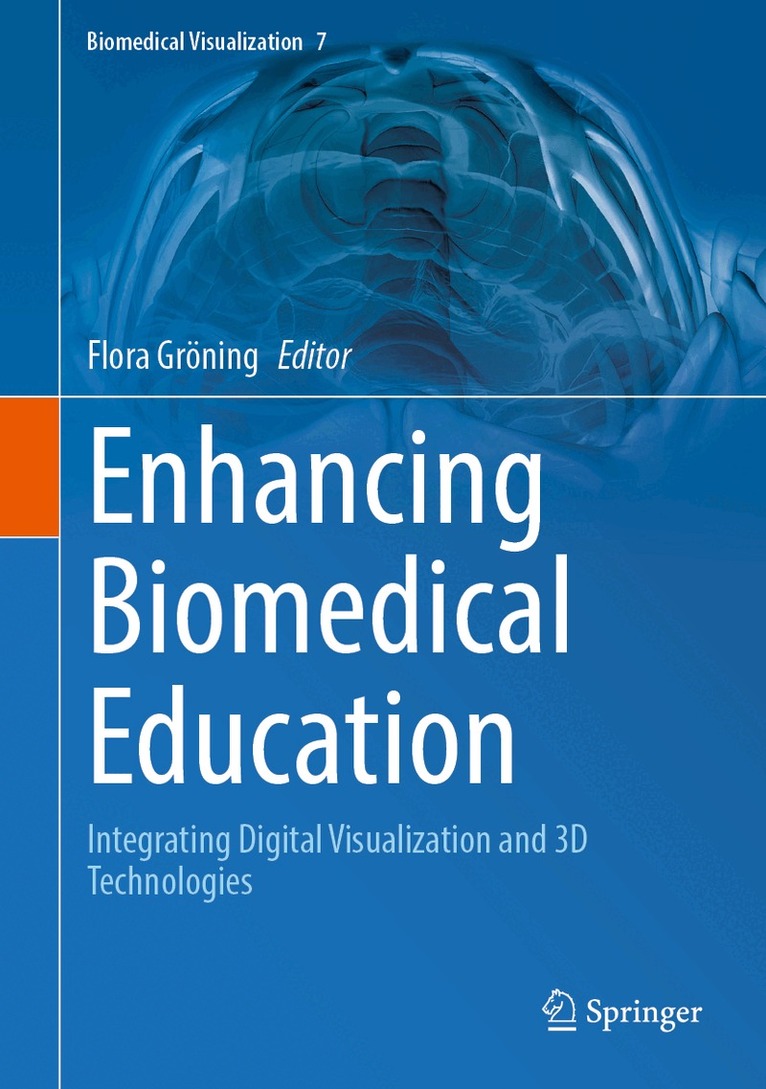
Enhancing Biomedical Education
2585 kr
Beställningsvara. Skickas inom 10-15 vardagar. Fri frakt över 249 kr.
Beskrivning
This edited book explores digital visualization as a tool to communicate complex and often challenging biomedical content in an accessible and engaging way. The reader will learn how current visualization technology can be applied to a wide range of biomedical fields to benefit the learning of students and enhance the public understanding of science. The focus of this volume will be on the innovative use of digital visualization (2D or 3D) in biomedical education and public engagement. This includes medical imaging (i.e., magnetic resonance imaging and computed tomography) as well as other digital imaging techniques such as laser scanning. It also covers the use of state-of-the-art visualization tools (i.e., augmented and virtual reality, animations and 3D printing) and the integration of 3D models of anatomical structures into serious computer games.This book will appeal to educators, researchers and students in life science subjects as well as to healthcare professionals and designers of digital learning resources. The book will be a source of inspiration for any reader who is interested in using digital visualization as a meaningful and engaging communication tool for biomedical content, ranging from the anatomy and function of organs to the mechanisms of diseases and their prevention.
Produktinformation
- Utgivningsdatum: 2025-01-30
- Mått: 178 x 254 x 26 mm
- Vikt: 1 019 g
- Format: Inbunden
- Språk: Engelska
- Serie: Biomedical Visualization
- Antal sidor: 378
- Förlag: Springer International Publishing AG
- ISBN: 9783031732690
Utforska kategorier
Betyg & recensioner
0 recensioner
Inga recensioner tillgängliga.