• Fri frakt över 249 kr
  • •
  • Snabba leveranser
  • •
  • Billiga böcker
Kundservice

Du är på sajten för privatpersoner.

Företag, bibliotek eller offentlig verksamhet?

Du handlar på classic.bokus.com, där alla dina funktioner finns intakta.
Till classic.bokus.com
Bokus logotyp. Gå till startsidan.
  • Erbjudanden
  • Nyheter
  • Student
  • Topplistor
  • Barn & ungdom
  • Bokus Play
  • E-böcker
  • Pocketböcker
  • Spel & pussel

10% rabatt på allt med kod NYSTART10 →

Sidfot

Mina sidor

    Hjälp

    • Kundservice
    • Vanliga frågor och svar
    • Frakt och leverans
    • Retur vid ångerrätt
    • Reklamera vara
    • Betalning
    • Köpvillkor
    • Allmänna villkor
    • Information om webbplatsens tillgänglighet

    Om Bokus

    • Om oss
    • Pressrum
    • För studenter
    • För företag
    • För bibliotek och offentlig verksamhet
    • För leverantörer
    • Hållbarhet

    Populärt

    • Aktuella erbjudanden
    • Presentkort
    • Studentlitteratur
    • Nya böcker
    • Topplistor
    • Signerade böcker
    • Engelska böcker

    Inspiration

    • Boktips
    • BookTok
    • Populära bokserier
    • Barnbokskaraktärer
    • Populära författare
    Logotyp för Bokus
    Följ oss på Facebook (extern länk)Följ oss på Instagram (extern länk)Följ oss på YouTube (extern länk)Följ oss på TikTok (extern länk)
    bokus @ CookiesAnpassa cookiesIntegritetspolicyKöpvillkor
    Till Citymail hemsida (extern länk)Till Budbee hemsida (extern länk)Till Postnord hemsida (extern länk)Till Schenker hemsida (extern länk)Till Early Bird hemsida (extern länk)Till Walleys hemsida (extern länk)
    1. Medicin
    2. Andra medicinska specialiteter
    3. Psykiatri

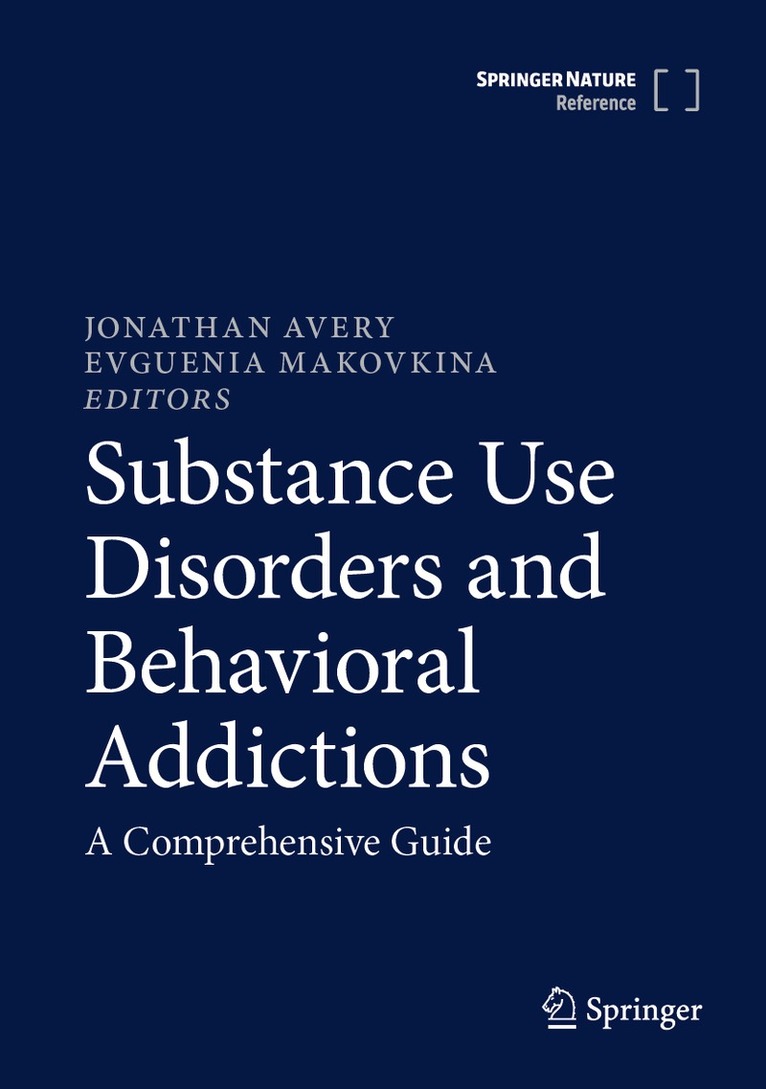
    Substance Use Disorders and Behavioral Addictions

    A Comprehensive Guide

    AvJonathan Avery,Evguenia Makovkina

    Inbunden, Engelska, 2026

    9 912 kr

    Kommande

    Beskrivning

    This book serves as a comprehensive reference text for the foundational principles related to substance use disorders and behavioral addictions. It offers a comprehensive overview of addictions, covering various aspects from the biological and psychological mechanisms to treatment approaches and societal implications. Many existing resources focus narrowly on specific aspects of addiction, such as the neurobiology or social aspects. This text bridges these gaps by integrating diverse perspectives and encouraging a multidisciplinary understanding. Additionally, the inclusion of emerging trends ensures that readers are equipped with the latest information, making this book an asset in an evolving field. By providing a consolidated and accessible resource, this reference book aims to contribute to improved education, research, and ultimately, more effective interventions for individuals grappling with substance use disorders.The book is organized into several sections, each addressing an important aspect of substance use disorders. It opens with the mechanism of addiction’s onset (Understanding Substance Use Disorders), progresses to the clinical approach (Assessment and Diagnosis, Pharmacological Interventions, and Psychosocial Interventions) and ends with strategies for prevention and advocacy on a societal level (Prevention and Public Health).Substance Use Disorders and Behavioral Addictions: A Comprehensive Guide provides a thorough and up-to-date resource for healthcare professionals and clinicians working with people with addictions, medical residents and students, researchers, and individuals seeking a deeper understanding of addictions.

    Produktinformation

    • Utgivningsdatum:2026-12-02
    • Mått:178 x 254 x undefined mm
    • Format:Inbunden
    • Språk:Engelska
    • Antal sidor:1 080
    • Förlag:Springer International Publishing AG
    • ISBN:9783031767517

    Utforska kategorier

    • Psykiatri inom Medicin
    • Missbruk inom Medicin

    Mer om författaren

    Jonathan Avery, M.D.New York-Presbyterian Weill CornellVice Chair for Addiction PsychiatryStephen P. Tobin and Dr. Arnold M. Cooper Associate Professor in Consultation-Liaison PsychiatryJonathan Avery, M.D. is the Vice Chair for Addiction Psychiatry, the Stephen P. Tobin and Dr. Arnold M. Cooper Associate Professor in Consultation-Liaison Psychiatry, and the Program Director for the Addiction Psychiatry Fellowship. Dr. Avery’s primary academic focus has been to examine and help develop interventions to improve clinicians’ attitudes towards patients with substance use disorders. He is also focused on educating all physicians on how to treat individuals with co-occurring substance use disorders and mental illness.Evguenia Makovkina, M.D.New York-Presbyterian Weill CornellAdult Psychiatry ResidentEvguenia Makovkina, M.D. is a fourth-year resident training in Adult Psychiatry at New York-Presbyterian Weill Cornell. She will start fellowship training in Addiction Psychiatry at Weill Cornell in July 2023. She is interested in long-term treatment models for addictions and initiatives that make substance use disorder care more widely accessible. She is focused on treating people with substance use disorders and co-occurring mental illness with pharmacotherapy and psychotherapy.

    Innehållsförteckning

    • Part 1: Understanding Substance Use Disorders.- Section 1. Introduction of Substance Use Disorders.- Chapter 1 Definition and Classification.- Chapter 2 Epidemiology and Global Impact.- Chapter 3 Historical Perspectives.- Section 2. Neurobiology of Addiction.- Chapter 4 Brain Structures and Functions.- Chapter 5 Neurotransmitters and Neural Pathways.- Chapter 6 Genetics and Addiction.- Section 3. Psychosocial Factors in Substance Use.- Chapter 7 Social Determinants.- Chapter 8 Psychological Factors.- Chapter 9 Cultural Influences.- Chapter 10 Stigma of Addiction.- Chapter 11 Substance use in Special Populations.- Section 4. Developmental Aspects of Substance Use.- Chapter 12 Adolescence and Substance Use.- Chapter 13 Adult Onset and Aging.- Part 2: Assessment and Diagnosis.- Section 5. Screening and Assessment Tools.- Chapter 14 Standardized Questionnaires.- Chapter 15 Diagnostic Interviews.- Chapter 16 Laboratory Workup.- Chapter 17 Biological Markers.- Section 6. Diagnostic Criteria for Substance Use Disorders.- Chapter 18 DSM-5 Criteria.- Chapter 19 ASAM Criteria.- Chapter 19 Critiques and Controversies.- Section 7. Substance Use Disorders.- Chapter 20 Opioid Use Disorder.- Chapter 21 Alcohol Use Disorder.- Chapter 22 Addiction to Nonalcohol Sedative-Hypnotics and Anxiolytics.- Chapter 23 Nicotine and Tobacco Use Disorders.- Chapter 23 Stimulant Use Disorder.- Chapter 24 Addiction to Caffeine.- Chapter 25 Cannabis Use Disorder.- Chapter 26 Hallucinogen Use Disorder.- Chapter 27 Addiction to Dissociative Substances.- Chapter 28 Addiction to Inhalants.- Chapter 29 Addiction to Anabolic-Androgenic Steroids.- Section 8. Behavioral Addictions.- Chapter 30 Gambling Addiction.- Chapter 31 Internet and Technology Addiction.- Chapter 32 Gaming Addiction.- Chapter 33 Sex Addiction.- Chapter 34 Addiction to Food and Eating Disorders.- Chapter 35 Other Behavioral Addictions.- Section 9. Co-occurring Disorders.- Chapter 36 Mental Health Disorders.- Chapter 37 Medical Comorbidities.- Part 3: Pharmacological Interventions.- Section 10. Pharmacotherapy for Substance Use Disorders.- Chapter 38 Opioid Use Disorder.- Chapter 39 Alcohol Use Disorder.- Chapter 40 Nonalcohol Sedative-Hypnotics and Anxiolytics.- Chapter 41 Nicotine and Tobacco Use Disorders.- Chapter 42 Stimulant Use Disorder.- Chapter 43 Caffeine Addiction.- Chapter 44 Cannabinoid Use Disorder.- Chapter 45 Hallucinogen Use Disorder.- Chapter 46 Dissociative Substances.- Chapter 47 Inhalant Use Disorder.- Chapter 48 Anabolic-Androgenic Steroid Use Disorder.- Chapter 49 Pharmacotherapy for Other Substances Use Disorders.- Chapter 50 Challenges and Future Directions.- Chapter 51 Pharmacological Management of Behavioral Addictions.- Part 4: Psychosocial Interventions.- Section 11. Individual Psychotherapy.- Chapter 52 Motivational Enhancement.- Chapter 53 Cognitive Behavioral Therapy.- Chapter 54 Dialectical Behavioral Therapy.- Chapter 55 Psychodynamic Psychotherapy.- Section 12. Group Therapy and Community Support.- Chapter 56 12-Step Programs.- Chapter 57 Peer Support Groups.- Chapter 58 Family Therapy.- Chapter 59 Network Therapy.- Chapter 60 Long-term Recovery Models.- Section 14. Emerging Therapeutic Approaches.- Chapter 62 Mindfulness and Alternative Treatments.- Chapter 62 Technology-Assisted Therapies.- Chapter 63 Novel Psychotherapeutic Modalities.- Part 5: Prevention and Public Health.- Section 15. Prevention Strategies.- Chapter 64 Universal Prevention.- Chapter 65 Selective Prevention.- Section 16. Public Health Policies.- Chapter 66 Substance Use and the Law.- Chapter 67 Harm Reduction.- Chapter 68 Advocacy and Public Awareness Campaigns.- Part 6: Special Topics and Future Directions.- Chapter 69 Novel Treatment Approaches.- Chapter 70 Global Perspectives on Substance Use.