• Fri frakt över 249 kr
  • •
  • Snabba leveranser
  • •
  • Billiga böcker
Kundservice

Du är på sajten för privatpersoner.

Företag, bibliotek eller offentlig verksamhet?

Du handlar på classic.bokus.com, där alla dina funktioner finns intakta.
Till classic.bokus.com
Bokus logotyp. Gå till startsidan.
  • Erbjudanden
  • Student
  • Topplistor
  • Barn & ungdom
  • Bokus Play
  • E-böcker
  • Ljudböcker
  • Pocketböcker
  • Spel & pussel

10% rabatt på allt med kod NYSTART10 →

Sidfot

Mina sidor

    Hjälp

    • Kundservice
    • Vanliga frågor och svar
    • Frakt och leverans
    • Retur vid ångerrätt
    • Reklamera vara
    • Betalning
    • Köpvillkor
    • Allmänna villkor
    • Information om webbplatsens tillgänglighet

    Om Bokus

    • Om oss
    • Pressrum
    • För studenter
    • För företag
    • För bibliotek och offentlig verksamhet
    • För leverantörer
    • Hållbarhet

    Populärt

    • Aktuella erbjudanden
    • Presentkort
    • Studentlitteratur
    • Nya böcker
    • Topplistor
    • Signerade böcker
    • Engelska böcker

    Inspiration

    • Boktips
    • BookTok
    • Populära bokserier
    • Barnbokskaraktärer
    • Populära författare
    Logotyp för Bokus
    Följ oss på Facebook (extern länk)Följ oss på Instagram (extern länk)Följ oss på YouTube (extern länk)Följ oss på TikTok (extern länk)
    bokus @ CookiesAnpassa cookiesIntegritetspolicyKöpvillkor
    Till Citymail hemsida (extern länk)Till Budbee hemsida (extern länk)Till Postnord hemsida (extern länk)Till Schenker hemsida (extern länk)Till Early Bird hemsida (extern länk)Till Walleys hemsida (extern länk)
    1. Medicin
    2. Andra medicinska specialiteter
    3. Patologi

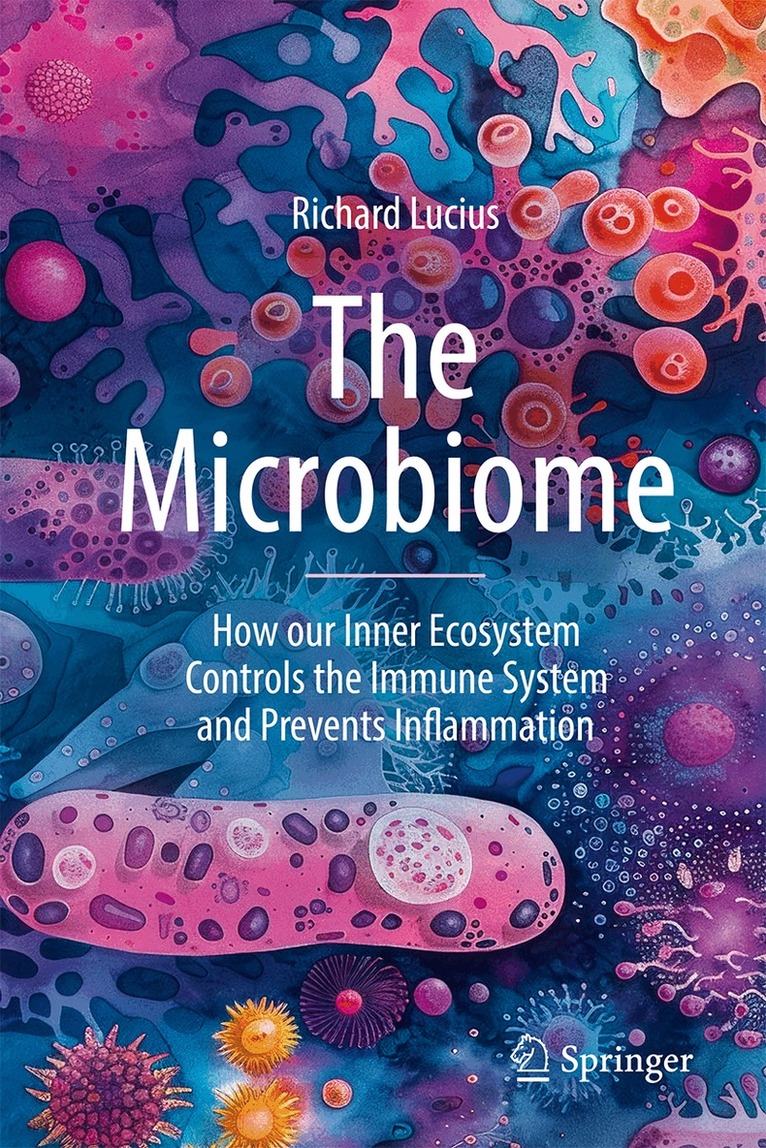
    Microbiome

    How our Inner Ecosystem Controls the Immune System and Prevents Inflammation

    AvRichard Lucius

    Inbunden, Engelska, 2025

    343 kr

    Beställningsvara. Skickas inom 10-15 vardagar. Fri frakt över 249 kr.

    Fler format och utgåvor

    E-bok

    455 kr

    Häftad

    343 kr

    Beskrivning

    This book unravels in an easily understandable way the exciting molecular connections between our gut microbiome, i.e. the collective microorganisms that we carry in our digestive system, nutrition and the immune system, and how an imbalance can lead to the development of inflammatory diseases. The totality of these gut microorganisms forms a complex ecosystem within us, consisting of hundreds of different species of bacteria.The author, microbiologist Professor Richard Lucius, introduces the historical context of microbiome research, discusses how our lives have changed in recent decades, and explains the composition and function of the microbiome and its connection to the gut and immune system. The book explains in detail and supported with appealing illustrations how allergies, chronic intestinal inflammation, type 1 diabetes, multiple sclerosis, rheumatoid arthritis, psoriasis and coeliac disease develop. Further chapters deal with the effects of nutrition on our intestinal flora and provide tips on building and maintaining a healthy microbiome. An intact bacterial community utilizes food residues that humans cannot digest and in return provides energy and vital substances. Only together with our inhabitants do we form a well-functioning "superorganism".Our immune system, which has developed over millions of years, is calibrated for a meagre, natural life. Under the influence of our modern way of life, the "Western lifestyle", our inner ecosystem is suffering from a loss of species, similar to our external environment. Highly processed foods, the influence of medication, lack of exercise and little contact with environmental bacteria are promoting this erosion process, which in the long term increases the risk of inflammatory diseases and obesity. As a result, more than 25% of people in modern societies suffer from allergies, autoimmune diseases and food intolerances that hardly existed in the past. This development can be counteracted by a healthy lifestyle that strengthens and diversifies the microbiome.This book is aimed at anyone who wants to understand the complex interplay between our gut microbiome, the immune system, nutrition and disease.The English translation of this volume, originally published in German language, was facilitated by artificial intelligence. A language editor has subsequently revised the text further in an endeavor to refine the work stylistically. The content was later revised by the author for accuracy.

    Produktinformation

    • Utgivningsdatum:2025-04-03
    • Mått:155 x 235 x 23 mm
    • Vikt:540 g
    • Format:Inbunden
    • Språk:Engelska
    • Antal sidor:241
    • Förlag:Springer International Publishing AG
    • ISBN:9783031788208
    • Originaltitel:Die Kraft unseres inneren Ökosystems

    Utforska kategorier

    • Patologi inom Medicin
    • Onkologi inom Medicin
    • Folkhälsa och hälsopedagogik inom Medicin

    Mer om författaren

    Prof. Dr. rer. nat. Richard Lucius, born in 1951 in Geesthacht/Elbe, Germany. Studies of biology at the Universities of Hohenheim and Heidelberg with a diploma thesis and dissertation on the biology of a livestock parasite in West Africa. Following the dissertation  work as a postdoc at Harvard University and as a university assistant and lecturer at the Tropical Institute of the University of Heidelberg. Habilitation (third thesis) in theoretical medicine, before taking up a professorship in parasitology at the University of Hohenheim in 1990. Since 1995 Professor and director of the Chair of Molecular Parasitology at the Institute of Biology at Humboldt- Universität zu Berlin. Scientific interests: communication between parasites and their hosts at the level of the immune system; evasion and subversion of the host immune system by parasites. Allergy and inflammatory diseases. Microbiome research.

    Innehållsförteckning

    • Foreword.- Allergy & Co.: The New Diseases of Civilization .- How our lives have changed.- From the hygiene hypothesis to the biodiversity hypothesis.- Humans and the microbiome: We are Many.- Inflammatory diseases.- More care for our inner ecosystem!- Appendix.