• Fri frakt över 249 kr
  • •
  • Snabba leveranser
  • •
  • Billiga böcker
Kundservice

Du är på sajten för privatpersoner.

Företag, bibliotek eller offentlig verksamhet?

Du handlar på classic.bokus.com, där alla dina funktioner finns intakta.
Till classic.bokus.com
Bokus logotyp. Gå till startsidan.
  • Erbjudanden
  • Student
  • Topplistor
  • Barn & ungdom
  • Bokus Play
  • E-böcker
  • Ljudböcker
  • Pocketböcker
  • Spel och pussel

5% studentrabatt – använd koden KURSBOK27 →

Sidfot

Mina sidor

    Hjälp

    • Kundservice
    • Vanliga frågor och svar
    • Frakt och leverans
    • Retur vid ångerrätt
    • Reklamera vara
    • Betalning
    • Köpvillkor
    • Allmänna villkor
    • Information om webbplatsens tillgänglighet

    Om Bokus

    • Om oss
    • Pressrum
    • För studenter
    • För företag
    • För bibliotek och offentlig verksamhet
    • För leverantörer
    • Hållbarhet

    Populärt

    • Aktuella erbjudanden
    • Presentkort
    • Studentlitteratur
    • Nya böcker
    • Topplistor
    • Signerade böcker
    • Engelska böcker

    Inspiration

    • Boktips
    • BookTok
    • Barnbokskaraktärer
    • Populära författare
    Logotyp för Bokus
    Följ oss på Facebook (extern länk)Följ oss på Instagram (extern länk)Följ oss på YouTube (extern länk)Följ oss på TikTok (extern länk)
    bokus @ CookiesAnpassa cookiesIntegritetspolicyKöpvillkor
    Till Citymail hemsida (extern länk)Till Budbee hemsida (extern länk)Till Postnord hemsida (extern länk)Till Schenker hemsida (extern länk)Till Early Bird hemsida (extern länk)Till Walleys hemsida (extern länk)
    1. Naturvetenskap och teknik
    2. Teknik och industri
    3. Elektronik och kommunikationer
    • Nyhet

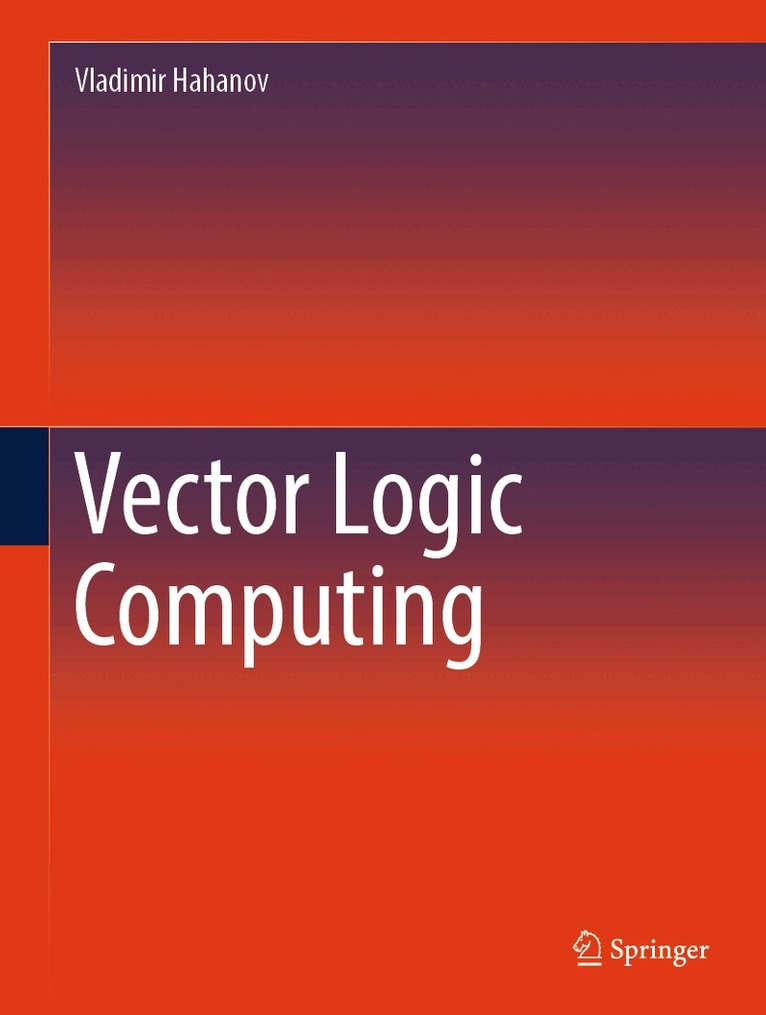
    Vector Logic Computing

    AvVladimir Hahanov,Vladimir Hahanov

    Inbunden, Engelska, 2026

    2 121 kr

    Beställningsvara. Skickas inom 11-20 vardagar. Fri frakt över 249 kr.

    Beskrivning

    This book creates a non-processor economy vector logic in-memory computing based on read-write transactions on logical vectors, truth tables, and matrices. In-memory vector logic is a harmonic relationship between a model and an algorithm that aims to reduce time and energy in modeling for simulation by using additional space and matter. Vector logic is an ideal form of representation of functions and structures for modelling and simulating social and physical processes. Modeling without simulation is a prompt-computing for creating a comprehensive testing map of any functionality or structure on a logical vector. Intelligent computing is here the integration of classical and artificial intelligence mechanisms for modeling and simulation, using vector-logical and matrix models to process functions and structures. The book first discusses the development of smart vector logic data structures to reduce the computational complexity of simulation algorithms. Then it explores the creation of mechanisms for vector logic modeling and testing, leveraging truth tables and matrices built on a logical vector. After that, the author goes on to cover the following: vector testing of logic circuits by simulating faults as addresses of logical vector bits; vector testing of graph structures by simulating transition faults as truth table addresses, and vector logic in-memory computing of unitary-encoded big data as truth table addresses. The book then explores the logical vector modeling for the simulation of social processes via unitary pattern encoding on the universe primitives. The goal of cyber-social vector logic computing is energy-effective monitoring and moral management of cyber-social processes and phenomena. Vector logic is a functional and structural relationship for in-memory computing, which forms an exponentially redundant data structure in memory to minimize its processing time and energy. The original vector logic mechanisms are implemented in the MOSI cloud service – Modeling for Simulation, written in Python, for simulating good-value states and faults, as addresses for logical circuits, functionalities, and structures. The book can be helpful for specialists in the field of big data prompt computing, including social and physical processes, as well as for engineers involved in testing digital GL, RTL, and system-level projects, automatic test generation, and good-value and fault address simulation. The theory and practice of vector-logical computing, algorithms, models, mechanisms, and codes are an original development to create energy- and time-saving processor-less new computing in memory.

    Produktinformation

    • Utgivningsdatum:2026-08-14
    • Mått:210 x 279 x undefined mm
    • Format:Inbunden
    • Språk:Engelska
    • Antal sidor:551
    • Förlag:Springer Nature Switzerland AG
    • ISBN:9783032070005

    Utforska kategorier

    • Elektronik och kommunikationer inom Naturvetenskap och teknik
    • Databaser inom Data och IT

    Mer om författaren

    Vladimir Hahanov was born in USSR in 1953. He is Doctor of Science, Professor of Computer Engineering Faculty, Design Automation Department, Kharkov National University of Radio Electronics, Ukraine. R&D fields: Design and Test of computers, Test Generation and Fault Simulation for SoC, Quantum memory-driven computing, Cyber Physical & Cyber Social Computing, Pattern Recognition & Machine Learning Computing, Digital Smart Cyber University, Cloud-Driven Traffic Control, Vector-Logic Computing. Previous positions: Acting Science Vice-Rector (2016), Dean of Computer Engineering Faculty (2003-2017). Supervisor for 4 Doctor of Science, 36 PhD’s, and 150 more engineers for 27 countries. General Chair of IEEE East-West Design & Test Symposium for 23 Years since 2003. Author of 650+ publications and 25 textbooks, 5 patents and 212 Scopus-indexed papers. H-index is 16, 1155 citations by 734 documents. Prof. Hahanov is IEEE Senior Member since 2010, IEEE Computer Society Golden Core Member, SAE Member and IFAC Member.

    Innehållsförteckning

    • Introduction.- Smart vector logic data structures to reduce the computational complexity of logic testing algorithms.- Mechanisms for vector logic testing leveraging truth tables and matrices built on a logical vector.- Vector testing of logic circuits by simulating faults as addresses of logical vector bits.- Vector testing of graph structures by simulating transition faults as truth table addresses.- Vector logic in-memory computing of unitary-encoded big data as truth table addresses.- Intelligent vector logic computing for energy-effective control of processes and phenomena.- Synthesis and testing of social logical vector obtained via unitary encoding of social processes and phenomena on primitives universum.- Cyber social vector logic computing for energy effective monitoring and management of cyber social processes and phenomena.- Conclusion.