• Fri frakt över 249 kr
  • •
  • Snabba leveranser
  • •
  • Billiga böcker
Kundservice

Du är på sajten för privatpersoner.

Företag, bibliotek eller offentlig verksamhet?

Du handlar på classic.bokus.com, där alla dina funktioner finns intakta.
Till classic.bokus.com
Bokus logotyp. Gå till startsidan.
  • Erbjudanden
  • Nyheter
  • Student
  • Topplistor
  • Barn & ungdom
  • Bokus Play
  • E-böcker
  • Pocketböcker
  • Spel & pussel

Må bättre, för mindre! Upp till 50% rabatt på hälsoböcker

Sidfot

Mina sidor

    Hjälp

    • Kundservice
    • Vanliga frågor och svar
    • Frakt och leverans
    • Retur vid ångerrätt
    • Reklamera vara
    • Betalning
    • Köpvillkor
    • Allmänna villkor
    • Information om webbplatsens tillgänglighet

    Om Bokus

    • Om oss
    • Pressrum
    • För studenter
    • För företag
    • För bibliotek och offentlig verksamhet
    • För leverantörer
    • Hållbarhet

    Populärt

    • Aktuella erbjudanden
    • Presentkort
    • Studentlitteratur
    • Nya böcker
    • Topplistor
    • Signerade böcker
    • Engelska böcker

    Inspiration

    • Boktips
    • BookTok
    • Populära bokserier
    • Barnbokskaraktärer
    • Populära författare
    Logotyp för Bokus
    Följ oss på Facebook (extern länk)Följ oss på Instagram (extern länk)Följ oss på YouTube (extern länk)Följ oss på TikTok (extern länk)
    bokus @ CookiesAnpassa cookiesIntegritetspolicyKöpvillkor
    Till Citymail hemsida (extern länk)Till Budbee hemsida (extern länk)Till Postnord hemsida (extern länk)Till Schenker hemsida (extern länk)Till Early Bird hemsida (extern länk)Till Walleys hemsida (extern länk)
    1. Ekonomi och Ledarskap
    2. Nationalekonomi
    3. Ekonomisk politik

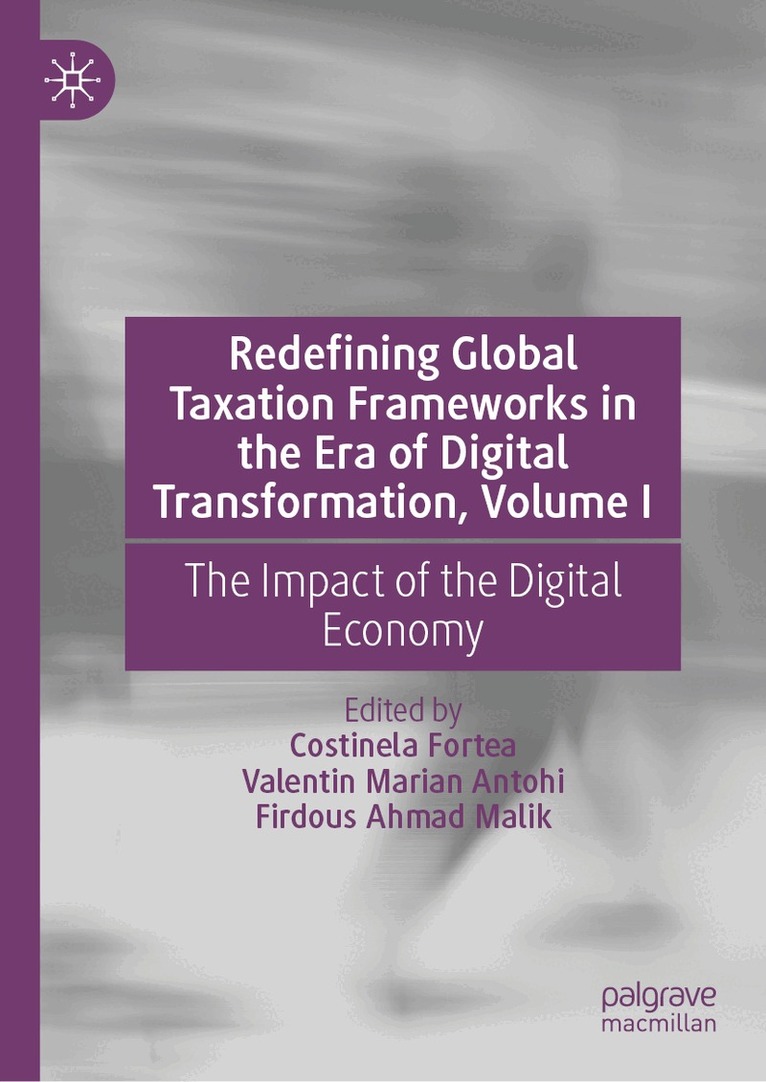
    Redefining Global Taxation Frameworks in the Era of Digital Transformation, Volume I

    The Impact of the Digital Economy

    AvCostinela Fortea,Valentin Marian Antohi

    Inbunden, Engelska, 2026

    2 185 kr

    Kommande

    Beskrivning

    This two-volume edited collection explores how the rapid advancement of emerging technologies such as artificial intelligence, blockchain and the platform economy is challenging international tax systems to adapt to a new economic reality. In an economic world characterized by increased capital mobility, complex cross-border flows and smart business models, while practices such as base erosion and profit shifting (BEPS) are simultaneously reducing states' tax revenues and amplifying pressures on governments to rethink the global tax architecture, the book provides a comprehensive and integrated analysis of the impact of the digital transformation on global taxation.The book draws on research from around the globe to identify current gaps and propose concrete solutions to develop sustainable, equitable and resilient tax frameworks. One of the book's most compelling insights is its critical analysis of traditional paradigms of taxation that were designed for an industrial economy based on tangible assets and physical presence. The book demonstrates that these concepts are outdated in today's context, where economic value is predominantly created through data, intellectual property and platform-based business models. At the same time, the contributions explore the limitations of possible solutions, paying specific attention to their varying effectiveness between developed and emerging economies. This is a vital resource for economists, researchers and tax professionals in understanding and implementing tax systems that are fair, efficient and adaptable to new economic realities.

    Produktinformation

    • Utgivningsdatum:2026-11-15
    • Mått:148 x 210 x undefined mm
    • Format:Inbunden
    • Språk:Engelska
    • Antal sidor:450
    • Förlag:Springer Nature Switzerland AG
    • ISBN:9783032110381

    Utforska kategorier

    • Ekonomisk politik inom Ekonomi och Ledarskap
    • Finansiering inom Ekonomi och Ledarskap

    Mer om författaren

    Costinela Fortea is Assistant Professor at the Faculty of Economics and Business Administration, Dunarea de Jos University of Galati, Romania. She is a member of prestigious academic organizations such as the European Regional Science Association and the Regional Science Association International. Her research focuses on finance, taxation, energy and environmental economics, and public policy, with particular interest in how fiscal and regulatory frameworks shape sustainable economic development. Valentin Marian Antohi is Professor of Economics at the Faculty of Economics and Business Administration, Dunarea de Jos University of Galati, Romania. With more than 26 years of academic and professional experience, he is an active member of prestigious academic associations, including the European Regional Science Association and the Regional Science Association International. His research areas cover a wide range of topics including financial and economic analysis, accounting, taxation, international taxation, tax policy, health services, rural and regional development and agricultural economics.Firdous Ahmad Malik is  Assistant Professor of Economics at the Department of Management, University of People, US. Previously he was a Research Fellow at the National Institute of Public Finance and Policy (NIPFP) in Delhi, India, and Senior Research Associate at the O.P. Jindal Global University in Sonipat.

    Innehållsförteckning

    • Chapter 1. The digital economy and fundamental tax challenges.- Chapter 2. The impact of digitization on the shadow economy: a bibliometric perspective.- Chapter 3. Analysing the relationship between innovation and the tax system.- Chapter 4. Tax models for e-commerce.- Chapter 5. Forecasting India's GST Revenue: An ARIMA Approach with Causal Insights from GDP.- Chapter 6. The interlink between digitalisation and informal economy.- Chapter 7. Encouraging Entrepreneurship Through Tax Relief: Digital Startups as Drivers of Economic Growth in Pakistan.- Chapter 8. The Digital Economy and Taxation Challenges: The Case of Turkey.- Chapter 9. Impact of Digital Taxation on Developing Economies and SMEs.- Chapter 10. Digital Systems to Prevent Tax Evasion.- Chapter 11. Redesigning Tax Systems Through Technology: Blockchain, AI, and the Future of Global Tax Governance.- Chapter 12. Understanding Digital Transformation and its impact on Tax Collection: A Case Study of Pakistan.- Chapter 13. Digital Tax Reform in Federal Economies: A Comparative Study of Indirect Tax Revenue Pre- and Post-GST in India.- Chapter 14. Taxing Times in a Digital Age: Disruptive Technologies and the Reinvention of Global Fiscal Policy.- Chapter 15. Pricing the Future: Malaysia’s 2026 Carbon Tax and the Path to a Low-Carbon Economy.- Chapter 16. Transformation of Tax System through Artificial Intelligence: A bibliometric analysis and research agenda.- Chapter 17. Assessing Taxpayer Awareness and Satisfaction with Income Tax e-Filing Systems: Evidence from Belagavi, Karnataka.- Chapter 18. The Interplay between Tax Policies and Foreign Direct Investment in India.