• Fri frakt över 249 kr
  • •
  • Snabba leveranser
  • •
  • Billiga böcker
Kundservice

Du är på sajten för privatpersoner.

Företag, bibliotek eller offentlig verksamhet?

Du handlar på classic.bokus.com, där alla dina funktioner finns intakta.
Till classic.bokus.com
Bokus logotyp. Gå till startsidan.
  • Erbjudanden
  • Nyheter
  • Student
  • Topplistor
  • Barn & ungdom
  • Bokus Play
  • E-böcker
  • Pocketböcker
  • Spel & pussel

10% studentrabatt med kod TERM26

Sidfot

Mina sidor

    Hjälp

    • Kundservice
    • Vanliga frågor och svar
    • Frakt och leverans
    • Retur vid ångerrätt
    • Reklamera vara
    • Betalning
    • Köpvillkor
    • Allmänna villkor
    • Information om webbplatsens tillgänglighet

    Om Bokus

    • Om oss
    • Pressrum
    • För studenter
    • För företag
    • För bibliotek och offentlig verksamhet
    • För leverantörer
    • Hållbarhet

    Populärt

    • Aktuella erbjudanden
    • Presentkort
    • Studentlitteratur
    • Nya böcker
    • Topplistor
    • Signerade böcker
    • Engelska böcker

    Inspiration

    • Boktips
    • BookTok
    • Populära bokserier
    • Barnbokskaraktärer
    • Populära författare
    Logotyp för Bokus
    Följ oss på Facebook (extern länk)Följ oss på Instagram (extern länk)Följ oss på YouTube (extern länk)Följ oss på TikTok (extern länk)
    bokus @ CookiesAnpassa cookiesIntegritetspolicyKöpvillkor
    Till Citymail hemsida (extern länk)Till Budbee hemsida (extern länk)Till Postnord hemsida (extern länk)Till Schenker hemsida (extern länk)Till Early Bird hemsida (extern länk)Till Walleys hemsida (extern länk)
    1. Psykologi och pedagogik
    2. Psykologi
    3. Psykologiska teorier och skolor

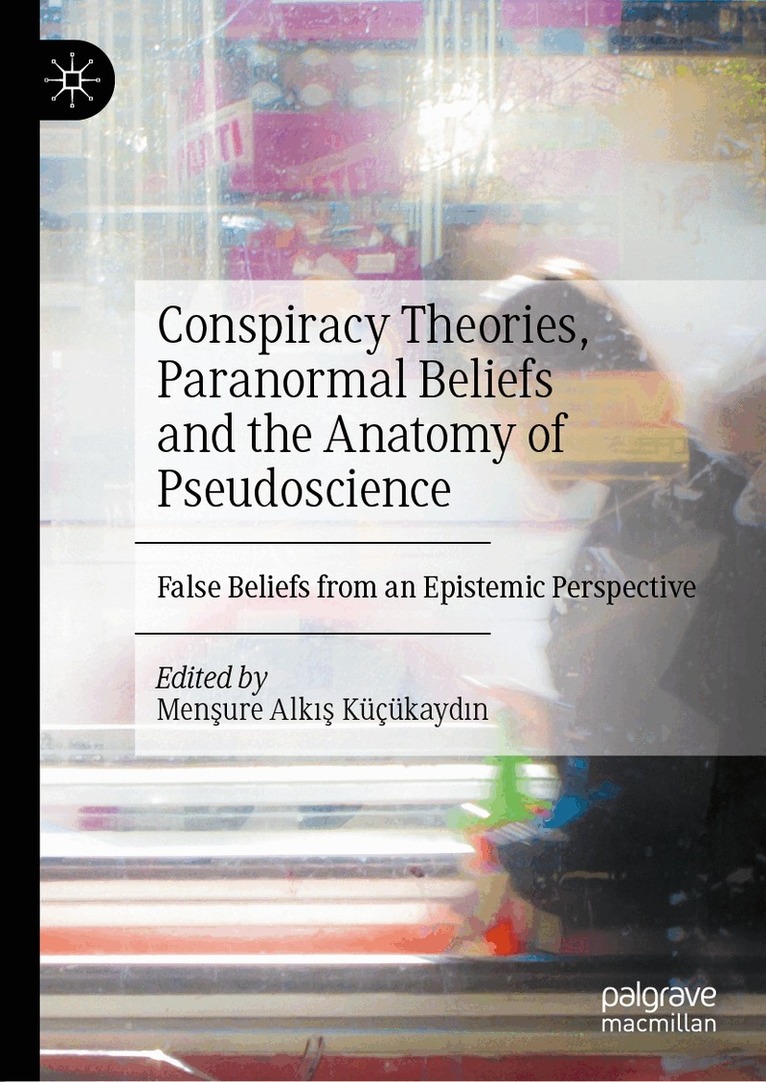
    Conspiracy Theories, Paranormal Beliefs and the Anatomy of Pseudoscience

    False Beliefs from an Epistemic Perspective

    AvMenşure Alkış Küçükaydın

    Inbunden, Engelska, 2026

    1 526 kr

    Beställningsvara. Skickas inom 10-15 vardagar. Fri frakt över 249 kr.

    Beskrivning

    This book aims to reveal how the human mind's search for order in the face of uncertainty and complexity leads to belief systems which have no scientific basis, while exploring the harms of such beliefs at individual and societal levels. Conspiracy theories, paranormal beliefs, and pseudoscientific claims can negatively affect individuals' decision-making processes, health choices, and social ties. The book aims to provide a holistic analysis of those phenomena by bringing together the perspectives of different disciplines, such as psychology, sociology, media studies, and philosophy of science. In particular, cognitive biases and social identity theory play a key role in explaining why these beliefs are attractive. As a work, it is distinct in that it not only approaches these issues from a critical perspective but also offers solution-oriented strategies to help readers acquire critical thinking skills and use scientific methods effectively.

    Produktinformation

    • Utgivningsdatum:2026-01-14
    • Mått:148 x 210 x 19 mm
    • Vikt:441 g
    • Format:Inbunden
    • Språk:Engelska
    • Antal sidor:228
    • Förlag:Springer Nature Switzerland AG
    • ISBN:9783032127327

    Utforska kategorier

    • Psykologiska teorier och skolor inom Psykologi och pedagogik
    • Socialpsykologi och gruppsykologi inom Psykologi och pedagogik
    • Religion: allmänt inom Filosofi och religion

    Mer om författaren

    Menşure Alkış Küçükaydın is an Associate Professor of Primary Education at Necmettin Erbakan University in Konya, Turkey. She received her undergraduate degree in Department of Primary Teacher Education from Gazi University, Faculty of Education in 2006 and her Ph.D degrees in Department of Primary Teacher Education from Gazi University in 2017. Dr. Küçükaydın’s scholarly work focuses on science and pseudoscience, conspiracy theories and scientific knowledge in education. She has published fifteen books.

    Innehållsförteckning

    • 1: Introduction.- 2: The Digital Condition and Its Psychological Consequences.- 3: The Body as an Image and the Crisis of Embodiment.- 4: Addiction, Emotional Disconnection, and the Neuroscience of Subjectivity.- 5: Generational Differences in Subjectivation.- 6: Towards a New Model of Subjectivation.- 7: Conclusion.