• Fri frakt över 249 kr
  • •
  • Snabba leveranser
  • •
  • Billiga böcker
Kundservice

Du är på sajten för privatpersoner.

Företag, bibliotek eller offentlig verksamhet?

Du handlar på classic.bokus.com, där alla dina funktioner finns intakta.
Till classic.bokus.com
Bokus logotyp. Gå till startsidan.
  • Erbjudanden
  • Nyheter
  • Student
  • Topplistor
  • Barn & ungdom
  • Bokus Play
  • E-böcker
  • Pocketböcker
  • Spel & pussel

10% studentrabatt med kod TERM26

Sidfot

Mina sidor

    Hjälp

    • Kundservice
    • Vanliga frågor och svar
    • Frakt och leverans
    • Retur vid ångerrätt
    • Reklamera vara
    • Betalning
    • Köpvillkor
    • Allmänna villkor
    • Information om webbplatsens tillgänglighet

    Om Bokus

    • Om oss
    • Pressrum
    • För studenter
    • För företag
    • För bibliotek och offentlig verksamhet
    • För leverantörer
    • Hållbarhet

    Populärt

    • Aktuella erbjudanden
    • Presentkort
    • Studentlitteratur
    • Nya böcker
    • Topplistor
    • Signerade böcker
    • Engelska böcker

    Inspiration

    • Boktips
    • BookTok
    • Populära bokserier
    • Barnbokskaraktärer
    • Populära författare
    Logotyp för Bokus
    Följ oss på Facebook (extern länk)Följ oss på Instagram (extern länk)Följ oss på YouTube (extern länk)Följ oss på TikTok (extern länk)
    bokus @ CookiesAnpassa cookiesIntegritetspolicyKöpvillkor
    Till Citymail hemsida (extern länk)Till Budbee hemsida (extern länk)Till Postnord hemsida (extern länk)Till Schenker hemsida (extern länk)Till Early Bird hemsida (extern länk)Till Walleys hemsida (extern länk)
    1. Samhälle och politik
    2. Samhälle och kultur
    3. Kultur och medier
    4. Referensverk och tvärvetenskap

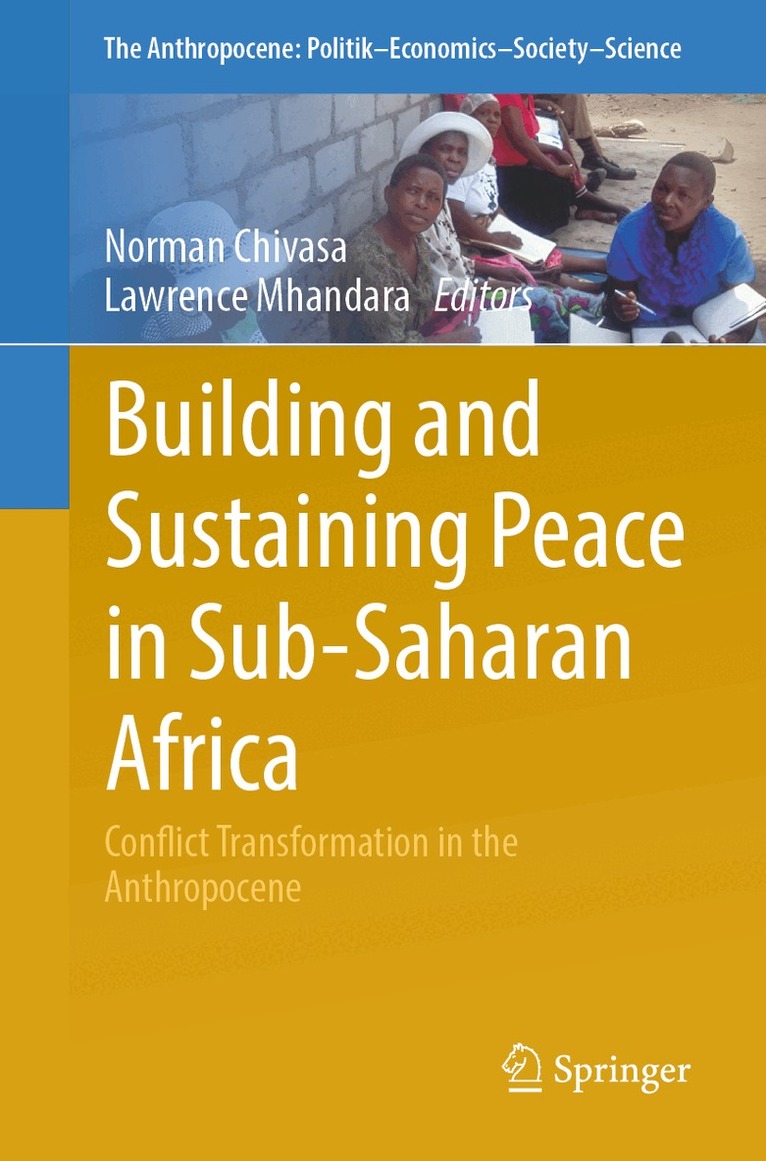
    Building and sustaining peace in sub-Saharan Africa

    Conflict transformation in the Anthropocene

    AvNorman Chivasa,Lawrence Mhandara

    Inbunden, Engelska, 2026

    Del i serien Anthropocene: Politik—Economics—Society—Science

    2 649 kr

    Kommande

    Beskrivning

    The book examines and reflects on how conflict transformation in Sub-Saharan Africa can be done in the Anthropocene. The Anthropocene is a geological epoch marked by human activities becoming the dominant influence on the environment, rather than natural forces. This shift signifies a new reality where humans, through their behaviors and decisions, have transformed ecosystems, altered atmospheric composition, and disrupted climatic systems. Historically, forces such as volcanic eruptions, ocean currents, and solar cycles dictated Earth’s systems. In the Anthropocene, human activities which include but not limited to the establishment of infrastructures for peace, peacekeeping, and community peace initiatives—have become equally, if not more, significant. Five major research themes emerge from its 19 Chapters are:1). The problematic in African communities 2).  Resilient social institutions in African communities3).  Infrastructures that sustain peace in Africa4).  Socio-political responses to climate change-induced conflict & violence in Africa5).  The future of peace in AfricaThe book acknowledges that top-down approaches to peace in African soil have failed, for example, truth and peace commissions in Siera Leone, South Africa, and peace agreements in Democratic Republic of Congo, Mozambique, Lesotho, Zimbabwe, and their unintended effects and so on. This book is a Call for new theoretical perspectives that move Sub-Saharan Africa forward in the area of peacebuilding using African innovation and endogenous institutions to sustain.

    Produktinformation

    • Utgivningsdatum:2026-08-31
    • Mått:155 x 235 x undefined mm
    • Format:Inbunden
    • Språk:Engelska
    • Serie:Anthropocene: Politik—Economics—Society—Science
    • Antal sidor:620
    • Förlag:Springer Nature Switzerland AG
    • ISBN:9783032223166

    Utforska kategorier

    • Referensverk och tvärvetenskap inom Samhälle och politik
    • Psykologi inom Psykologi och pedagogik
    • Internationella relationer inom Samhälle och politik

    Mer om författaren

    Norman Chivasa is a Research Associate at the International Centre of Non-violence, Durban University of Technology & Lecturer in the Department of Peace, Security & Society at the University of Zimbabwe. He holds a DPhil and Masters in Conflict Resolution & Peace Studies from the University of KwaZulu-Natal. He has co-edited a volume published by Springer: Climate change and socio-political violence in Sub-Saharan Africa in the Anthropocene: Perspectives from peace ecology and sustainable development. He has published 25 peer reviewed journal articles and 8 book chapters in climate change, conflict resolution, self-help initiatives, peacebuilding, ubuntu leadership  and statelessness.Lawrence Mhandara is a senior lecturer of Political Science in the Department of Governance and Public Management, University of Zimbabwe. Lawrence holds the BSc. degree in Politics and Administration, Bachelor of Substantive Laws and an MSc degree in International Relations. He also holds a DPhil in Public Administration from the Durban University of Technology, Durban, South Africa. Lawrence has co-edited four books and authored over 25 book chapters, 13 journal articles in peer-reviewed journals, and an occasional paper.

    Innehållsförteckning

    • Chapter 1. Introduction to Conflict Transformation in the Anthropocentric.- Chapter 2. African Nonviolent Resistance in Colonial Zimbabwe: Tracing the Roots of Conflict Transformation, circa 1963-1980.- Chapter 3. Cyber-Enabled Drug Trafficking and the Erosion of National Security in Zimbabwe.- Chapter 4. Human Smuggling from Zimbabwe to South Africa: An Analysis of the Push Factors, Actors and Modus Operandi through the Beitbridge Border.- Chapter 5. Is Mozambique's Growing Young Population the Root Cause of Electoral Violence or a Catalyst for Change?.- Chapter 6. Harnessing Community-Based Peacebuilding to Mitigate Afrophobic Violence Involving Young Black Africans in Durban, South Africa.- Chapter 7. An Exploration of the Possibility of Applying an Adapted Resilient Community Approach to Better Address GBV Among GBV Survivors in Harare District.- Chapter 8. The Shona Peace Tradition: Its Potential to Build and Sustain Peace in Post-Colonial Zimbabwe.- Chapter 9. Re-thinking Religious Peacebuilding in Zimbabwe: A Case Study of the Zion Christian Church (ZCC).- Chapter 10. Christian Spirituality as a Resource for Peace: Evidence from Johane Masowe and Zion Christian Church (ZCC) churches in Zimbabwe.- Chapter 11. Resolving Leadership Succession Disputes in African Initiated Churches in Zimbabwe.- Chapter 12. Social cohesion: The Aftermath of Nyadzonya Massacre Memories in Zimbabwe’s Second Republic.- Chapter 13. The Bottom-Up Peacebuilding as a Strategy to Resolve the Conflict Between Lebamnon Investment (Pvt) Ltd and Magunje Local Community in Mashonaland West Province, Zimbabwe.- Chapter 14. The Role of Grassroots Women in Building Durable Peace in Cabo Delgado, Mozambique.- Chapter 15. Youth, the Crisis of Participation and Youth Agency in Post-Colonial Zimbabwe.- Chapter 16. Mitigating Cycles of Violence Through Peace Gardening in Bikita District of Masvingo Province; Zimbabwe.-= Chapter 17. Enhancing Grassroots Peacebuilding and Resilience Through Food Security in Eastern Democratic Republic of Congo.- Chapter 18. Exploring the peacebuilding potential of Climate-Smart Agriculture (CSA) in Goromonzi district, Zimbabwe.- Chapter 19. Conclusion.