• Fri frakt över 249 kr
  • •
  • Snabba leveranser
  • •
  • Billiga böcker
Kundservice

Du är på sajten för privatpersoner.

Företag, bibliotek eller offentlig verksamhet?

Du handlar på classic.bokus.com, där alla dina funktioner finns intakta.
Till classic.bokus.com
Bokus logotyp. Gå till startsidan.
  • Erbjudanden
  • Nyheter
  • Student
  • Topplistor
  • Barn & ungdom
  • Bokus Play
  • E-böcker
  • Pocketböcker
  • Spel & pussel

10% rabatt på allt med kod: NYSTART10 →

Sidfot

Mina sidor

    Hjälp

    • Kundservice
    • Vanliga frågor och svar
    • Frakt och leverans
    • Retur vid ångerrätt
    • Reklamera vara
    • Betalning
    • Köpvillkor
    • Allmänna villkor
    • Information om webbplatsens tillgänglighet

    Om Bokus

    • Om oss
    • Pressrum
    • För studenter
    • För företag
    • För bibliotek och offentlig verksamhet
    • För leverantörer
    • Hållbarhet

    Populärt

    • Aktuella erbjudanden
    • Presentkort
    • Studentlitteratur
    • Nya böcker
    • Topplistor
    • Signerade böcker
    • Engelska böcker

    Inspiration

    • Boktips
    • BookTok
    • Populära bokserier
    • Barnbokskaraktärer
    • Populära författare
    Logotyp för Bokus
    Följ oss på Facebook (extern länk)Följ oss på Instagram (extern länk)Följ oss på YouTube (extern länk)Följ oss på TikTok (extern länk)
    bokus @ CookiesAnpassa cookiesIntegritetspolicyKöpvillkor
    Till Citymail hemsida (extern länk)Till Budbee hemsida (extern länk)Till Postnord hemsida (extern länk)Till Schenker hemsida (extern länk)Till Early Bird hemsida (extern länk)Till Walleys hemsida (extern länk)
    1. Juridik
    2. Rättsvetenskap
    3. Komparativ rätt
    • Nyhet

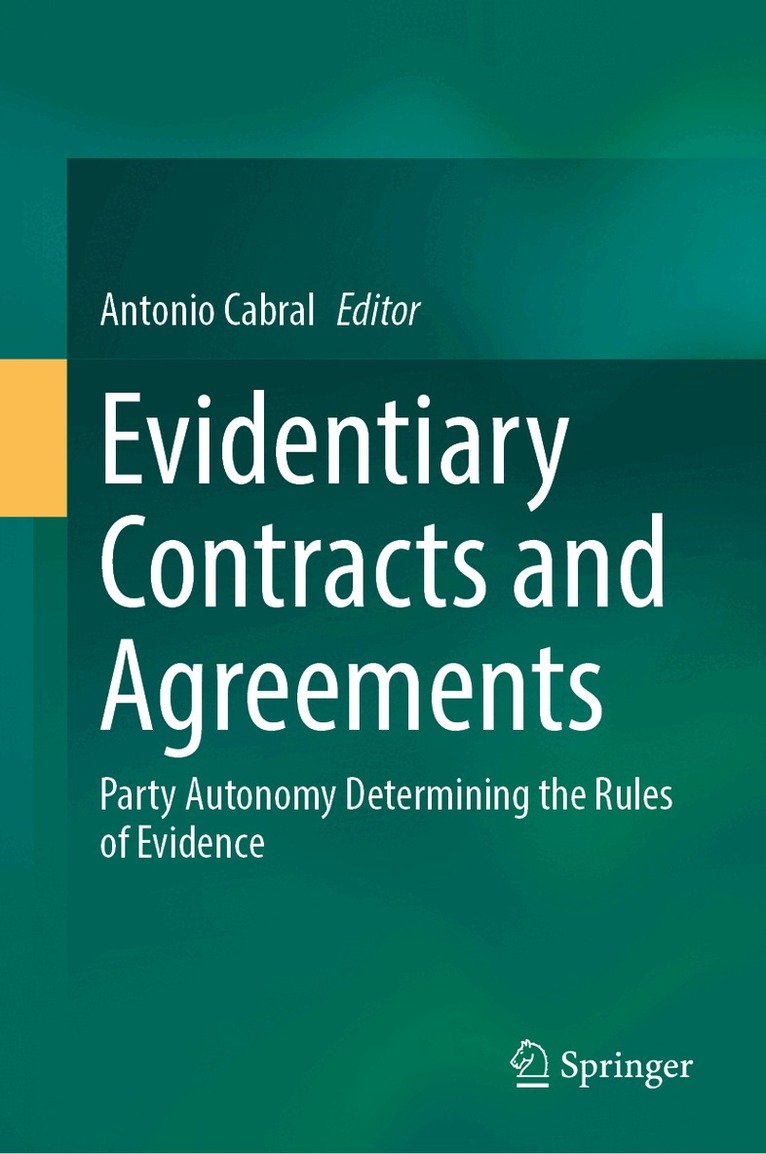
    Evidentiary Contracts and Agreements

    Party Autonomy Determining the Rules of Evidence

    AvAntonio Cabral

    Inbunden, Engelska, 2026

    1 992 kr

    Beställningsvara. Skickas inom 10-15 vardagar. Fri frakt över 249 kr.

    Beskrivning

    This book addresses the worldwide movement towards granting the parties to a contract the possibility of defining the rules of evidence in a pending or future court procedure. The so-called “evidentiary contracts and agreements” are contractual stipulations to derogate default statutory norms regarding evidence.Legal systems more inclined to see judges as central characters of litigation often emphasize jurisdictional powers to produce evidence ex officio. Judges should be entitled to bring evidence to the procedure on their own motion to search for the truth; justice and fairness of the final decisions about the facts should be assured as values of public interest, intrinsically dependent on judicial oversight. Therefore, parties should not be able to govern those rules according to their private goals and strategies.In other legal systems, parties have a stronger role as protagonists of the procedure and should take the more intense initiatives regarding the allegation of facts and the evidence supporting them. Party autonomy to shape the formalities of litigation should follow the waivability of substantive legal rights. Judges would then have a subsidiary role, and parties’ stipulations about evidence would reflect the unavoidable private interests involved, including the costs of evidence and its impacts on privacy, professional or trade secrets, and business confidential information.Across the globe, many contracts nowadays (both nationally and internationally) contain clauses through which the parties intend to control and regulate how evidence is to be taken, evaluated, and how it should or should not support the legal reasoning about facts in judicial decisions. In this backdrop, a comparative analysis of different jurisdictions can certainly be of interest to academics and practitioners. It seems of utmost relevance to debate the admissibility of evidentiary contracts and agreements, their conditions of validity, the role of judges vis-à-vis these stipulations, and the several types of legal transactions that can be entered into by the parties to determine the rules of evidence to be applied in a certain court procedure.

    Produktinformation

    • Utgivningsdatum:2026-08-10
    • Mått:155 x 235 x undefined mm
    • Format:Inbunden
    • Språk:Engelska
    • Antal sidor:246
    • Förlag:Springer Nature Switzerland AG
    • ISBN:9783032225597

    Utforska kategorier

    • Komparativ rätt inom Juridik
    • Rättsordning inom Juridik
    • Folkrätt inom Juridik

    Mer om författaren

    Prof. Dr. Antonio Cabral has his Habilitation at the University of São Paulo, a Ph.D. at the University of Rio de Janeiro in cooperation with the University of Munich, Germany (Ludwig-Maximilians-Universität), a Master of Laws at the University of Rio de Janeiro, and post-doctorate studies at the University of Paris 1 (Panthéon-Sorbonne). He is currently Vice-President of the International Association of Procedural Law and Co-Director of the Center for German and Comparative Law Studies at the University of Rio de Janeiro. He is a Professor of Law at the University of Rio de Janeiro, and has been a Visiting Professor at the Universities of Passau and Kiel (Germany), Ritsumeikan University (Kyoto, Japan), and Pontificia Universidad Catolica (Lima, Peru), as well as a Senior Lecturer at Peking University (China). He is the Co-Editor of the books “Contractualisation of Civil Litigation” (Intersentia, 2023) and “Shaping Civil Litigation Using Procedural Agreements” (Eleven, 2024), among many other books and articles on the subject.

    Innehållsförteckning

    • Evidentiary Agreements: Between Party Autonomy and Court Oversight by Antonio Cabral.- How Far Can Evidentiary Agreements Go? Limits and Possibilities of Contracting Regarding the Evidence from Chinese and Comparative Perspectives by (Hector) Zhixun Cao.- Contractual Clauses on the Burden of Proof and the Standard of Evidence by Magne Strandberg.- Limitations and Possibilities of Procedural Agreements on Standards of Proof in Brazilian Civil Procedural Law by Ravi Peixoto.- Stipulation of Facts and Evidentiary Agreements: Drafting and Interpretation Issues by Ignacio Soba Bracesco.- From Contract to Courtroom: Evidentiary Effects of Non-Disclosure Agreements by Wannes Vandenbussche and Niels Depaepe.- Evidentiary Agreements in Italy: Shaping Admissible Evidence Across Mediation, Negotiation, and Judicial Proceedings by Elena D’Alessandro.- Perspectives on Evidence and Party Autonomy in the Italian Legal System by Alessandro Fabbi.- Evidentiary Agreements in Structural Litigation by María Pía Molina and María Victoria Mosmann.- Evidentiary Waivers in Criminal Adjudication by Talia Fisher.- Law and Economics of Evidentiary Agreements in Civil Procedure by Clarisse Leite.- The Role of Pre-action Protocols in Facilitating Evidentiary Agreements in the English Civil Justice System and a Proposal for Brazil by Masood Ahmed.