• Fri frakt över 249 kr
  • •
  • Snabba leveranser
  • •
  • Billiga böcker
Kundservice

Du är på sajten för privatpersoner.

Företag, bibliotek eller offentlig verksamhet?

Du handlar på classic.bokus.com, där alla dina funktioner finns intakta.
Till classic.bokus.com
Bokus logotyp. Gå till startsidan.
  • Erbjudanden
  • Nyheter
  • Student
  • Topplistor
  • Barn & ungdom
  • Bokus Play
  • E-böcker
  • Pocketböcker
  • Spel & pussel

10% studentrabatt med kod TERM26

Sidfot

Mina sidor

    Hjälp

    • Kundservice
    • Vanliga frågor och svar
    • Frakt och leverans
    • Retur vid ångerrätt
    • Reklamera vara
    • Betalning
    • Köpvillkor
    • Allmänna villkor
    • Information om webbplatsens tillgänglighet

    Om Bokus

    • Om oss
    • Pressrum
    • För studenter
    • För företag
    • För bibliotek och offentlig verksamhet
    • För leverantörer
    • Hållbarhet

    Populärt

    • Aktuella erbjudanden
    • Presentkort
    • Studentlitteratur
    • Nya böcker
    • Topplistor
    • Signerade böcker
    • Engelska böcker

    Inspiration

    • Boktips
    • BookTok
    • Populära bokserier
    • Barnbokskaraktärer
    • Populära författare
    Logotyp för Bokus
    Följ oss på Facebook (extern länk)Följ oss på Instagram (extern länk)Följ oss på YouTube (extern länk)Följ oss på TikTok (extern länk)
    bokus @ CookiesAnpassa cookiesIntegritetspolicyKöpvillkor
    Till Citymail hemsida (extern länk)Till Budbee hemsida (extern länk)Till Postnord hemsida (extern länk)Till Schenker hemsida (extern länk)Till Early Bird hemsida (extern länk)Till Walleys hemsida (extern länk)
    1. Samhälle och politik
    2. Politik och statsskick
    3. Internationella relationer

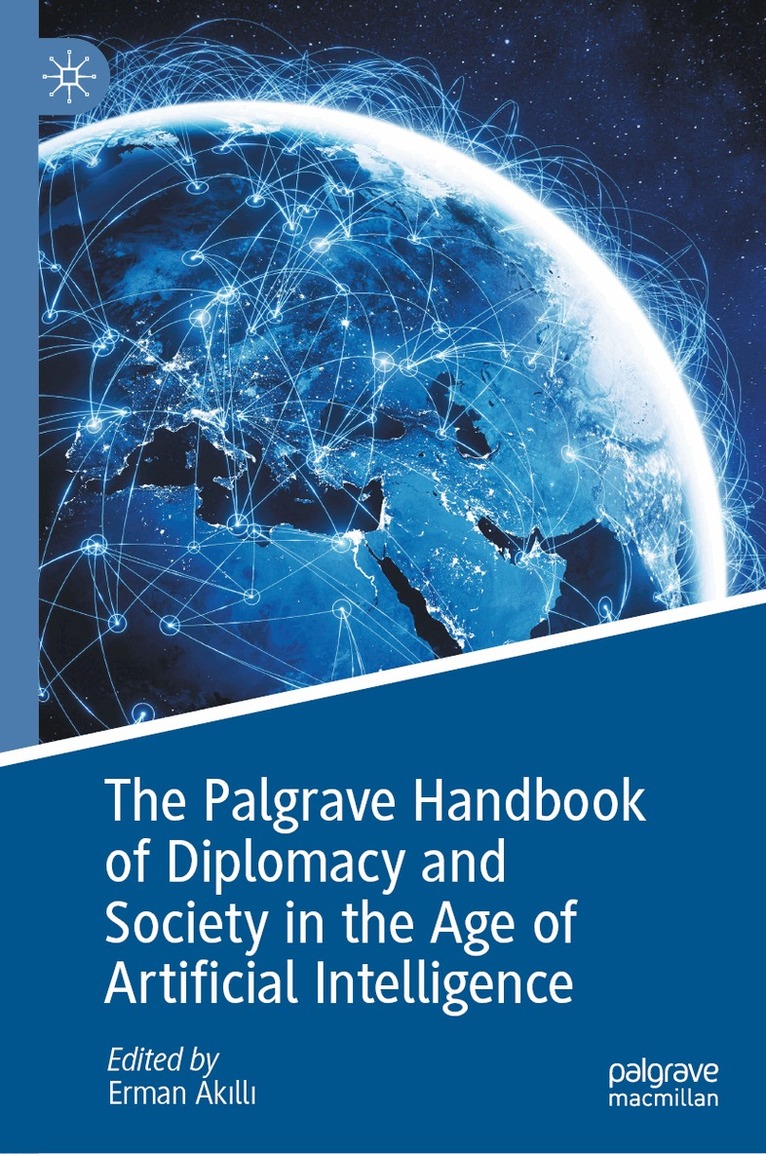
    Palgrave Handbook of Diplomacy and Society in the Age of Artificial Intelligence

    AvErman Akıllı

    Inbunden, Engelska, 2026

    2 650 kr

    Kommande

    Beskrivning

    This handbook provides a comprehensive and interdisciplinary examination of how artificial intelligence is transforming diplomacy, governance and the wider structures of society. Bringing together an international group of leading scholars, it maps the strategic, institutional, cultural, educational, economic and security implications of AI, offering an integrated framework for understanding technological change in the emerging technopolar world. The volume’s scope extends across both international and domestic spheres, revealing how AI redistributes global power, reshapes international order, alters diplomatic practice, and redefines major domains of social life including education, employment, media ecosystems, public discourse, cultural identity and national resilience. These themes are increasingly significant because AI now functions as a structuring force in world politics and societal transformation, influencing everything from international law and economic statecraft to learning systems, public opinion formation, crisis diplomacy and collective security. Although scholarship on AI has expanded rapidly, there remains no single handbook that synthesizes these diverse developments within a coherent, diplomacy and society centred analytical framework. The core problem this handbook addresses is the lack of an authoritative reference that captures AI’s simultaneous impact on global governance, diplomatic agency and societal evolution. Existing studies tend to illuminate individual sectors or policy challenges, yet a consolidated resource that brings together these intersecting transformations has been missing. This handbook fills that gap by providing conceptual foundations, comparative perspectives and policy-oriented insights that connect technological innovation with social change and international relations. The volume is designed for an international readership of scholars, graduate students, diplomats, policymakers, educators and professionals seeking a rigorous, interdisciplinary reference on how artificial intelligence is reshaping diplomacy and society.

    Produktinformation

    • Utgivningsdatum:2026-12-24
    • Mått:155 x 235 x undefined mm
    • Format:Inbunden
    • Språk:Engelska
    • Antal sidor:532
    • Förlag:Springer Nature Switzerland AG
    • ISBN:9783032276711

    Utforska kategorier

    • Internationella relationer inom Samhälle och politik
    • Artificiell intelligens inom Data och IT

    Mer om författaren

    Prof. Dr. Erman Akıllı is a faculty member in the Department of International Relations at Ankara Hacı Bayram Veli University. His research and teaching focus on artificial intelligence in foreign policy, digital diplomacy, the Turkic World, the Africa region, and public diplomacy along with its sub-branches. Over the course of his career, he has published articles in peer-reviewed journals indexed in SSCI and WoS, and has contributed as both author and editor to volumes released by leading academic publishers including Palgrave Macmillan, Routledge, and Springer Nature. His most recent and internationally acclaimed monograph, Cognitive Diplomacy and Digital Autonomy: Statecraft in the Age of Artificial Intelligence, was published by Palgrave Macmillan in 2025. In addition to his scholarly work, he serves as Assistant Editor of Insight Turkey, a journal published by the SETA Foundation, where he continues to contribute to debates on international affairs, diplomacy, and emerging technologies.

    Innehållsförteckning

    • Part I: Introduction.- Chapter 1: Introduction: Epistemology of Power, Digital Ontology of the State, and Technological Realism.- Part II: Navigating Sovereignty in the Digital Age: Classical Foundations and Emerging Frontiers.- Chapter 2: Navigating Sovereignty in the Digital Age: Classical Foundations and Emerging Frontiers.- Chapter 3: Statecraft in the Technopolar World: Digital Asymmetry, Digital Autonomy, and Cognitive Diplomacy.- Chapter 4: Artificial Intelligence and International Relations Theory: An Epistemological Bridge for Security, Inequality, and Legitimacy.- Chapter 5: Digital Trust Paradox: Digital Sovereignty and the Conditions of State Survival in the AI Era.- Part III: Global Governance, Law and Normative Competition.- Chapter 6: Governance of Artificial Intelligence and Normative Competition in International Systems: Comparative Analysis on the Basis of United Nations, EU, and US.- Chapter 7: The EU Artificial Intelligence Act in Action: Institutional Design, Compliance Duties, and Global Implications.- Chapter 8: The Role of Artificial Intelligence in International Law: Opportunities and Challenges.- Chapter 9: AI-Powered Neurotechnology: UNESCO’s Ethics Recommendations for Artificial Intelligence and Neurotechnology.- Part IV: Diplomacy, Communication and the Contest over Information.- Chapter 10: Digital Diplomacy in the Age of AI: An Examination from the Perspective of Disinformation.- Chapter 11: Social Media Diplomacy in the Age of Artificial Intelligence: Algorithmic Moderation and the Illusions of Neutrality.- Chapter 12: Can Digital Diplomats Offer a Solution to Controlling Propaganda Activities in the Age of Artificial Intelligence?.- Chapter 13: Public Opinion Analysis with Artificial Intelligence.- Chapter 14: AI, Central Banks, and National Resilience: Communication, Cyber Risk, and Coordination.- Part V: Power, Rivalry and Regional Pathways.- Chapter 15: Digital Minds, Global Discourses: The AI-Based Rivalry Between the United States and China.- Chapter 16: The Rise of the Artificial Intelligence Ecosystem in Africa: Pathways of Leading Countries, Cloudification, and the Redefinition of Digital Sovereignty.- Chapter 17: AI and Inequality: A Global South Perspective.- Chapter 18: AI as a Strategic Tool in South Korean Diplomacy: Balancing Efficiency, National Security, and Global Governance.- Chapter 19: Maritime Diplomacy in the Digital Age: The Case of India.- Chapter 20: Defense Artificial Intelligence (AI) in the Arab-Gulf Cooperation Council States (GCC): Opportunities, Tensions, and Risks.- Chapter 21: Regional Integration in the AI Era: Mapping the 2040 Vision of the Organization of Turkic States.- Part VI: Security, Conflict and Strategic Stability.- Chapter 22: Hybrid Threats in the Age of Artificial Intelligence: Security, Terrorism and Strategic Instability.- Chapter 23: The Importance and Ethical Issue of Artificial Intelligence Assisted Autonomous Weapons.- Chapter 24: The Role of Artificial Intelligence in Conflict Resolution and Peacebuilding.- Chapter 25: The Impact of Artificial Intelligence on Peacebuilding and Multitrack Diplomacy.- Chapter 26: Countering Extremism Through Artificial Intelligence.- Part VII: Society, Knowledge and Human Futures.- Chapter 27: Revolution in Media: From Pens to Code.- Chapter 28: Future of Employment in the Age of Artificial Intelligence.- Chapter 29: Artificial Intelligence and Econometric Modelling of Youth Labour Force Participation in Türkiye: Evidence from the 2024 HLFS with Logit and FT-Transformer.- Chapter 30: AI and the Future of Education: Knowledge Systems, Literacy and Learning Societies.- Chapter 31: AI, Language and Identity: Translation, Meaning and Cognitive Frames.- Chapter 32: Cultural Context of Digital Sovereignty: An Assessment of the East West Divide in the Global Digital Entertainment (Streaming Services) Industry.- Chapter 33: Engineering Issues and AI in International Relations.- Chapter 34: Bridging the Global AI Gap: A Framework for Equitable Development and Diplomacy.- Part VIII: Conclusion.- Chapter 35: Conclusion: The Epistemological Bridge and the Future of Digital Statecraft..