Inbunden, Engelska, 2026
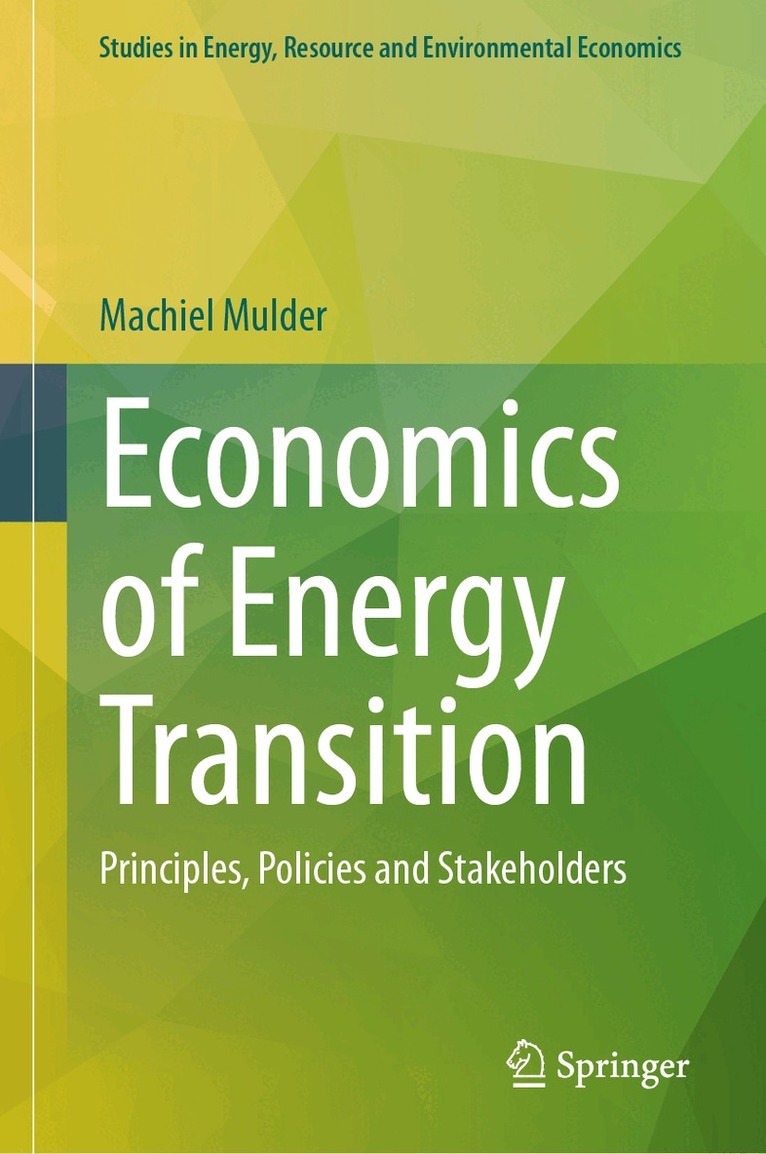
Economics of Energy Transition
1039 kr
Kommande
Beskrivning
This textbook provides a clear and comprehensive economic perspective on energy transition, highlighting that it involves more than just replacing fossil fuels with renewable energy. It discusses critical interventions in the optimizing decisions of economic agents to achieve a reliable and sustainable future.Students learn about the conditions under which such interventions can improve societal welfare, building on the fundamental economic principle that optimal outcomes arise when coordination mechanisms function effectively.The book explores key motivations and drivers behind energy transition policies, including the depletion of energy resources, energy security, environmental impacts of fossil fuel use, and the challenges of high and volatile energy prices. It provides detailed analyses of the efficiency, effectiveness, and distributional effects of various government policy measures, such as capacity mechanisms, energy taxation, renewable energy support schemes, and emissions trading systems.In addition to a societal and governmental perspective, the book discusses the roles of stakeholders within energy systems – such as producers, grid operators and consumers, as well stakeholders within organizations—such as shareholders, employees, and customers—in driving the energy transition. While grounded in economic principles, it integrates insights from other disciplines, including engineering, law, and social sciences, to provide a holistic understanding of energy systems and their transformation.Designed for students and scholars, this book equips readers with the knowledge and tools to understand the economic principles underpinning a reliable and sustainable energy future.
Produktinformation
- Utgivningsdatum: 2026-08-29
- Mått: 155 x 235 x undefined mm
- Vikt: 627 g
- Format: Inbunden
- Språk: Engelska
- Serie: Studies in Energy, Resource and Environmental Economics
- Antal sidor: 275
- Förlag: Springer Nature Switzerland AG
- ISBN: 9783032290090
Utforska kategorier
Betyg & recensioner
0 recensioner
Inga recensioner tillgängliga.