• Fri frakt över 249 kr
  • •
  • Snabba leveranser
  • •
  • Billiga böcker
Kundservice

Du är på sajten för privatpersoner.

Företag, bibliotek eller offentlig verksamhet?

Du handlar på classic.bokus.com, där alla dina funktioner finns intakta.
Till classic.bokus.com
Bokus logotyp. Gå till startsidan.
  • Erbjudanden
  • Nyheter
  • Student
  • Topplistor
  • Barn & ungdom
  • Bokus Play
  • E-böcker
  • Pocketböcker
  • Spel & pussel

10% rabatt på allt med kod: NYSTART10 →

Sidfot

Mina sidor

    Hjälp

    • Kundservice
    • Vanliga frågor och svar
    • Frakt och leverans
    • Retur vid ångerrätt
    • Reklamera vara
    • Betalning
    • Köpvillkor
    • Allmänna villkor
    • Information om webbplatsens tillgänglighet

    Om Bokus

    • Om oss
    • Pressrum
    • För studenter
    • För företag
    • För bibliotek och offentlig verksamhet
    • För leverantörer
    • Hållbarhet

    Populärt

    • Aktuella erbjudanden
    • Presentkort
    • Studentlitteratur
    • Nya böcker
    • Topplistor
    • Signerade böcker
    • Engelska böcker

    Inspiration

    • Boktips
    • BookTok
    • Populära bokserier
    • Barnbokskaraktärer
    • Populära författare
    Logotyp för Bokus
    Följ oss på Facebook (extern länk)Följ oss på Instagram (extern länk)Följ oss på YouTube (extern länk)Följ oss på TikTok (extern länk)
    bokus @ CookiesAnpassa cookiesIntegritetspolicyKöpvillkor
    Till Citymail hemsida (extern länk)Till Budbee hemsida (extern länk)Till Postnord hemsida (extern länk)Till Schenker hemsida (extern länk)Till Early Bird hemsida (extern länk)Till Walleys hemsida (extern länk)
    1. Språk och ordböcker
    2. Språkvetenskap och lingvistik

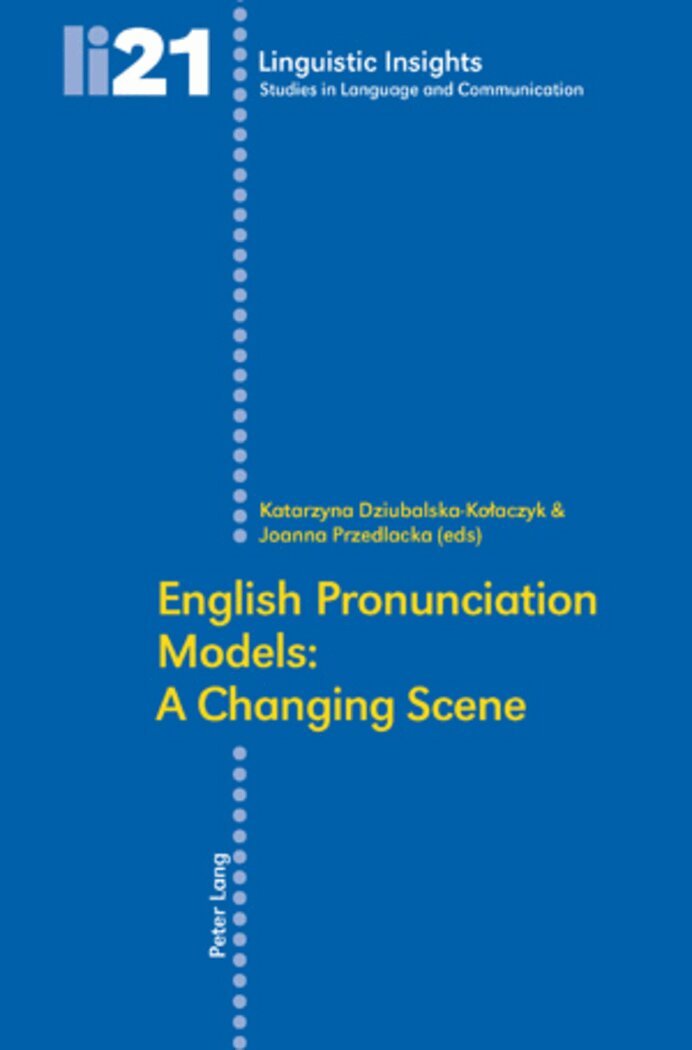
    English Pronunciation Models: A Changing Scene

    Second Edition

    AvKatarzyna Dziubalska-Kolaczyk,Joanna Przedlacka

    Häftad, Engelska, 2008

    Del 21 i serien Linguistic Insights

    1 143 kr

    Beställningsvara. Skickas inom 5-8 vardagar. Fri frakt över 249 kr.

    Beskrivning

    The choice of a pronunciation model for the 21st century learner has become a major issue of debate among applied linguists concerned with teaching English. The standard pronunciation models – Received Pronunciation and General American – have recently been confronted with a new proposal of a Lingua Franca Core (LFC) or English as a Lingua Franca (ELF), put forward as a didactic priority in teaching English pronunciation to foreigners. This volume, which includes selected contributions from the Poznań Linguistic Meetings of 2003 and 2004, does not intend to present yet another model, but sets out to place the teaching and learning of English pronunciation in the context of the 21st century. As the needs of English users are clearly changing fast in the globalizing world, the question is to what extent, if at all, models of pronunciation have been able to keep up with them, and whether they in fact should do so. Thus, key issues in the integration of pronunciation into English as L2 curricula are explored.

    Produktinformation

    • Utgivningsdatum:2008-11-18
    • Mått:150 x 225 x 30 mm
    • Vikt:660 g
    • Format:Häftad
    • Språk:Engelska
    • Serie:Linguistic Insights
    • Antal sidor:488
    • Upplaga:2
    • Förlag:Verlag Peter Lang
    • ISBN:9783039116829

    Utforska kategorier

    • Språkvetenskap och lingvistik inom Språk och ordböcker
    • Studieteknik och inlärningsförmåga inom Psykologi och pedagogik

    Mer om författaren

    The Editors: Katarzyna Dziubalska-Kołaczyk is professor ordinarius and head of the School of English at Adam Mickiewicz University, Poznań, Poland. She has published extensively on phonology and phonetics, and second language acquisition. Joanna Przedlacka has lectured on language and linguistics, including varieties and history of English, sociolinguistics, phonetics and phonology at the English Departments of Warsaw University and Pedagogical University in Warsaw, Poland. She obtained her Ph.D. from the University of Warsaw for her study of teenage speech of the Home Counties.

    Innehållsförteckning

    • Contents: Joanna Przedlacka: Models and Myth: Updating the (Non)standard Accents – Dennis R. Preston: How Can You Learn a Language that Isn’t There – Barbara Seidlhofer: Language Variation and Change: The Case of English as a Lingua Franca – Peter Trudgill: Native Speaker Segmental Phonological Models and the English Lingua Franca Core – J. C. Wells: Goals in Teaching English Pronunciation – Sylwia Scheuer: Why Native Speakers are (Still) Relevant – Włodzimierz Sobkowiak: Why Not LFC? – Jolanta Szpyra-Kozłowska: Lingua Franca Core, Phonetic Universals and the Polish Context – Geoffrey Schwartz: The Lingua Franca Core and the Phonetics-Phonology Interface – Jennifer Jenkins: Misinterpretation, Bias, and Resistance to Change: The Case of the Lingua Franca Core – Peter Trudgill: Finding the Speaker-listener Equilibrium: Segmental Phonological Models in EFL – Ewa Waniek-Klimczak/Karol Klimczak: Target in Speech Development: Learners’ Views – Katarzyna Janicka/Małgorzata Kul/Jarosław Weckwerth: Polish Students’ Attitudes to Native English Accents as Models for EFL Pronunciation – Michał Remiszewski: Lingua Franca Core: Picture Incomplete – Esther Grabe/Greg Kochanski/John Coleman: The Intonation of Native Accent Varieties in the British Isles: Potential for Miscommunication? – John M. Levis: Comparing Apples and Oranges? Pedagogical Approaches to Intonation in British and American English – Jane Setter: Communicative Patterns of Intonation in L2 English Teaching and Learning: The Impact of Discourse Approaches – Peter Roach: Representing the English Model – J. C. Wells: Abbreviatory Conventions in Pronunciation Dictionaries – Clive Upton/Lawrence M. Davis/Charles L. Houck: Modelling RP: A Variationist Case – Magdalena Wrembel: An Overview of English Pronunciation Teaching Materials. Patterns of Change: Model Accents, Goals and Priorities – Dafydd Gibbon: Afterword: Navigating Pronunciation in Search of the Golden Fleece.