• Fri frakt över 249 kr
  • •
  • Snabba leveranser
  • •
  • Billiga böcker
Kundservice

Du är på sajten för privatpersoner.

Företag, bibliotek eller offentlig verksamhet?

Du handlar på classic.bokus.com, där alla dina funktioner finns intakta.
Till classic.bokus.com
Bokus logotyp. Gå till startsidan.
  • Erbjudanden
  • Student
  • Topplistor
  • Barn & ungdom
  • Bokus Play
  • E-böcker
  • Ljudböcker
  • Pocketböcker
  • Spel och pussel

Pocketfynda! Hundratals böcker för 49 kr/st →

Sidfot

Mina sidor

    Hjälp

    • Kundservice
    • Vanliga frågor och svar
    • Frakt och leverans
    • Retur vid ångerrätt
    • Reklamera vara
    • Betalning
    • Köpvillkor
    • Allmänna villkor
    • Information om webbplatsens tillgänglighet

    Om Bokus

    • Om oss
    • Pressrum
    • För studenter
    • För företag
    • För bibliotek och offentlig verksamhet
    • För leverantörer
    • Hållbarhet

    Populärt

    • Aktuella erbjudanden
    • Presentkort
    • Studentlitteratur
    • Nya böcker
    • Topplistor
    • Signerade böcker
    • Engelska böcker

    Inspiration

    • Boktips
    • BookTok
    • Barnbokskaraktärer
    • Populära författare
    Logotyp för Bokus
    Följ oss på Facebook (extern länk)Följ oss på Instagram (extern länk)Följ oss på YouTube (extern länk)Följ oss på TikTok (extern länk)
    bokus @ CookiesAnpassa cookiesIntegritetspolicyKöpvillkor
    Till Citymail hemsida (extern länk)Till Budbee hemsida (extern länk)Till Postnord hemsida (extern länk)Till Schenker hemsida (extern länk)Till Early Bird hemsida (extern länk)Till Walleys hemsida (extern länk)
    1. Data och IT
    2. Systemvetenskap och AI

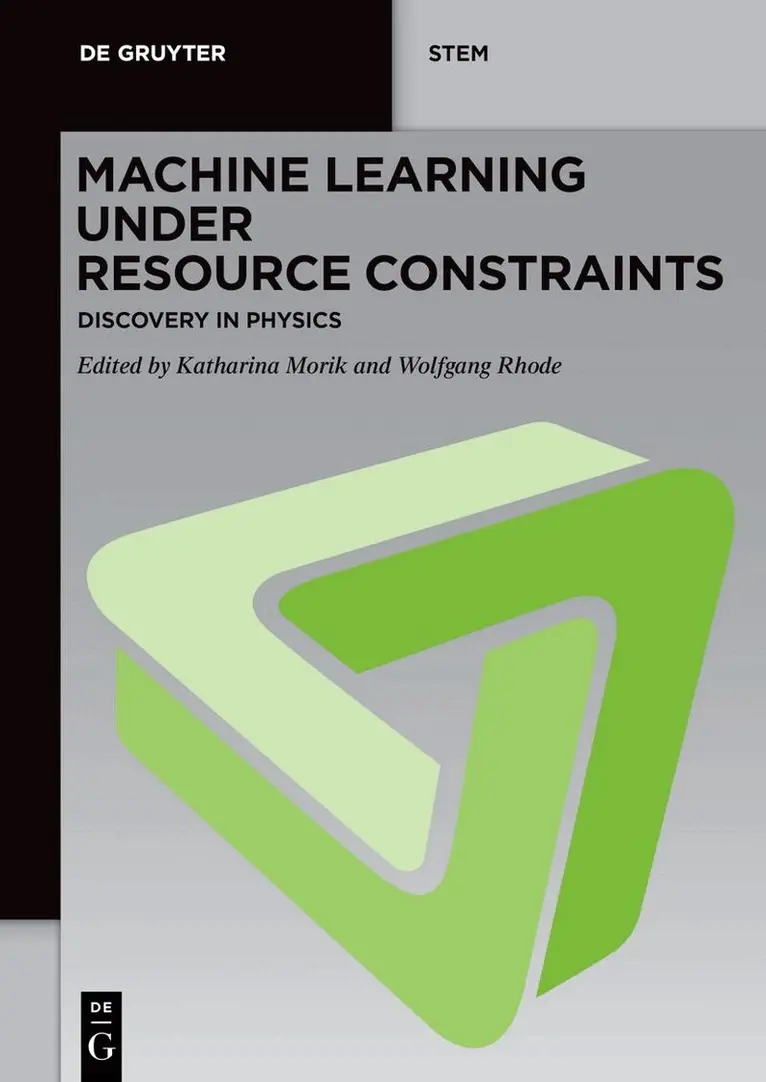
    Machine Learning under Resource Constraints - Discovery in Physics

    AvKatharina Morik,Wolfgang Rhode

    Häftad, Engelska, 2022

    Del i serien De Gruyter STEM

    1 459 kr

    Beställningsvara. Skickas inom 5-8 vardagar. Fri frakt över 249 kr.

    Beskrivning

    Machine Learning under Resource Constraints addresses novel machine learning algorithms that are challenged by high-throughput data, by high dimensions, or by complex structures of the data in three volumes. Resource constraints are given by the relation between the demands for processing the data and the capacity of the computing machinery. The resources are runtime, memory, communication, and energy. Hence, modern computer architectures play a significant role. Novel machine learning algorithms are optimized with regard to minimal resource consumption. Moreover, learned predictions are executed on diverse architectures to save resources. It provides a comprehensive overview of the novel approaches to machine learning research that consider resource constraints, as well as the application of the described methods in various domains of science and engineering. Volume 2 covers machine learning for knowledge discovery in particle and astroparticle physics. Their instruments, e.g., particle detectors or telescopes, gather petabytes of data. Here, machine learning is necessary not only to process the vast amounts of data and to detect the relevant examples efficiently, but also as part of the knowledge discovery process itself. The physical knowledge is encoded in simulations that are used to train the machine learning models. At the same time, the interpretation of the learned models serves to expand the physical knowledge. This results in a cycle of theory enhancement supported by machine learning.

    Produktinformation

    • Utgivningsdatum:2022-12-31
    • Mått:170 x 240 x undefined mm
    • Vikt:618 g
    • Format:Häftad
    • Språk:Engelska
    • Serie:De Gruyter STEM
    • Antal sidor:363
    • Förlag:De Gruyter
    • ISBN:9783110785951

    Utforska kategorier

    • Systemvetenskap och AI inom Data och IT
    • Informationsteknik: allmänt inom Data och IT
    • Databaser inom Data och IT

    Mer om författaren

    Katharina Morik received her doctorate from the University of Hamburg in 1981 and her habilitation from the TU Berlin in 1988. In 1991, she established the chair of Artificial Intelligence at the TU Dortmund University. She is a pioneer of machine learning contributing substantially to inductive logic programming, support vector machines, probabilistic graphical models. In 2011, she acquired the Collaborative Research Center SFB 876 "Providing Information by Resource-Constrained Data Analysis", of which she is the spokesperson. and computing architectures together so that machine learning models may be executed or even trained on resource restricted devices. It consists of 12 projects and a graduate school for more than 50 Ph. D. students. She is a spokesperson of the Competence Center for Machine Learning Rhein Ruhr (ML2R) and coordinator of the German competence centers for AI. She is the author of more than 200 publications in prestigious journals and conferences. She was a founding member, Program Chair and Vice Chair of the conference IEEE International Conference on Data Mining (ICDM) and is a member of the steering committee of and was Program Chair of ECML PKDD. Together with Volker Markl, Katharina Morik heads the working group "Technological Pioneers" of the platform "Learning Systems and Data Science" of the BMBF. Prof. Morik has been a member of the Academy of Technical Sciences since 2015 and of the North Rhine-Westphalian Academy of Sciences and Arts since 2016. She has been awarded Fellow of the German Society of Computer Science GI e.V. in 2019. Wolfgang Rhode has been Professor of Astroparticle Physics at the TU Dortmund University since 2004. After studying physics and philosophy in Freiburg and Wuppertal, he received a PhD in both subjects. He is active in the astroparticle experiments AMANDA, IceCube, MAGIC, FACT and CTA as well as in radio astronomy, throughout with a special focus on data analysis and Monte Carlo development using machine learning methods as developed in the CRC 876. In addition to being an interdisciplinary teacher in philosophy, he was co-founder of the working group "Physics and Philosophy" in in the German Physical Society (DPG) in 2004. As a consequence of the long year cooperation with K. Morik on machine learning in astroparticle physics within the CRC 876, both became co-founder of the DPG-working group "Physics, Modern Information Technology and Artificial Intelligence" in 2017.