• Fri frakt över 249 kr
  • •
  • Snabba leveranser
  • •
  • Billiga böcker
Kundservice

Du är på sajten för privatpersoner.

Företag, bibliotek eller offentlig verksamhet?

Du handlar på classic.bokus.com, där alla dina funktioner finns intakta.
Till classic.bokus.com
Bokus logotyp. Gå till startsidan.
  • Erbjudanden
  • Nyheter
  • Student
  • Topplistor
  • Barn & ungdom
  • Bokus Play
  • E-böcker
  • Pocketböcker
  • Spel & pussel

10% studentrabatt med kod TERM26

Sidfot

Mina sidor

    Hjälp

    • Kundservice
    • Vanliga frågor och svar
    • Frakt och leverans
    • Retur vid ångerrätt
    • Reklamera vara
    • Betalning
    • Köpvillkor
    • Allmänna villkor
    • Information om webbplatsens tillgänglighet

    Om Bokus

    • Om oss
    • Pressrum
    • För studenter
    • För företag
    • För bibliotek och offentlig verksamhet
    • För leverantörer
    • Hållbarhet

    Populärt

    • Aktuella erbjudanden
    • Presentkort
    • Studentlitteratur
    • Nya böcker
    • Topplistor
    • Signerade böcker
    • Engelska böcker

    Inspiration

    • Boktips
    • BookTok
    • Populära bokserier
    • Barnbokskaraktärer
    • Populära författare
    Logotyp för Bokus
    Följ oss på Facebook (extern länk)Följ oss på Instagram (extern länk)Följ oss på YouTube (extern länk)Följ oss på TikTok (extern länk)
    bokus @ CookiesAnpassa cookiesIntegritetspolicyKöpvillkor
    Till Citymail hemsida (extern länk)Till Budbee hemsida (extern länk)Till Postnord hemsida (extern länk)Till Schenker hemsida (extern länk)Till Early Bird hemsida (extern länk)Till Walleys hemsida (extern länk)
    1. Historia och arkeologi
    2. Historia
    3. Historia: särskilda händelser och ämnen
    4. Kolonialism och imperialism

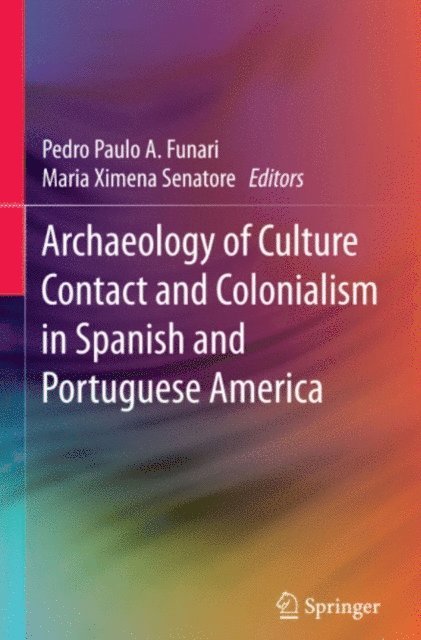
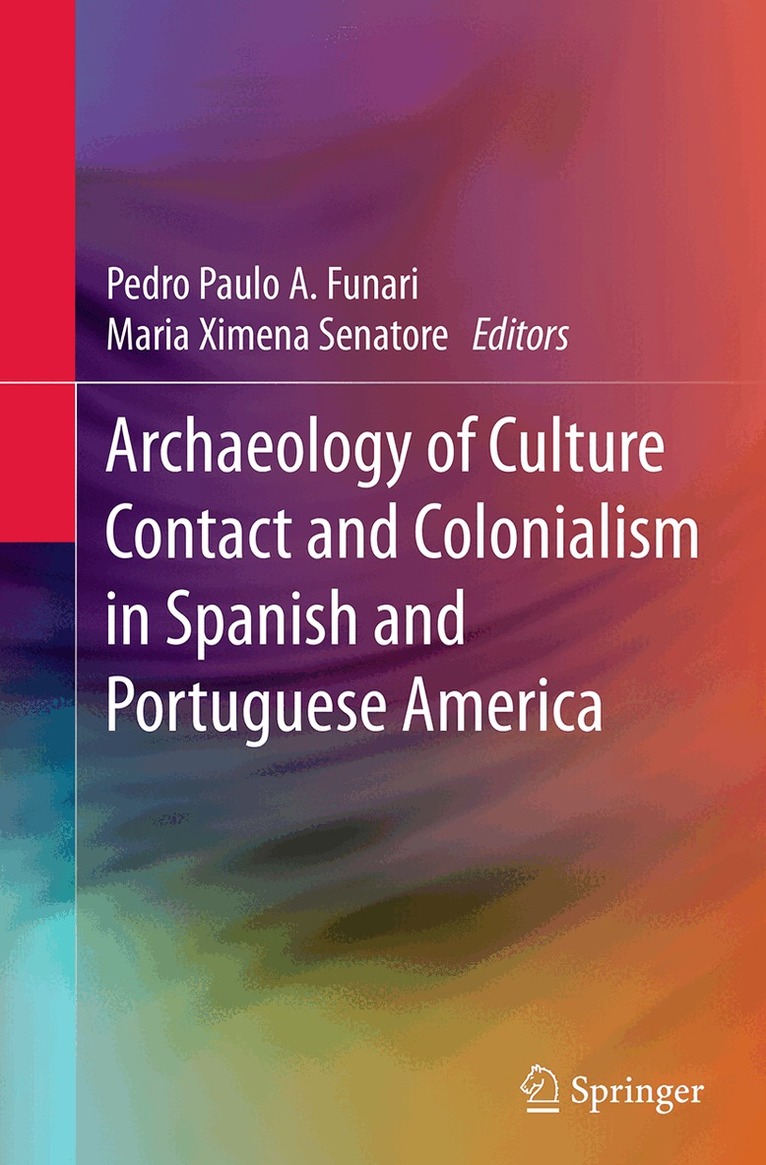
    Archaeology of Culture Contact and Colonialism in Spanish and Portuguese America

    AvPedro Paulo A. Funari,Maria Ximena Senatore

    Inbunden, Engelska, 2014

    1 124 kr

    Beställningsvara. Skickas inom 10-15 vardagar. Fri frakt över 249 kr.

    Beskrivning

    The volume contributes to disrupt the old grand narrative of cultural contact and colonialism in Spanish and Portuguese America in a wide and complete sense. This edited volume aims at exploring contact archaeology in the modern era. Archaeology has been exploring the interaction of peoples and cultures from early times, but only in the last few decades have cultural contact and material world been recognized as crucial elements to understanding colonialism and the emergence of modernity. Modern colonialism studies pose questions in need of broader answers. This volume explores these answers in Spanish and Portuguese America, comprising present-day Latin America and formerly Spanish territories now part of the United States. The volume addresses studies of the particular features of Spanish-Portuguese colonialism, as well as the specificities of Iberian colonization, including hybridism, religious novelties, medieval and modern social features, all mixed in a variety of ways unique and so different from other areas, particularly the Anglo-Saxon colonial thrust. Cultural contact studies offer a particularly in-depth picture of the uniqueness of Latin America in terms of its cultural mixture. This volume particularly highlights local histories, revealing novelty, diversity, and creativity in the conformation of the new colonial realities, as well as presenting Latin America as a multicultural arena, with astonishing heterogeneity in thoughts, experiences, practices, and, material worlds.

    Produktinformation

    • Utgivningsdatum:2014-11-25
    • Mått:155 x 235 x 26 mm
    • Vikt:742 g
    • Format:Inbunden
    • Språk:Engelska
    • Antal sidor:369
    • Upplaga:2015
    • Förlag:Springer International Publishing AG
    • ISBN:9783319080680

    Utforska kategorier

    • Kolonialism och imperialism inom Historia och arkeologi
    • Arkeologiska perioder och områden inom Historia och arkeologi
    • Amerikas historia inom Historia och arkeologi

    Mer om författaren

    Pedro Paulo A. Funari is professor of historical archaeology at the University of Campinas, Brazil, former World Archaeological Congress secretary, author and editor of several books, such as Historical archaeology, back from the edge (London, Routledge, 1999), Global Archaeological Theory (New York, Springer, 2005), Memories from Darkness, the archaeology of repression and resistance in Latin America (New York, Springer, 2009), with fieldwork in Brazil, England, Wales, Spain and Italy (several in each country). Funari is member of the editorial boards of several journals, notably the International Journal of Historical Archaeology (New York), Journal of Material Culture (London), Public Archaeology (London, UCL) and is referee in several other journals, like Current Anthropology. Funari has published papers in most prestigious journals, such as Historical Archaeology, Current Anthropology, Archaeologies, Révue Archéologique, Antiquity, American Antiquity, American Journal of Archaeology, and has edited archaeological encyclopedias. María Ximena Senatore is a National Researcher at CONICET (National Council of Scientific and Technological Research), Argentina. Professor on Historical Archaeology and Heritage at University of Buenos Aires and National University of Patagonia Austral. Senatore has a degree in Archaeology (University of Buenos Aires, 1995) and PhD in History (2003, University of Valladolid, Spain). She is running research projects on Spanish Colonialism in South Patagonia, and Capitalism Expansion to Antarctica. Senatore has published papers in several journals such as International Journal of Historical Archaeology, Historical Archaeology, Polar Record, and 3 books in Argentina and Brazil.

    Innehållsförteckning

    • Foreword 1: Alfredo González-Ruibal.- Foreword 2: Neil Silberman.- Chapter 1: Introduction: Disrupting the grand narrative of Spanish and Portuguese colonialism Maria Ximena Senatore and Pedro P. A. Funari.- Section I: Posing questions in cultural contact and colonialism.- Chapter 2: The Atlantic expansion and the Portuguese material culture in the Early Modern Age: an archaeological approach André Teixeira, Joana Bento Torres and José Bettencourt.- Chapter 3: The early colonisation of the Rio de la Plata basin and the settlement of Sancti Spiritus,  Agustin Azkarate and Sergio Escribano Ruiz.- Chapter 4: Technological transformations: adaptationist, relativist, and economic models in Mexico and Venezuela Enrique Rodríguez-Alegría, Ana María Navas Méndez and Franz Scaramelli.- Chapter 5: Tribute, Antimarkets and Consumption: An Archaeology of Capitalist Effects in Colonial Guatemala Guido Pezzarossi.- Chapter 6: Ek Chuah encounters the holy ghost in the colonial labyrinth:  ideology and commerce on both sides of the Spanish invasion Susan Kepecs.- Chapter 7: Archaeology of contact in Cuba, a reassessment Lourdes Domínguez and Pedro Paulo A. Funari.-Section II: Local histories: diversity, creativity and novelty.- Chapter 8: Dress, faith, and medicine: Caring for the body in 18th-century Spanish Texas Diana DiPaolo Loren.- Chapter 9: Uncommon Commodities: Articulating the Global and the Local on the Orinoco Frontier Franz Scaramelli and Kay Scaramelli.- Chapter 10: Women in Spanish Colonial Contexts Nan A. Rothschild.-Chapter 11: Material culture, mestizage, and social segmentation in Santarém, northern Brazil Luís Cláudio Pereira Symanski  and Denise Maria Cavalcante Gomes.-Chapter 12: Modernity at the edges of the Spanish Enlightenment. Novelty and material culture in Floridablanca Colony (Patagonia, 18th century) Maria Ximena Senatore.- Section III: New realities and material worlds.- Chapter 13: Basque fisheries in Eastern Canada, a special case of cultural encounter in the colonizing of North America Sergio Escribano-Ruiz and Agustín Azkarate.- Chapter 14: The Spanish occupation of the Central Lowlands of South America: Santa Cruz de la Sierra la Vieja Horacio Chiavazza.- Chapter 15: Nautical landscapes in the 16th century: an archaeological approach to the coast of São Paulo (Brazil)Paulo Fernando Bava de Camargo.- Chapter 16: Fort San José, a Remote Spanish Outpost in Northwest Florida, 1700-1721 Julie Rogers Saccente and Nancy Marie White.- Chapter 17: Striking it Rich in the Americas' First Boom Town:  Economic Activity at Concepción de la Vega (Hispaniola) 1495-1564 Pauline Kulstad.- Chapter 18: Brazil Baroque, Baroque mestizo: heritage, archaeology, modernism and the “Estado Novo” in the Brazilian context Rita Juliana Soares Poloni.- Final Comments.- Chapter 19: Narratives of Colonialism, Grand and Not-So-Grand: A Critical Reflection on the Archaeology of the Spanish and Portuguese Americas Barbara L. Voss.