
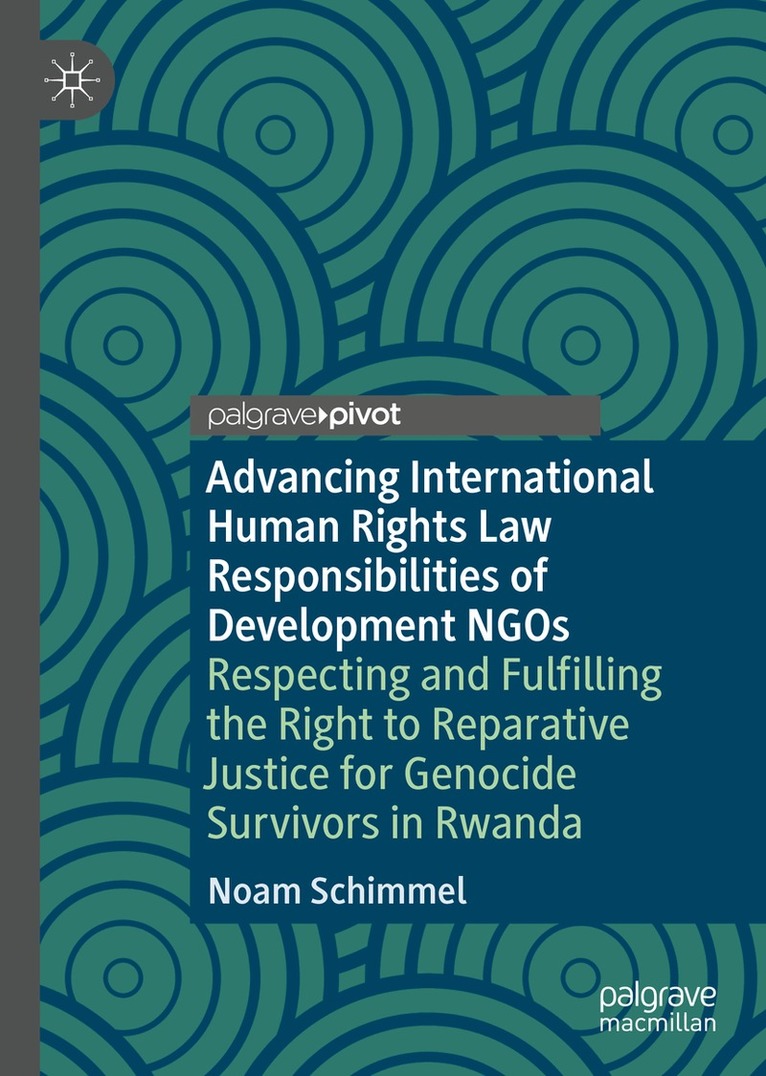
Advancing International Human Rights Law Responsibilities of Development NGOs
Noam Schimmel
Inbunden, 2020
612 kr
1 137 kr
Beställningsvara. Skickas inom 10-15 vardagar. Fri frakt över 249 kr.
Noam Schimmel
Inbunden, 2020
612 kr

Noam Schimmel
807 kr



J. Atkins, A. Finlayson, J. Martin, N. Turnbull
Inbunden, 2014
1 214 kr

Mihaela Mihai, Mathias Thaler, Mihaela Mihai, Mathias Thaler
Inbunden, 2014
540 kr

Kenneth A. Loparo, Marouf Hasian, Jr., Kenneth A Loparo
Inbunden, 2014
572 kr

Andrew S. Crines, Timothy Heppell, Peter Dorey
Inbunden, 2016
1 433 kr

Heather Ashley Hayes
Inbunden, 2016
1 104 kr

Andrew S. Crines, David S. Moon, Robert Lehrman
Inbunden, 2016
556 kr


Claudia Wiesner, Taru Haapala, Kari Palonen
Inbunden, 2017
1 545 kr


Noam Schimmel
Inbunden, 2020
612 kr
Noam Schimmel
807 kr






Francisco J. Bellido
Häftad, 2025
1 324 kr
1 137 kr
Beställningsvara. Skickas inom 10-15 vardagar. Fri frakt över 249 kr.
Noam Schimmel
Inbunden, 2020
612 kr
Noam Schimmel
807 kr
J. Atkins, A. Finlayson, J. Martin, N. Turnbull
Inbunden, 2014
1 214 kr
Mihaela Mihai, Mathias Thaler, Mihaela Mihai, Mathias Thaler
Inbunden, 2014
540 kr
Kenneth A. Loparo, Marouf Hasian, Jr., Kenneth A Loparo
Inbunden, 2014
572 kr
Andrew S. Crines, Timothy Heppell, Peter Dorey
Inbunden, 2016
1 433 kr
Heather Ashley Hayes
Inbunden, 2016
1 104 kr
Andrew S. Crines, David S. Moon, Robert Lehrman
Inbunden, 2016
556 kr
Claudia Wiesner, Taru Haapala, Kari Palonen
Inbunden, 2017
1 545 kr
Noam Schimmel
Inbunden, 2020
612 kr
Noam Schimmel
807 kr
Francisco J. Bellido
Häftad, 2025
1 324 kr