• Fri frakt över 249 kr
  • •
  • Snabba leveranser
  • •
  • Billiga böcker
Kundservice

Du är på sajten för privatpersoner.

Företag, bibliotek eller offentlig verksamhet?

Du handlar på classic.bokus.com, där alla dina funktioner finns intakta.
Till classic.bokus.com
Bokus logotyp. Gå till startsidan.
  • Erbjudanden
  • Nyheter
  • Student
  • Topplistor
  • Barn & ungdom
  • Bokus Play
  • E-böcker
  • Pocketböcker
  • Spel & pussel

Må bättre, för mindre! Upp till 50% rabatt på hälsoböcker

Sidfot

Mina sidor

    Hjälp

    • Kundservice
    • Vanliga frågor och svar
    • Frakt och leverans
    • Retur vid ångerrätt
    • Reklamera vara
    • Betalning
    • Köpvillkor
    • Allmänna villkor
    • Information om webbplatsens tillgänglighet

    Om Bokus

    • Om oss
    • Pressrum
    • För studenter
    • För företag
    • För bibliotek och offentlig verksamhet
    • För leverantörer
    • Hållbarhet

    Populärt

    • Aktuella erbjudanden
    • Presentkort
    • Studentlitteratur
    • Nya böcker
    • Topplistor
    • Signerade böcker
    • Engelska böcker

    Inspiration

    • Boktips
    • BookTok
    • Populära bokserier
    • Barnbokskaraktärer
    • Populära författare
    Logotyp för Bokus
    Följ oss på Facebook (extern länk)Följ oss på Instagram (extern länk)Följ oss på YouTube (extern länk)Följ oss på TikTok (extern länk)
    bokus @ CookiesAnpassa cookiesIntegritetspolicyKöpvillkor
    Till Citymail hemsida (extern länk)Till Budbee hemsida (extern länk)Till Postnord hemsida (extern länk)Till Schenker hemsida (extern länk)Till Early Bird hemsida (extern länk)Till Walleys hemsida (extern länk)
    1. Djur och Natur
    2. Naturböcker
    3. Växtböcker

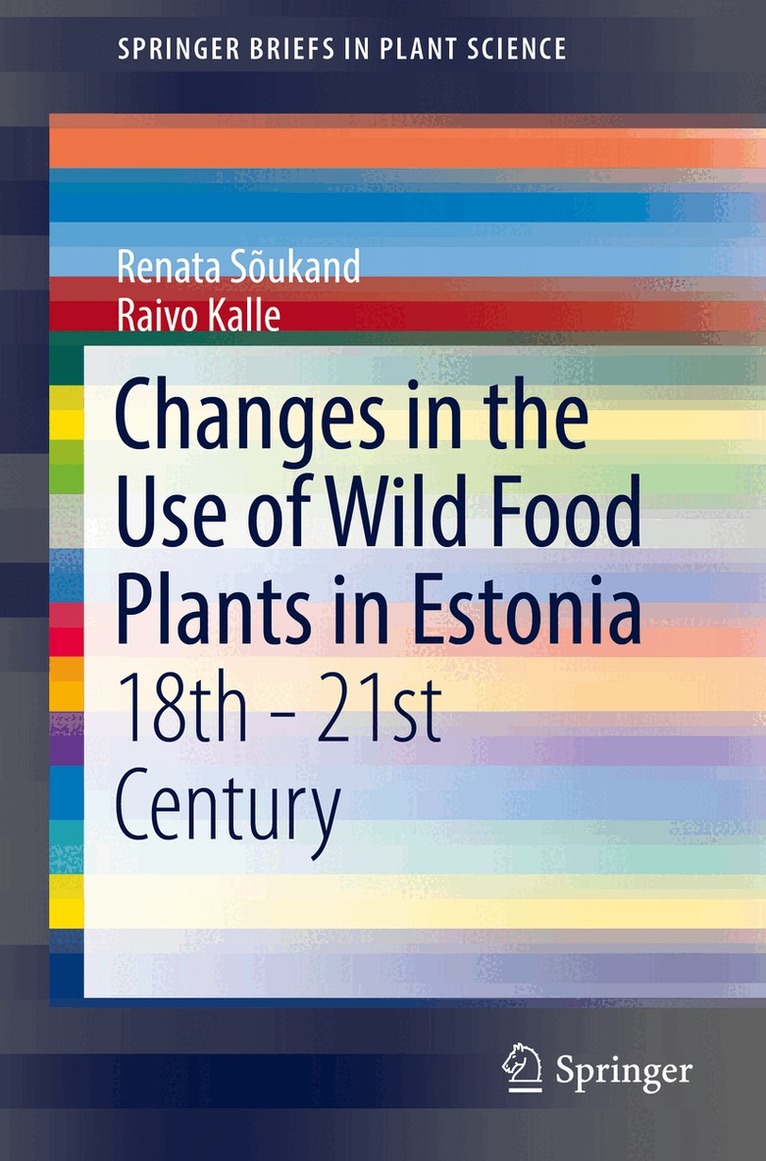
    Changes in the Use of Wild Food Plants in Estonia

    18th - 21st Century

    AvRenata Sõukand,Raivo Kalle

    Häftad, Engelska, 2016

    Del i serien SpringerBriefs in Plant Science

    547 kr

    Beställningsvara. Skickas inom 10-15 vardagar. Fri frakt över 249 kr.

    Beskrivning

    This book is a systematized overview of wild edible plants eaten in the territory of present Estonia, with a focus on the systematic changes within the field. Starting in the end of 18th century, when the first data was published, the text is an extended version and compilation of articles on the subject published by Drs. Kalle and Sõukand and includes unpublished fieldwork results. This work covers changes and tendencies not covered previously due to the limits of article length. Included in this data is a general overview table containing all used plant taxa, parts used and purposes of use. More details on specific food-uses are provided in separate chapters analysing dynamics of changes of the importance of wild plants within the specific food category.

    Produktinformation

    • Utgivningsdatum:2016-11-17
    • Mått:155 x 235 x 11 mm
    • Vikt:283 g
    • Format:Häftad
    • Språk:Engelska
    • Serie:SpringerBriefs in Plant Science
    • Antal sidor:172
    • Förlag:Springer International Publishing AG
    • ISBN:9783319339474

    Utforska kategorier

    • Växtböcker inom Djur och Natur
    • Botanik inom Naturvetenskap och teknik

    Mer om författaren

    Renata Sõukand, PhD is a researcher at the Estonian Literary Museum in Tartu, Estonia. Dr. Sõukand defended her PhD thesis on the historical perception of herbal landscapes in Semiotics and Cultural Theory at the University of Tartu in 2010. She won a 2016 European Research Council Starting Grant for her project "Ethnobotany of divided generations." Her main research interests are the popular perceptions and changes in plant use, the conceptualization of wild food and medicinal plants, herbal ethnomedicine and ethnocuisine, and the food-medicine continuum of the past and present. Starting from archival research and interpretation of folklore records, she moved on to research the popular use of wild food plants through contemporary surveys and sample field research all over Estonia and later conducted intensive fieldwork on Saaremaa Island on the use of wild food plants and ethnomedicine. Dr. Sõukand’s experience extends beyond Estonia; she also has fieldwork experience in Ukraine, Belarus, and Kosovo. She has co-authored over 40 peer-reviewed publications and a book on popular use of wild edible plants, written in Estonian.  Raivo Kalle, MSc is a PhD student in botany at the University of Life Sciences, Tartu, Estonia. Since 2006 he has worked as a research assistant at the Estonian Literary Museum, digitizing and systematizing Estonian herbal lore. His main research interests are the use of wild food plants, especially changes in their use in Estonia through the last two centuries, use of alien plants in ethnomedicine, popular perceptions of changes in landscape and ecology, and history of ethnobotany in Estonia. Besides working in archives, he has intensive fieldwork experience all over Estonia, particularly on Saaremaa Island, in which he also adopted a survey on the use of wild edible plants to Estonian conditions. In addition, he conducted ethnobotanial fieldwork in Belarus and documented Estonian vegetation on a botanical expedition. He has co-authored over 30 peer-reviewed publications and has been the first author of a book on the popular use of wild edible plants, written in Estonian. Currently, he is preparing an anthology of the herbal ethnomedicine of Saaremaa Island.

    Recensioner i media

    “Renata Sõukand and Raivo Kalle finally provide an up to date overview on the development of plant use in Estonia over the last centuries … . Changes in the Use of Wild Food Plants in Estonia. 18th - 21st Century is a very new nice resource for everybody interested in plant use in the wider Baltics and Central Europe. The volume is indeed a very timely addition to European ethnobotanical literature and serves both experts and laypeople.” (Rainer W. Bussmann, Economic Botany, Vol. 71 (2), 2017)

    Innehållsförteckning

    • 1. Introduction.- 2. What Is Wild Food Plant.- 3. Estonia in the Context of Wild Food Plants.- 4. The Sources and Methods Used in the Book.- 5. Use of Wild Food Plants.- 6. Sources That Influenced the Use of Wild Food Plants in Estonia.- 7. Recent Changes in Use of and Perceptions on Wild Food Plants in Saaremaa.- 8. Conclusions and Future Perspectives.