• Fri frakt över 249 kr
  • •
  • Snabba leveranser
  • •
  • Billiga böcker
Kundservice

Du är på sajten för privatpersoner.

Företag, bibliotek eller offentlig verksamhet?

Du handlar på classic.bokus.com, där alla dina funktioner finns intakta.
Till classic.bokus.com
Bokus logotyp. Gå till startsidan.
  • Erbjudanden
  • Nyheter
  • Student
  • Topplistor
  • Barn & ungdom
  • Bokus Play
  • E-böcker
  • Pocketböcker
  • Spel & pussel

Må bättre, för mindre! Upp till 50% rabatt på hälsoböcker

Sidfot

Mina sidor

    Hjälp

    • Kundservice
    • Vanliga frågor och svar
    • Frakt och leverans
    • Retur vid ångerrätt
    • Reklamera vara
    • Betalning
    • Köpvillkor
    • Allmänna villkor
    • Information om webbplatsens tillgänglighet

    Om Bokus

    • Om oss
    • Pressrum
    • För studenter
    • För företag
    • För bibliotek och offentlig verksamhet
    • För leverantörer
    • Hållbarhet

    Populärt

    • Aktuella erbjudanden
    • Presentkort
    • Studentlitteratur
    • Nya böcker
    • Topplistor
    • Signerade böcker
    • Engelska böcker

    Inspiration

    • Boktips
    • BookTok
    • Populära bokserier
    • Barnbokskaraktärer
    • Populära författare
    Logotyp för Bokus
    Följ oss på Facebook (extern länk)Följ oss på Instagram (extern länk)Följ oss på YouTube (extern länk)Följ oss på TikTok (extern länk)
    bokus @ CookiesAnpassa cookiesIntegritetspolicyKöpvillkor
    Till Citymail hemsida (extern länk)Till Budbee hemsida (extern länk)Till Postnord hemsida (extern länk)Till Schenker hemsida (extern länk)Till Early Bird hemsida (extern länk)Till Walleys hemsida (extern länk)
    1. Psykologi och pedagogik
    2. Psykologi
    3. Psykologi: jaget, identitet och personlighet

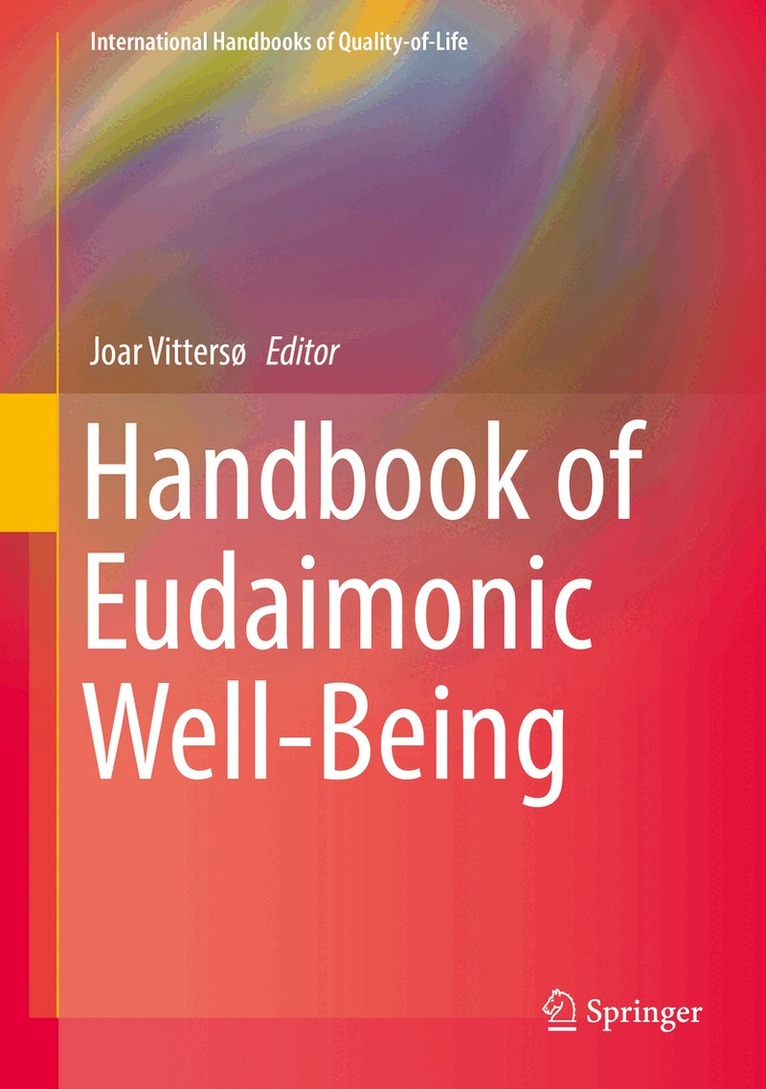
    Handbook of Eudaimonic Well-Being

    AvJoar Vittersø

    Inbunden, Engelska, 2016

    Del i serien International Handbooks of Quality-of-Life

    2 031 kr

    Beställningsvara. Skickas inom 5-8 vardagar. Fri frakt över 249 kr.

    Beskrivning

    This handbook presents the most comprehensive account of eudaimonic well-being to date. It brings together theoretical insights and empirical updates presented by leading scholars and young researchers. The handbook examines philosophical and historical approaches to the study of happy lives and good societies, and it critically looks at conceptual controversies related to eudaimonia and well-being. It identifies the elements of happiness in a variety of areas such as emotions, health, wisdom, self-determination, internal motivation, personal growth, genetics, work, leisure, heroism, and many more. It then places eudaimonic well-being in the larger context of society, addressing social elements. The most remarkable outcome of the book is arguably its large-scale relevance, reminding us that the more we know about the good way of living, the more we are in a position to build a society that can be supportive and offer opportunities for such a way of living for all of its citizens.

    Produktinformation

    • Utgivningsdatum:2016-10-27
    • Mått:178 x 254 x 40 mm
    • Vikt:1 280 g
    • Format:Inbunden
    • Språk:Engelska
    • Serie:International Handbooks of Quality-of-Life
    • Antal sidor:569
    • Upplaga:16001
    • Förlag:Springer International Publishing AG
    • ISBN:9783319424439

    Utforska kategorier

    • Psykologi: jaget, identitet och personlighet inom Psykologi och pedagogik
    • Psykologiska teorier och skolor inom Psykologi och pedagogik

    Mer om författaren

    Joar Vittersø is a professor of psychology at the University of Tromsø, Norway. He holds a Master’s degree in social anthropology and a Ph.D. in social psychology, both from the University of Oslo. Author of more than 60 scientific journal articles and book chapters, Dr. Vittersø primarily conducts research on well-being, positive emotions and other elements of a good life.

    Innehållsförteckning

    • 1. The Most Important Idea in the World: An Introduction; Joar Vittersø.- PART I.  Philosophical Eudaimonism.- 2. The Philosophical Basis of Eudaimonic Psychology; Dan Haybron.- 3. Ethics and Eudaimonic Wellbeing; Johannes Hirata.- 4. Aristotle on Eudaimonia: On the Virtue of Returning to the Source; Blaine Fowers.- 5. Conceptual Challenges for a Science of Eudaimonic Wellbeing; Lorraine Besser.- PART II. Identifying the Elements of Psychological Eudaimonics.- 6.Beautiful Ideas and the Scientific Enterprise: Sources of Intellectual Vitality in Research on Eudaimonic Well-Being; Carol Ryff.- 7. Eudaimonia as a Way of Living: Connecting Aristotle with Self-Determination Theory; Richard Ryan and Frank Martela.- 8. Internal Motivation, Instrumental Motivation, and Eudaimonia; Barry Schwartz and Amy Wrzesniewski.- 9. Eudaimonia and Wisdom; Alan Law and Ursula Staudinger.- 10.Eudaimonic Growth: The Development of the Goods in Personhood (or: Cultivating a Good Life Story); Jack Bauer.- 11. Hedonia, Eudaimonia, and Meaning: Me versus Us; Fleeting versus Enduring; Michael F. Steger.- 12. The Eudaimonics of Positive Emotions; Barbara Fredrickson.- 13. On the Synergy between Hedonia and Eudaimonia: The Role of Passion; Bob Vallerand.- 14.The Eudaimonics of Self-Actualization; Rebecca J. Schlegel, Joshua Hicks and Andrew Christy.- 15. Eudaimonic and Hedonic Orientations: Theoretical Considerations and Research Findings; Veronika Huta.- 16. Genes, Environments and Core Features of Eudaimonic Wellbeing; Espen Røysamb and Ragnhild Bang Nes.- 17. The Feeling of Excellent Functioning: Hedonic and Eudaimonic Emotions; Joar Vittersø.- 18. Measuring Eudaimonic Wellbeing; Carmel Proctor and Roger Tweed.- PART III. Living Eudaimonically.- 19. Well-Doing: Personal Projects and the Social Ecology of Flourishing; Brian Little.- 20.The Eudaimonics of Human Strengths: The Relations Between Character Strengths and Well-Being; Claudia Harzer.- 21. The Mind of the “Happy Warrior”: Eudaimonia, Awe, and the Search for Meaning in Life; Alexander Danvers, Makenzie  O’Neil and Michelle Shiota.- 22. The Eudaimonia of Heroism: Sublime Actualization through the Embodiment of Virtue; Zeno Franco, Olivia Efthimiou and Philip G. Zimbardo.- 23.Health and Eudaimonic Wellbeing: Exploring the Promise of Positive Well-Being and Healthier Living; Jay Kimiecik.- 24. Eudaimonia, Aging, and Health:  A Review of Underlying Mechanisms; Anthony Ong and Alicia Patterson.- 25.Wholeness and Holiness: The Spiritual Dimension of Eudaimonics; Kenneth Pargament, Serena Wong and Julie Exline.- 26. Positive Interventions that Erode the Hedonic and Eudaimonic Divide to Promote Lasting Happiness; Dianne Vella-Brodrick.- PART IV. Eudaimonia and the Society.- 27. Eudaimonia and Culture: The Anthropology of Virtue; Francis Mckay.- 28. Eudaimonic Wellbeing: A Gendered Perspective; Leah Ferguson and Katie Gunnell.- 29. Sentimental Hedonism: Pleasure, Purpose, and Public PolicyPaul Dolan and Laura Kudrna.- 30. The Eudaimonics of Education; Hans Henrik Knoop.- 31. Developing Well-Being and Capabilities As a Goal of Higher Education: A Thought-Piece on Educating the Whole Student; Eranda Jayawickreme and Sara Dahill-Brown.- 32. Developing a Eudaimonia Research Agenda in Travel and Tourism; M. Joseph Sirgy and Muzaffer Uysal.- 33.Hedonism, Eudaimonia, and the Serious Leisure Perspective; Robert A. Stebbins.- 34. Eudaimonia and "Species Being": a Marxist Perspective; Hartley Dean.- PART V.  Against Eudaimonia.-  35. Socrates Dissatisfaction, A Happiness Arms Race, And the Trouble with Eudaimonic Well-being; Sarah J. Ward and Laura King.- 36. Putting Eudaimonia in its Place (On the Predictor, not the Outcome, Side of the Equation); Kennon M. Sheldon.- 37. Social Planning Without Bentham or Aristotle: Towards Dignified and Socially Engaged Wellbeing; Neil Thin.- Epilogue.- 38. The Future of Eudaimonic Well-Being:  Subjectivism, Objectivism and the Lump Under the Carpet; Valerie Tiberius.