• Fri frakt över 249 kr
  • •
  • Snabba leveranser
  • •
  • Billiga böcker
Kundservice

Du är på sajten för privatpersoner.

Företag, bibliotek eller offentlig verksamhet?

Du handlar på classic.bokus.com, där alla dina funktioner finns intakta.
Till classic.bokus.com
Bokus logotyp. Gå till startsidan.
  • Erbjudanden
  • Nyheter
  • Student
  • Topplistor
  • Barn & ungdom
  • Bokus Play
  • E-böcker
  • Pocketböcker
  • Spel & pussel

Må bättre, för mindre! Upp till 50% rabatt på hälsoböcker

Sidfot

Mina sidor

    Hjälp

    • Kundservice
    • Vanliga frågor och svar
    • Frakt och leverans
    • Retur vid ångerrätt
    • Reklamera vara
    • Betalning
    • Köpvillkor
    • Allmänna villkor
    • Information om webbplatsens tillgänglighet

    Om Bokus

    • Om oss
    • Pressrum
    • För studenter
    • För företag
    • För bibliotek och offentlig verksamhet
    • För leverantörer
    • Hållbarhet

    Populärt

    • Aktuella erbjudanden
    • Presentkort
    • Studentlitteratur
    • Nya böcker
    • Topplistor
    • Signerade böcker
    • Engelska böcker

    Inspiration

    • Boktips
    • BookTok
    • Populära bokserier
    • Barnbokskaraktärer
    • Populära författare
    Logotyp för Bokus
    Följ oss på Facebook (extern länk)Följ oss på Instagram (extern länk)Följ oss på YouTube (extern länk)Följ oss på TikTok (extern länk)
    bokus @ CookiesAnpassa cookiesIntegritetspolicyKöpvillkor
    Till Citymail hemsida (extern länk)Till Budbee hemsida (extern länk)Till Postnord hemsida (extern länk)Till Schenker hemsida (extern länk)Till Early Bird hemsida (extern länk)Till Walleys hemsida (extern länk)
    1. Naturvetenskap och teknik
    2. Matematik och naturvetenskap
    3. Biologi

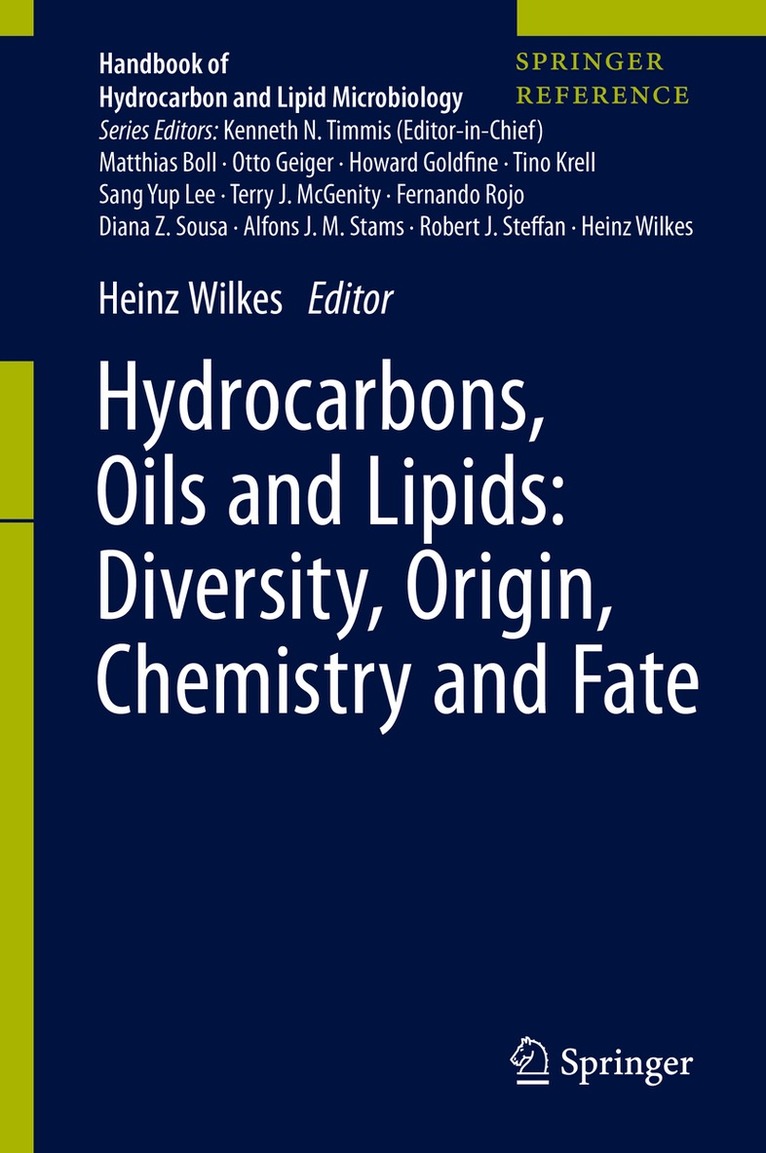
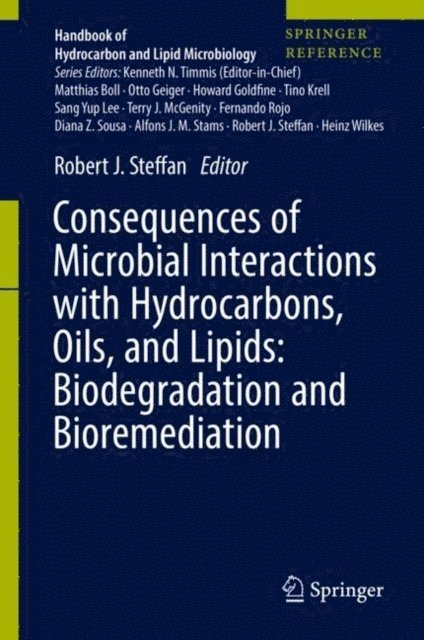
    Consequences of Microbial Interactions with Hydrocarbons, Oils, and Lipids: Biodegradation and Bioremediation

    AvRobert J. Steffan

    Inbunden, Engelska, 2019

    Del i serien Handbook of Hydrocarbon and Lipid Microbiology

    3 244 kr

    Beställningsvara. Skickas inom 10-15 vardagar. Fri frakt över 249 kr.

    Beskrivning

    In this book international experts discuss the state-of-the-art  in the biological degradation of hydrocarbons to meet remedial or disposal goals.  The work focuses on practical applications, often on globally important scales including the remediation of some of the world’s largest crude oil spills.  Other related chapters discuss important implications of microbial transformation of hydrocarbons, including treatment of high fat processing wastes, impacts of microbial biodegradation activity on industrial processes, and the implications of microbial oil degradation in relation to modern oil extraction processes like hydraulic fracturing of shales and extraction of oil sands.

    Produktinformation

    • Utgivningsdatum:2019-08-22
    • Mått:155 x 235 x 28 mm
    • Vikt:889 g
    • Format:Inbunden
    • Språk:Engelska
    • Serie:Handbook of Hydrocarbon and Lipid Microbiology
    • Antal sidor:414
    • Förlag:Springer International Publishing AG
    • ISBN:9783319504322

    Utforska kategorier

    • Biologi inom Naturvetenskap och teknik
    • Miljöteknik inom Naturvetenskap och teknik

    Mer om författaren

    Dr. Robert J. Steffan received his Ph.D. in biology from the University of Louisville, where he worked on the development of molecular biological tools for monitoring genetically engineered microorganisms in the environment. His work included the first ever application of the polymerase chain reaction (PCR) for monitoring organisms in environmental samples. This early work provided a basis for much of the PCR-based environmental analysis in use today. Following his doctoral studies, he received an Alexander von Humboldt fellowship to perform postdoctoral research at the National Institute for Biotechnology (GBF) in Braunschweig, Germany. There, he worked to identify and genetically engineer biodegradation pathways in bacteria and to evaluate genetic transformation of bacteria in nature. After his postdoctoral studies, he worked in the environmental industry for more than 25 years, where he served as a technical expert to help solve real-world remediation and pollution treatment challenges, and also led a research and development group. His primary research interests were biodegradation of chlorinated solvents and ether-containing pollutants (1,4-dioxane, MTBE, BCEE, etc.), bioaugmentation for remediation, development of novel remediation strategies, and molecular biology of degradative bacteria. He directed the development and commercialization of SDC-9TM, a Dehalococcoides sp.-containing bacterial culture that has been applied at more than 2000 sites for remediation of chlorinated solvent contaminated groundwater. In addition, he led a program that developed a novel patented combinatorial biocatalysis process that resulted in the production of several unique and patented antibiotic compounds with activity against Gram-positive microorganisms including multidrug resistant TB. He has authored more than 100 scientific papers, reports, and book chapters, including two invited review articles in the Annual Review of Microbiology, and has received 11 patents. He has served as a member of the editorial boards of the Journal of Bacteriology and Applied and Environmental Microbiology, and was the recipient of the 2008 Excellence in Review Award from Environmental Science & Technology. He retired from his work in the environmental industry in 2014.

    Innehållsförteckning

    • Biodegradation and Bioremediation: An Introduction;- Developing Bioremediation Technologies for Commercial Application: An Insiders View;- Utility of Industrial Experimental Sites for Developing Analytical, Monitoring, and Remediation Technologies;- Bioremediation of Marine Oil Spills;- Oil Biodegradation in Deep Marine Basins;- Biostimulation Strategies for Enhanced Bioremediation of Marine Oil Spills Including Chronic Pollution;- Weathered Hydrocarbon Biotransformation: Implications for Bioremediation, Analysis, and Risk Assessment;- Role of Biosurfactants;- Plant-Endophyte Partnerships to Assist Petroleum Hydrocarbon Remediation;- Removal of Hydrocarbons and Other Related Chemicals Via the Rhizosphere of Plants;- Natural Attenuation of Hydrocarbon Compounds in Groundwater;- In Situ: Groundwater Bioremediation;- Microbiology of Oil- and Natural Gas-Producing Shale Formations: An Overview;- Cometabolic Bioremediation;- Anaerobic Biodegradation of Hydrocarbons: Metagenomics and Metabolomics;- Genomic Response of  Pseudomonas putida to Toluene;- Biodegradation of Ether Pollutants;- Plastic Biodegradation: Challenges and Opportunities;- Determination of Kinetic Parameters and Metabolic Modes Using the Chemostat;-