• Fri frakt över 249 kr
  • •
  • Snabba leveranser
  • •
  • Billiga böcker
Kundservice

Du är på sajten för privatpersoner.

Företag, bibliotek eller offentlig verksamhet?

Du handlar på classic.bokus.com, där alla dina funktioner finns intakta.
Till classic.bokus.com
Bokus logotyp. Gå till startsidan.
  • Erbjudanden
  • Student
  • Topplistor
  • Barn & ungdom
  • Bokus Play
  • E-böcker
  • Ljudböcker
  • Pocketböcker
  • Spel & pussel

10% rabatt på allt med kod NYSTART10 →

Sidfot

Mina sidor

    Hjälp

    • Kundservice
    • Vanliga frågor och svar
    • Frakt och leverans
    • Retur vid ångerrätt
    • Reklamera vara
    • Betalning
    • Köpvillkor
    • Allmänna villkor
    • Information om webbplatsens tillgänglighet

    Om Bokus

    • Om oss
    • Pressrum
    • För studenter
    • För företag
    • För bibliotek och offentlig verksamhet
    • För leverantörer
    • Hållbarhet

    Populärt

    • Aktuella erbjudanden
    • Presentkort
    • Studentlitteratur
    • Nya böcker
    • Topplistor
    • Signerade böcker
    • Engelska böcker

    Inspiration

    • Boktips
    • BookTok
    • Populära bokserier
    • Barnbokskaraktärer
    • Populära författare
    Logotyp för Bokus
    Följ oss på Facebook (extern länk)Följ oss på Instagram (extern länk)Följ oss på YouTube (extern länk)Följ oss på TikTok (extern länk)
    bokus @ CookiesAnpassa cookiesIntegritetspolicyKöpvillkor
    Till Citymail hemsida (extern länk)Till Budbee hemsida (extern länk)Till Postnord hemsida (extern länk)Till Schenker hemsida (extern länk)Till Early Bird hemsida (extern länk)Till Walleys hemsida (extern länk)
    1. Kultur
    2. Arkitektur

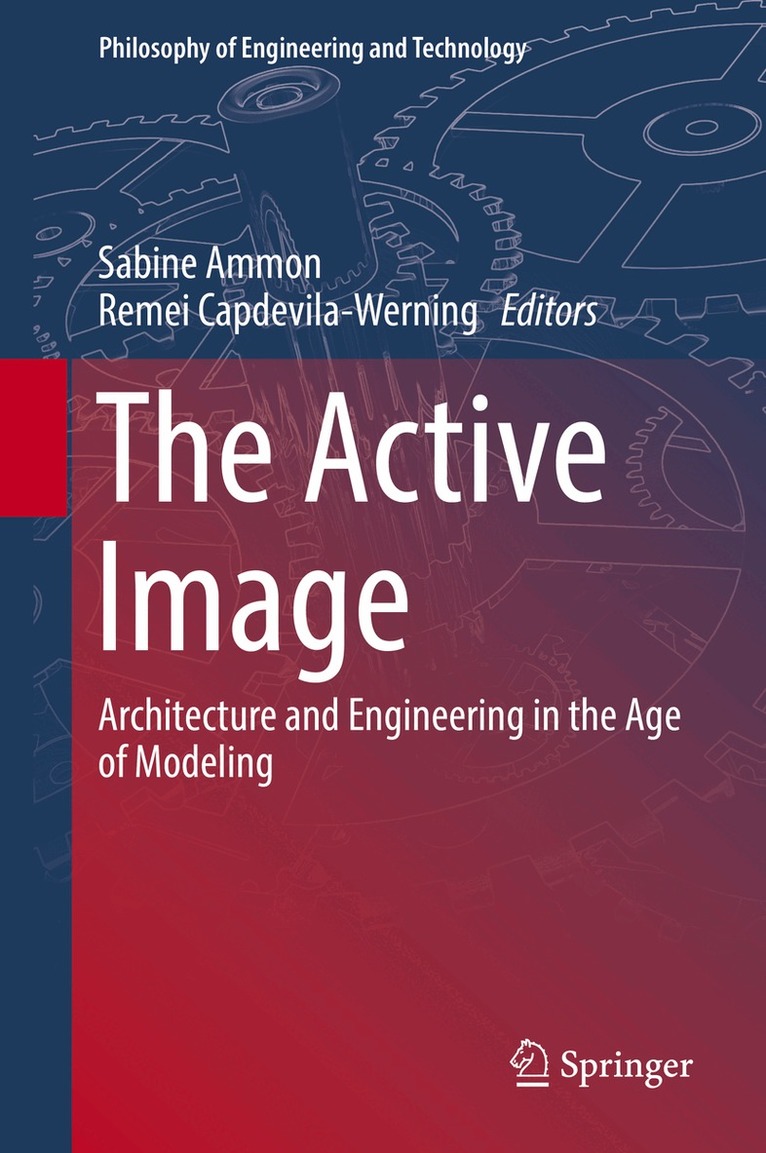
    Active Image

    Architecture and Engineering in the Age of Modeling

    AvSabine Ammon,Remei Capdevila-Werning

    Inbunden, Engelska, 2017

    Del 28 i serien Philosophy of Engineering and Technology

    1 338 kr

    Beställningsvara. Skickas inom 10-15 vardagar. Fri frakt över 249 kr.

    Beskrivning

    The “active image” refers to the operative nature of images, thus capturing the vast array of “actions” that images perform. This volume features essays that present a new approach to image theory. It explores the many ways images become active in architecture and engineering design processes and how, in the age of computer-based modeling, images play an indispensable role.The contributors examine different types of images, be they pictures, sketches, renderings, maps, plans, and photographs; be they analog or digital, planar or three-dimensional, ephemeral, realistic or imaginary. Their essays investigate how images serve as means of representing, as tools for thinking and reasoning, as ways of imagining the inexistent, as means of communicating and conveying information and how images may also perform functions and have an agency in their own.The essays discuss the role of images from the perspective of philosophy, theory and history of architecture, history of science, media theory, cognitive sciences, design studies, and visual studies, offering a multidisciplinary approach to imagery and showing the various methodologies and interpretations in current research. In addition, they offer valuable insight to better understand how images operate and function in the arts and sciences in general.

    Produktinformation

    • Utgivningsdatum:2017-07-17
    • Mått:155 x 235 x 24 mm
    • Vikt:658 g
    • Format:Inbunden
    • Språk:Engelska
    • Serie:Philosophy of Engineering and Technology
    • Antal sidor:317
    • Upplaga:17001
    • Förlag:Springer International Publishing AG
    • ISBN:9783319564654

    Utforska kategorier

    • Arkitektur inom Kultur
    • Systemvetenskap och AI inom Data och IT
    • Teknik: allmänt inom Naturvetenskap och teknik

    Mer om författaren

    Sabine Ammon works at the Berlin University of Technology as a Marie Skłodowska-Curie Fellow, funded by the European Union, and acts as spokesperson of the interdisciplinary research group “Dynamics of Knowledge in Engineering Sciences”. She received her Ph.D. from Berlin University of Technology. She works mainly in epistemology, philosophy of engineering science and technology, image theory, and design ethics.Remei Capdevila-Werning is Director of Education and Public Programs at El Museo del Barrio in New York. She received her Ph.D. from the Universitat Autònoma de Barcelona. She has taught at Fairfield University and the School of Visual Arts. Her research interests include analytical aesthetics and epistemology, philosophy of art, architecture and historic preservation.

    Innehållsförteckning

    • Chapter 1: Reinhold Martin, Points of Departure: Notes Toward a Reversible History of Architectural Visualization.- Chapter 2: Daniel Cardoso Llach, Architecture and the Structured Image: Software Simulations as Infrastructures for Building Production.- Chapter 3: Remei Capdevila-Werning, Architectural Drawings as Symbols: A Goodmanian Account of Epistemic Practices in the Design Process.- Chapter 4: Gabriela Goldschmidt, Manual Sketching: Why is it Still Relevant?.- Chapter 5: Irene Mittelberg, Thomas H. Schmitz, Hannah Groninger, Operative Manufacts: Gestures as Immediate Sketches in the Early Stages of the Design Process.- Chapter 6: Rivka Oxman, The Role of the Image in Digital Design: Processing the Image versus Imaging the Process.- Chapter 7: Nathalie Bredella, Visualization Techniques and Computational Design Strategies: Reflecting on the Milieu and Agency of Digital Tools in 1990s Architecture.- Chapter 8: Sabine Ammon, Image-based Epistemic Strategies in Modeling: Designing Architecture after the Digital Turn.- Chapter 9: Alice Comi, Suha Jaradat, Jennifer Whyte, Constructing Shared Vision in Design Practice: Material Mediation in Professional Work between Architects and Engineers.- Chapter 10: Mehul Bhatt, Carl Schultz, People-Centered Visuospatial Cognition. Next-generation Architectural Design Systems and their Role in Conception, Computing, and Communication.- Chapter 11: Johannes Lenhard, License to Explore: How Images Work in Simulation Modeling.- Chapter 12: Doris Hallama, On Fuzziness and Relationships: Abstraction and Illustrative Visualization in Snow Avalanche Control Planning..