• Fri frakt över 249 kr
  • •
  • Snabba leveranser
  • •
  • Billiga böcker
Kundservice

Du är på sajten för privatpersoner.

Företag, bibliotek eller offentlig verksamhet?

Du handlar på classic.bokus.com, där alla dina funktioner finns intakta.
Till classic.bokus.com
Bokus logotyp. Gå till startsidan.
  • Erbjudanden
  • Nyheter
  • Student
  • Topplistor
  • Barn & ungdom
  • Bokus Play
  • E-böcker
  • Pocketböcker
  • Spel & pussel

Må bättre, för mindre! Upp till 50% rabatt på hälsoböcker

Sidfot

Mina sidor

    Hjälp

    • Kundservice
    • Vanliga frågor och svar
    • Frakt och leverans
    • Retur vid ångerrätt
    • Reklamera vara
    • Betalning
    • Köpvillkor
    • Allmänna villkor
    • Information om webbplatsens tillgänglighet

    Om Bokus

    • Om oss
    • Pressrum
    • För studenter
    • För företag
    • För bibliotek och offentlig verksamhet
    • För leverantörer
    • Hållbarhet

    Populärt

    • Aktuella erbjudanden
    • Presentkort
    • Studentlitteratur
    • Nya böcker
    • Topplistor
    • Signerade böcker
    • Engelska böcker

    Inspiration

    • Boktips
    • BookTok
    • Populära bokserier
    • Barnbokskaraktärer
    • Populära författare
    Logotyp för Bokus
    Följ oss på Facebook (extern länk)Följ oss på Instagram (extern länk)Följ oss på YouTube (extern länk)Följ oss på TikTok (extern länk)
    bokus @ CookiesAnpassa cookiesIntegritetspolicyKöpvillkor
    Till Citymail hemsida (extern länk)Till Budbee hemsida (extern länk)Till Postnord hemsida (extern länk)Till Schenker hemsida (extern länk)Till Early Bird hemsida (extern länk)Till Walleys hemsida (extern länk)
    1. Ekonomi och Ledarskap
    2. Nationalekonomi
    3. Ekonomisk historia

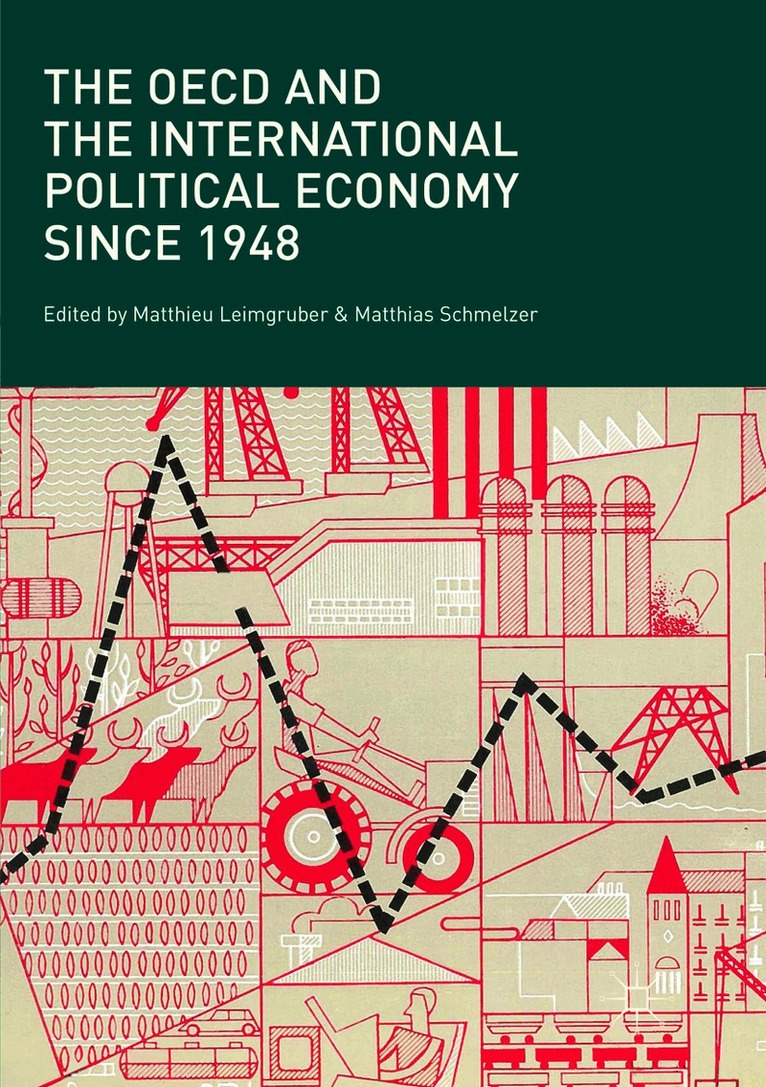
    OECD and the International Political Economy Since 1948

    AvMatthieu Leimgruber,Matthias Schmelzer

    Inbunden, Engelska, 2018

    1 452 kr

    Beställningsvara. Skickas inom 10-15 vardagar. Fri frakt över 249 kr.

    Beskrivning

    This book explores the history of the Organization for Economic Co-operation and Development (OECD) and its place within capitalist development. Since 1948, the OECD and its forerunner, the Organization for European Economic Cooperation (OEEC) worked on almost every subject of interest to national governments ranging from economic growth to education (PISA rankings), statistics, to the environment. With varying success the OEEC/OECD thus played a key role as a warden of the West and of capitalist development. However, it has remained one of the least understood international organizations. Bringing together a number of case studies by scholars from around the world, this first source-based volume on the history of the  OEEC/OECD in global governance offers not only a new understanding of the Organization’s key areas of activities, but also its multiple relations to member states, other international organizations, and private networks. The volume thus critically re-examines postwar international history, most importantly decolonization and the Cold War, through the prism of one international organization in its various contexts.

    Produktinformation

    • Utgivningsdatum:2018-01-23
    • Mått:148 x 210 x 27 mm
    • Vikt:616 g
    • Format:Inbunden
    • Språk:Engelska
    • Antal sidor:363
    • Upplaga:18001
    • Förlag:Springer International Publishing AG
    • ISBN:9783319602424

    Utforska kategorier

    • Ekonomisk historia inom Ekonomi och Ledarskap
    • Finansiering inom Ekonomi och Ledarskap
    • Allmän historia och världshistoria inom Historia och arkeologi

    Mer om författaren

    Matthieu Leimgruber is an Associate Professor of Modern History at the University of Zürich, Switzerland. He is the lead investigator for the OECD History Project.Matthias Schmelzer is a Permanent Fellow at the DFG-Kolleg on Post-Growth Societies at the University of Jena, Germany, and co-directed the OECD history project. He has published the award winning The Hegemony of Growth. The OECD and the Making of the Economic Growth Paradigm (2016).

    Recensioner i media

    “This ground-breaking collection is part of a larger research project now based at the University of Zurich … . Although there is quite a substantial literature on the OECD, its rich archival resources are largely unstudied, and it is still relatively neglected among international organizations concerned with the global political economy. This volume continues the considerable task of remedying the first of these issues, and makes a strong contribution to the second across a wide range of issues.” (whatsworthreading.weebly.com, April, 2018)

    Innehållsförteckning

    • Introduction: Writing histories of the OECD; Matthieu Leimgruber & Matthias Schmelzer.- From the Marshall Plan to global governance: Historical transformations of the OEEC/OECD, 1948 to present; Matthias Schmelzer & Matthieu Leimgruber.- A short guide to historical archives, online resources, and research materials on the OEEC/OECD.- Part I: Being part of the West.- Western European vs. all-European cooperation? The OEEC, the European Recovery Program, and the United Nations Economic Commission for Europe (ECE), 1947-1952; Daniel Stinsky.- A socialist developing country in a Western capitalist club. Yugoslavia and the OEEC/OECD, 1955-1980; Andrej Markovic & Ivan Obadic.- Shall we or shall we not? The Japanese, Australian and New Zealand decisions to apply for membership of the OECD, 1960-1973; Peter Carroll.- The construction of a Western voice: OECD and the first UNCTAD of 1964; Patricia Hongler.- Part II: Managing the economy.-From post-war reconstruction to multi-level neo-corporatism. The OEEC/OECD and steel during the Cold War; Wolfram Kaiser.- A crisis manager for the international monetary and financial system? The rise and fall of the OECD Working Party 3, 1961-1980; Kazuhiko Yago.- Peer pressure in Paris: Country reviews at the OECD in the 1960s and 1970s; William Gray.- ‘Positive adjustments’: the emergence of supply-side economics in the OECD and G7, 1970-1984; Samuel Beroud.- Part III: Coping with socio-ecological challenges.- The narrowing-down of the OEEC/OECD migration functions, 1947-1986; Emmanuel Comte & Simone Paoli.- Engineering the Free World. The emergence of the OECD as an actor in education policy, 1957-1972; Regula Bürgi.- Negotiating environment: The making of the OECD Environment Committee and the Polluter Pays Principle, 1968-1972; Iris Borowy.- Gendering development: the OECD’s Development Assistance Committee, 1981-2000; Rianne Mahon.