• Fri frakt över 249 kr
  • •
  • Snabba leveranser
  • •
  • Billiga böcker
Kundservice

Du är på sajten för privatpersoner.

Företag, bibliotek eller offentlig verksamhet?

Du handlar på classic.bokus.com, där alla dina funktioner finns intakta.
Till classic.bokus.com
Bokus logotyp. Gå till startsidan.
  • Erbjudanden
  • Nyheter
  • Student
  • Topplistor
  • Barn & ungdom
  • Bokus Play
  • E-böcker
  • Pocketböcker
  • Spel & pussel

10% rabatt på allt med kod: NYSTART10 →

Sidfot

Mina sidor

    Hjälp

    • Kundservice
    • Vanliga frågor och svar
    • Frakt och leverans
    • Retur vid ångerrätt
    • Reklamera vara
    • Betalning
    • Köpvillkor
    • Allmänna villkor
    • Information om webbplatsens tillgänglighet

    Om Bokus

    • Om oss
    • Pressrum
    • För studenter
    • För företag
    • För bibliotek och offentlig verksamhet
    • För leverantörer
    • Hållbarhet

    Populärt

    • Aktuella erbjudanden
    • Presentkort
    • Studentlitteratur
    • Nya böcker
    • Topplistor
    • Signerade böcker
    • Engelska böcker

    Inspiration

    • Boktips
    • BookTok
    • Populära bokserier
    • Barnbokskaraktärer
    • Populära författare
    Logotyp för Bokus
    Följ oss på Facebook (extern länk)Följ oss på Instagram (extern länk)Följ oss på YouTube (extern länk)Följ oss på TikTok (extern länk)
    bokus @ CookiesAnpassa cookiesIntegritetspolicyKöpvillkor
    Till Citymail hemsida (extern länk)Till Budbee hemsida (extern länk)Till Postnord hemsida (extern länk)Till Schenker hemsida (extern länk)Till Early Bird hemsida (extern länk)Till Walleys hemsida (extern länk)
    1. Samhälle och politik
    2. Politik och statsskick
    3. Internationella relationer

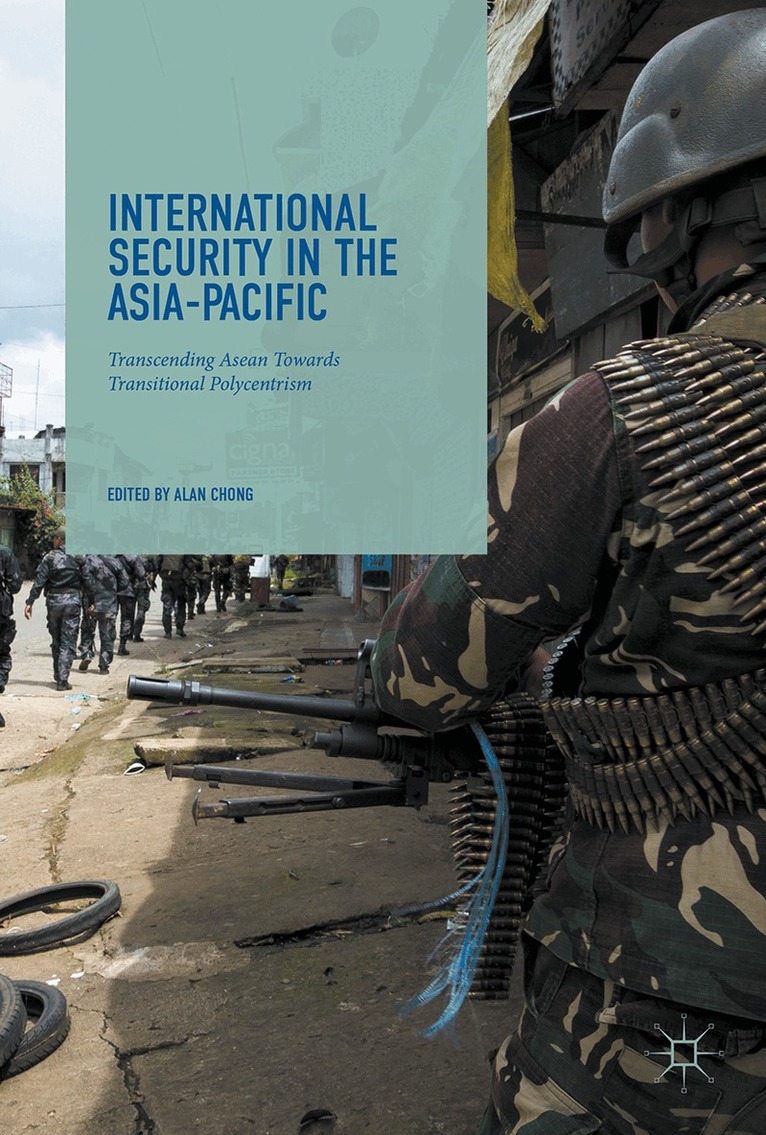
    International Security in the Asia-Pacific

    Transcending ASEAN towards Transitional Polycentrism

    AvAlan Chong

    Inbunden, Engelska, 2017

    1 949 kr

    Beställningsvara. Skickas inom 10-15 vardagar. Fri frakt över 249 kr.

    Beskrivning

    This volume argues that international security in the Asia-Pacific lends itself to contradictory analyses of centrifugal and centripetal trends. Transitional polycentrism is intrinsically awkward as a description of the security of states and their populations; it implies the loosening of state control and the emergence of newly asserted authority by mixed constellations of intergovernmental organizations and non-state actors. It implies a competition of agendas: threats to the integrity of borders and human security threats such as natural disasters, airliner crashes, and displacement by man-made pollution and food scarcity. Conversely, polycentrism could also imply a return to a more neo-realist oriented international order where great powers ignore ASEAN and steer regional order according to their perceived interests and relative military superiority. This book embraces these contradictory trends as a foundation of analysis and accepts that disorder can also be re-described fromthe perspective of studied detachment as polycentric order.

    Produktinformation

    • Utgivningsdatum:2017-10-02
    • Mått:148 x 210 x 29 mm
    • Vikt:683 g
    • Format:Inbunden
    • Språk:Engelska
    • Antal sidor:429
    • Upplaga:17001
    • Förlag:Springer International Publishing AG
    • ISBN:9783319607610

    Utforska kategorier

    • Internationella relationer inom Samhälle och politik

    Mer om författaren

    Alan Chong is Associate Professor at the S. Rajaratnam School of International Studies, Singapore. He has published widely on the notion of soft power and the role of ideas in constructing the international relations of Singapore and Asia.

    Innehållsförteckning

    • Chapter 1: Southeast Asia : a Global Periphery No More - Dr Ooi Kee Beng, Institute of Southeast Asian Studies, Singapore.- Chapter 2: ASEAN Centrality in Defense and Security Cooperation in East Asia - Professor See Seng Tan, S. Rajaratnam School of International Studies, Singapore.- Chapter 3: ASEAN's Limits with respect to Conflict Resolution in the Region - Professor Kriengsak Chareonwongsak, Institute of Future Studies for Development, Thailand.- Chapter 4: Animating Transitional Polycentrism: the Role of China - Assistant Professor Hoo Tiang Boon, China Programme, S. Rajaratnam School of International Studies, Singapore.- Chapter 5: The Emerging Security Landscape in the Asia-Pacific: Where ASEAN fits - Professor Huang Xiaoming, Victoria University of Wellington, New Zealand.- Chapter 6: ASEAN in the Era of Japan-China Tensions: Diplomatic Opportunities or Strategic Dilemmas? - Associate Professor Takeshi Yuzawa, Hosei University, Japan.- Chapter 7: The Role of the US’ Quasi-Alliances in Asia: Shadow Puppetry or Hard Alliances? - Assistant Professor Charmaine Misalucha, De La Salle University, Philippines.- Chapter 8: Order in South Asia and the Indian Ocean Region: Indian Hegemony or Indian Primacy? - Dr. Manjeet S. Pardesi, Lecturer in International Relations, Victoria University of Wellington, New Zealand.- Chapter 9: Fostering Military Diplomacy with America’s Bilateral Allies: The Philippine Policy of Linking Spokes Together - Professor Renato Cruz de Castro, De La Salle University, Philippines.- Chapter 10: Reasons for Optimism? China, Japan and Unilateral Naval Restraint in the East China Sea - Dr Collin Koh, Maritime Programme, S. Rajaratnam School of International Studies, Singapore.- Chapter 11: The Asia-Pacific Diplomacy of Counter-Terrorism in Tackling the Threat from the Islamic State - Associate Professor Bilveer Singh, Department of Political Science, National University of Singapore, Singapore.- Chapter 12: Climate Change and Food Insecurities – Destabilizers of ASEAN Centrality? - Dr Tamara Nair, Centre for Non-Traditional Security, S. Rajaratnam School of International Studies, Singapore.- Chapter 13: Subnational Conflict Mitigation: Networks, innovations, and the uncertain place of ASEAN - Assistant Professor Linda Quayle, The University of Nottingham (Malaysia Campus), Malaysia.- Chapter 14: Silos, Synergies and Prospects for Cooperation in the Asia-Pacific: Humanitarian Assistance and Disaster Relief - Dr Alistair D.B. Cook, Centre for Non-Traditional Security, S. Rajaratnam School of International Studies, Singapore.- Chapter 15: Asia’s Military Competition by Proxy: Competitive HADR as a Respectable Arena? - Associate Professor Alan Chong, S. Rajaratnam School of International Studies, Singapore.- Chapter 16: Re-conceptualizing the Role of the Military for International Disaster Relief: Exploring the Factors Conditioning Responses by the Militaries of Japan, Taiwan, China, and South Korea - Mr Jeffrey Engstrom, RAND Corporation, USA.