• Fri frakt över 249 kr
  • •
  • Snabba leveranser
  • •
  • Billiga böcker
Kundservice

Du är på sajten för privatpersoner.

Företag, bibliotek eller offentlig verksamhet?

Du handlar på classic.bokus.com, där alla dina funktioner finns intakta.
Till classic.bokus.com
Bokus logotyp. Gå till startsidan.
  • Erbjudanden
  • Nyheter
  • Student
  • Topplistor
  • Barn & ungdom
  • Bokus Play
  • E-böcker
  • Pocketböcker
  • Spel & pussel

10% rabatt på allt med kod: NYSTART10 →

Sidfot

Mina sidor

    Hjälp

    • Kundservice
    • Vanliga frågor och svar
    • Frakt och leverans
    • Retur vid ångerrätt
    • Reklamera vara
    • Betalning
    • Köpvillkor
    • Allmänna villkor
    • Information om webbplatsens tillgänglighet

    Om Bokus

    • Om oss
    • Pressrum
    • För studenter
    • För företag
    • För bibliotek och offentlig verksamhet
    • För leverantörer
    • Hållbarhet

    Populärt

    • Aktuella erbjudanden
    • Presentkort
    • Studentlitteratur
    • Nya böcker
    • Topplistor
    • Signerade böcker
    • Engelska böcker

    Inspiration

    • Boktips
    • BookTok
    • Populära bokserier
    • Barnbokskaraktärer
    • Populära författare
    Logotyp för Bokus
    Följ oss på Facebook (extern länk)Följ oss på Instagram (extern länk)Följ oss på YouTube (extern länk)Följ oss på TikTok (extern länk)
    bokus @ CookiesAnpassa cookiesIntegritetspolicyKöpvillkor
    Till Citymail hemsida (extern länk)Till Budbee hemsida (extern länk)Till Postnord hemsida (extern länk)Till Schenker hemsida (extern länk)Till Early Bird hemsida (extern länk)Till Walleys hemsida (extern länk)
    1. Djur och Natur
    2. Naturböcker
    3. Växtböcker

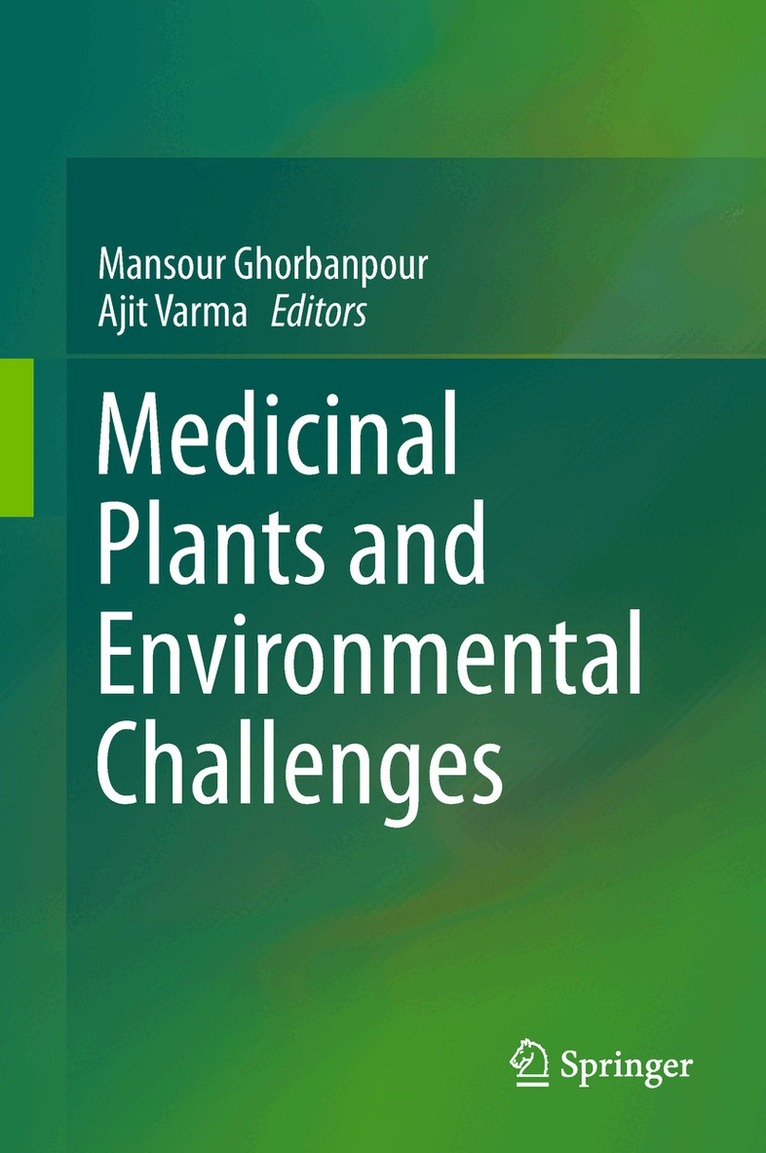
    Medicinal Plants and Environmental Challenges

    AvMansour Ghorbanpour,Ajit Varma

    Inbunden, Engelska, 2017

    1 896 kr

    Beställningsvara. Skickas inom 10-15 vardagar. Fri frakt över 249 kr.

    Beskrivning

    This book sheds new light on the role of various environmental factors in regulating the metabolic adaptation of medicinal and aromatic plants. Many of the chapters present cutting-edge findings on the contamination of medicinal plants through horizontal transfer, as well as nanomaterials and the biosynthesis of pharmacologically active compounds. In addition, the book highlights the impacts of environmental factors (e.g., high and low temperature, climate change, global warming, UV irradiation, intense sunlight and shade, ozone, carbon dioxide, drought, salinity, nutrient deficiency, agrochemicals, waste, heavy metals, nanomaterials, weeds, pests and pathogen infections) on medicinal and aromatic plants, emphasizing secondary metabolisms. In recent years, interest has grown in the use of bioactive compounds from natural sources. Medicinal and aromatic plants constitute an important part of the natural environment and agro-ecosystems, and contain a wealth of chemical compounds known as secondary metabolites and including alkaloids, glycosides, essential oils and other miscellaneous active substances. These metabolites help plants cope with environmental and/or external stimuli in a rapid, reversible and ecologically meaningful manner. Additionally, environmental factors play a crucial role in regulating the metabolic yield of these biologically active molecules. Understanding how medicinal plants respond to environmental perturbations and climate change could open new frontiers in plant production and in agriculture, where successive innovation is urgently needed due to the looming challenges in connection with global food security and climate change. Readers will discover a range of revealing perspectives and the latest research on this vital topic.

    Produktinformation

    • Utgivningsdatum:2017-11-10
    • Mått:155 x 235 x 28 mm
    • Vikt:902 g
    • Format:Inbunden
    • Språk:Engelska
    • Antal sidor:413
    • Förlag:Springer International Publishing AG
    • ISBN:9783319687162

    Utforska kategorier

    • Växtböcker inom Djur och Natur
    • Botanik inom Naturvetenskap och teknik
    • Farmakologi inom Medicin

    Mer om författaren

    Mansour Ghorbanpour, Ph.D.Mansour Ghorbanpour is an Associate Professor at the Department of Medicinal Plants, Faculty of Agriculture and Natural Resources, Arak University, Arak, Iran. He holds a B.Sc. (1997), an M.Sc. (2003) and a Ph.D. (2011) from the University of Tehran, Karaj, Iran. Dr. Ghorbanpour has been a visiting scholar to the Nutrient Uptake and Toxicity Stress (NUTS) group at the University of Western Australia, Australia. His research interests include environmental stresses and plant responses, phytonanotechnology, bioavailability of emerging contaminants, and plant metabolism. He also has previous experience in beneficial soil microorganisms and biosynthesis pathways for secondary metabolites. To date, Dr. Ghorbanpour has published over 80 journal articles and 6 books. In addition, he serves as an editor for a number of international journals, including the Journal of Diseases and Medicinal Plants and the International Journal of Traditional and Herbal Medicine. Lastly, he has served as a reviewer for other scientific journals such as Natural Product Research, Carbon, Journal of Medicinal Plants, Journal of Hazardous Materials, Journal of Essential Oil Bearing Plant, and Canadian Journal of Microbiology.  Ajit Varma, Ph.D.Ajit Varma completed his PhD at Allahabad University and is a former Professor, School of Life Sciences, Jawaharlal Nehru University, India. Presently, he is the Distinguished Scientist and Professor of Eminence at the Amity Institute of Microbial Technology; Pro-Vice Chancellor, Ritnand Balved Education Foundation; and Vice Chairman of Amity Science, Technology and Innovation Foundation at Amity University in Uttar Pradesh, India. He has published more than 374 papers and 87 books. Dr. Varma is Fellow of the Alexander-von-Humboldt Society, Germany, elected Fellow of the National Academy of Agricultural Sciences and Fellow of the Microbiology Society of India.Ajit Varma is also a series editor of the Springer series “Soil Biology” http://www.springer.com/series/5138.

    Innehållsförteckning

    • Importance of Medicinal and Aromatic Plants in the Life of Human and Environmental Ecosystems.- Introduction to Environmental Challenges all over the World.- Rarity of Endemic Medicinal Plants and Role of Herbaria  for their Conservation against Environmental Challenges.- Metabolic Responses of Medicinal Plants to Global Warming, Temperature and Heat Stress.- Toxic Gases, Ozone, Carbon Dioxide, and Waste Effects on the Production of Secondary Plant Metabolites.- Plant Secondary Metabolites and Some Plant Growth Regulators Elicited by UV Irradiation, Light and/or Shade.- Effect of Climate Change on Algae: A valuable Source of Medicinal Natural Compounds.- Metabolic and Hormonal Responses of Plants to Cold Stress.- The Impact of Drought Stress on the Quality of Spice and Medicinal Plants.- Effects of Salinity Stress on Growth and Physiology of Medicinal Plants.- Heavy Metals Contaminated Soils Effects on Secondary Metabolites Production, Oxidative Status and Phytoextraction Potentials ofMedicinal Plants.- Horizontal Natural Product Transfer: A so far Unconsidered Source of Contamination of Medicinal Plants.- Strategies for Enhancing Artemisinin Production in Artemisia annuaunder Changing Environment.- Response of Medicinal and Aromatic Plants to Natural and Manufactured Nanosacel Materials.- Influences of Agrochemicals, Seasonality and Good Agricultural Practices on some Phytochemical of Medicinal Plants.- Introduction to Infectious Medicinal Plants Diseases: Identification and Management.- Weed and Weeding Effects on Medicinal Plants.- The Insect Pests of Medicinal and Aromatic Plants.- Biotechnological Production of Essential oils against Aedesaegypti L..- Adaptation Strategies and Defense Mechanisms of Plants to Environmental Stresses.- Metabolic Adaptation of Tea (Camellia sinensis) to Environmental Perturbations.- Genomic Approaches towards Development of Climate Resilient Medicinal Plants.