• Fri frakt över 249 kr
  • •
  • Snabba leveranser
  • •
  • Billiga böcker
Kundservice

Du är på sajten för privatpersoner.

Företag, bibliotek eller offentlig verksamhet?

Du handlar på classic.bokus.com, där alla dina funktioner finns intakta.
Till classic.bokus.com
Bokus logotyp. Gå till startsidan.
  • Erbjudanden
  • Nyheter
  • Student
  • Topplistor
  • Barn & ungdom
  • Bokus Play
  • E-böcker
  • Pocketböcker
  • Spel & pussel

10% rabatt på allt med kod NYSTART10 →

Sidfot

Mina sidor

    Hjälp

    • Kundservice
    • Vanliga frågor och svar
    • Frakt och leverans
    • Retur vid ångerrätt
    • Reklamera vara
    • Betalning
    • Köpvillkor
    • Allmänna villkor
    • Information om webbplatsens tillgänglighet

    Om Bokus

    • Om oss
    • Pressrum
    • För studenter
    • För företag
    • För bibliotek och offentlig verksamhet
    • För leverantörer
    • Hållbarhet

    Populärt

    • Aktuella erbjudanden
    • Presentkort
    • Studentlitteratur
    • Nya böcker
    • Topplistor
    • Signerade böcker
    • Engelska böcker

    Inspiration

    • Boktips
    • BookTok
    • Populära bokserier
    • Barnbokskaraktärer
    • Populära författare
    Logotyp för Bokus
    Följ oss på Facebook (extern länk)Följ oss på Instagram (extern länk)Följ oss på YouTube (extern länk)Följ oss på TikTok (extern länk)
    bokus @ CookiesAnpassa cookiesIntegritetspolicyKöpvillkor
    Till Citymail hemsida (extern länk)Till Budbee hemsida (extern länk)Till Postnord hemsida (extern länk)Till Schenker hemsida (extern länk)Till Early Bird hemsida (extern länk)Till Walleys hemsida (extern länk)
    1. Naturvetenskap och teknik
    2. Teknik och industri
    3. Elektronik och kommunikationer

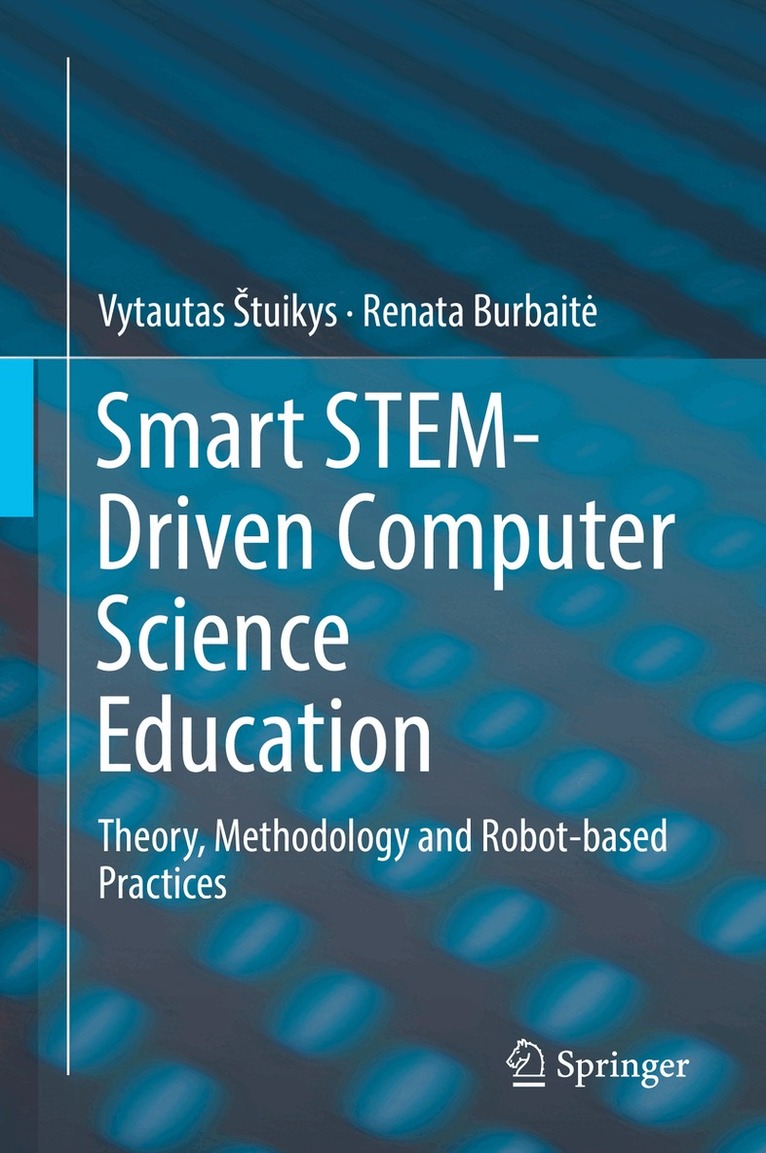
    Smart STEM-Driven Computer Science Education

    Theory, Methodology and Robot-based Practices

    AvVytautas Štuikys,Renata Burbaitė

    Inbunden, Engelska, 2018

    1 085 kr

    Beställningsvara. Skickas inom 10-15 vardagar. Fri frakt över 249 kr.

    Fler format och utgåvor

    Häftad

    1 054 kr

    Beskrivning

    At the centre of the methodology used in this book is STEM learning variability space that includes STEM pedagogical variability, learners’ social variability, technological variability, CS content variability and interaction variability. To design smart components, firstly, the STEM learning variability space is defined for each component separately, and then model-driven approaches are applied. The theoretical basis includes feature-based modelling and model transformations at the top specification level and heterogeneous meta-programming techniques at the implementation level.Practice includes multiple case studies oriented for solving the task prototypes, taken from the real world, by educational robots. These case studies illustrate the process of gaining interdisciplinary knowledge pieces identified as S-knowledge, T-knowledge, E-knowledge, M-knowledge or integrated STEM knowledge and evaluate smart components from the pedagogical and technological perspectives based ondata gathered from one real teaching setting. Smart STEM-Driven Computer Science Education: Theory, Methodology and Robot-based Practices outlines the overall capabilities of the proposed approach and also points out the drawbacks from the viewpoint of different actors, i.e. researchers, designers, teachers and learners.

    Produktinformation

    • Utgivningsdatum:2018-07-16
    • Mått:155 x 235 x 27 mm
    • Vikt:746 g
    • Format:Inbunden
    • Språk:Engelska
    • Antal sidor:368
    • Upplaga:18001
    • Förlag:Springer International Publishing AG
    • ISBN:9783319784847

    Utforska kategorier

    • Elektronik och kommunikationer inom Naturvetenskap och teknik
    • Systemvetenskap och AI inom Data och IT
    • Undervisning i specifika ämnen inom Psykologi och pedagogik

    Innehållsförteckning

    • Part 1: Introduction: Motivation, Challenges, and Conceptual Vision of STEM-Driven CS Education Based on Robotics.- Challenges of STEM-Driven Computer Science (CS) Education.- A Vision for Introducing STEM into CS Education at School.- Smart Devices and Educational Robotics as Technology for STEM Knowledge.- Part 2: Methodological and Theoretical Background of Approaches to Implement the Proposed Vision.- A Methodological Background for STEM-Driven Reuse-Enhanced CS Education 60.- Theoretical Background to Implement STEM-Driven Approaches.- Part 3: Design, Re-Design and Use of Smart Content for STEM-Driven CS Education.- Understanding of Smart Content for STEM-Driven CS Education.- Model-Driven Design and Re-Design of Smart STEM-Driven CS Content.- Stage-Based Smart Learning Objects: Adaptation Perspective.- Agent-Based GLOs/SLOs for STEM.- Part 4: Infrastructure to Support STEM-Driven CS Educational Practice.- Personal Generative Library for STEM-Driven Educational Resources.- A Methodology and Tools for Creating Generative Scenario for STEM.- Smart STEM-Driven Educational Environment for CS Education: A Case Study.- Practice of Smart STEM-Driven CS Education at High School.- Part 5:An Extended Vision to STEM-Driven CS Education.-Internet-of-Things: A New Vision for STEM and CS Education.- A Finalizing Discussion and Open Issues.- Glossary.- Indexes.