• Fri frakt över 249 kr
  • •
  • Snabba leveranser
  • •
  • Billiga böcker
Kundservice

Du är på sajten för privatpersoner.

Företag, bibliotek eller offentlig verksamhet?

Du handlar på classic.bokus.com, där alla dina funktioner finns intakta.
Till classic.bokus.com
Bokus logotyp. Gå till startsidan.
  • Erbjudanden
  • Nyheter
  • Student
  • Topplistor
  • Barn & ungdom
  • Bokus Play
  • E-böcker
  • Pocketböcker
  • Spel & pussel

10% rabatt på allt med kod: NYSTART10 →

Sidfot

Mina sidor

    Hjälp

    • Kundservice
    • Vanliga frågor och svar
    • Frakt och leverans
    • Retur vid ångerrätt
    • Reklamera vara
    • Betalning
    • Köpvillkor
    • Allmänna villkor
    • Information om webbplatsens tillgänglighet

    Om Bokus

    • Om oss
    • Pressrum
    • För studenter
    • För företag
    • För bibliotek och offentlig verksamhet
    • För leverantörer
    • Hållbarhet

    Populärt

    • Aktuella erbjudanden
    • Presentkort
    • Studentlitteratur
    • Nya böcker
    • Topplistor
    • Signerade böcker
    • Engelska böcker

    Inspiration

    • Boktips
    • BookTok
    • Populära bokserier
    • Barnbokskaraktärer
    • Populära författare
    Logotyp för Bokus
    Följ oss på Facebook (extern länk)Följ oss på Instagram (extern länk)Följ oss på YouTube (extern länk)Följ oss på TikTok (extern länk)
    bokus @ CookiesAnpassa cookiesIntegritetspolicyKöpvillkor
    Till Citymail hemsida (extern länk)Till Budbee hemsida (extern länk)Till Postnord hemsida (extern länk)Till Schenker hemsida (extern länk)Till Early Bird hemsida (extern länk)Till Walleys hemsida (extern länk)
    1. Ekonomi och Ledarskap
    2. Nationalekonomi

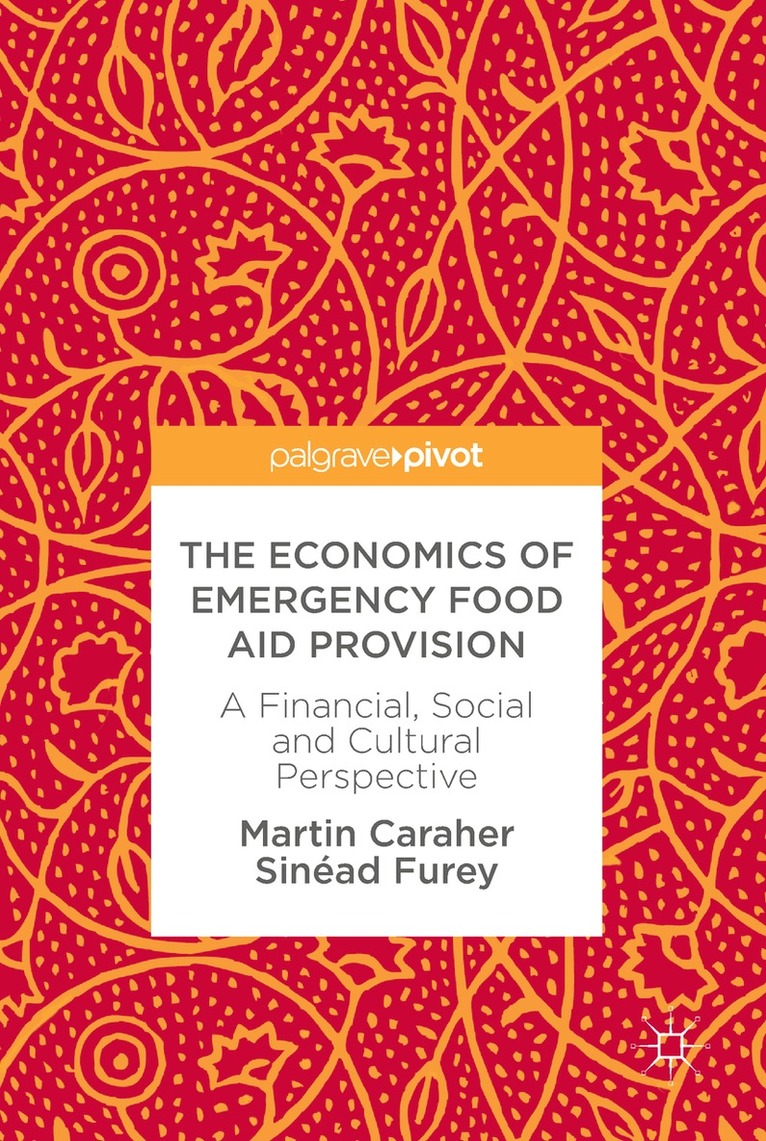
    Economics of Emergency Food Aid Provision

    A Financial, Social and Cultural Perspective

    AvMartin Caraher,Sinéad Furey

    Inbunden, Engelska, 2018

    654 kr

    Beställningsvara. Skickas inom 10-15 vardagar. Fri frakt över 249 kr.

    Beskrivning

    This short book reviews the provision of food bank and other emergency food aid provision with a specific focus on the UK, whilst drawing lessons from North America, Brazil and Europe. The authors look at the historical positioning of food aid and the growth of the food aid sector in the UK following the period of austerity 2007-2012, before addressing the causes of food insecurity and concluding that food banks are a symptom of austerity and government inaction which fail to tackle the underlying causes of food poverty. The research is timely, and considers a range of disciplines and practices. This book will appeal to researchers, policy makers and practitioners food economics, welfare economics, public policy, public health, food studies, nutrition, and the wider social sciences.

    Produktinformation

    • Utgivningsdatum:2018-06-07
    • Mått:148 x 210 x undefined mm
    • Format:Inbunden
    • Språk:Engelska
    • Antal sidor:111
    • Förlag:Springer International Publishing AG
    • ISBN:9783319785059

    Utforska kategorier

    • Nationalekonomi inom Ekonomi och Ledarskap
    • Ekonomisk politik inom Ekonomi och Ledarskap
    • Socialt arbete och välfärd inom Samhälle och politik

    Mer om författaren

    Martin Caraher is Professor of Food Policy at City, University of London, UK. He has worked for and acted as a consultant to the UK Dept of Health, the World Bank and the World Health Organisation. He currently acts as an adviser to the European Executive Agency for Health and Consumers (DG Sanco) and is a member of the International Obesity Task Force (IOTF) scientific committee.  Sinead Furey is a lecturer in Consumer Management and Food Innovation at the University of Ulster, Northern Ireland. She previously worked in consumer, food and nutrition policy in the Consumer Council for Northern Ireland, Education and Training Inspectorate, and the Food Standards Agency in Northern Ireland.

    Innehållsförteckning

    • 1. The Growing Problems of Food Poverty and Insecurity.- 2.  Growth of Food Banks in the UK (and Europe): Leftover Food for Leftover People.- 3. The Cultural and economic Dimensions of Food Poverty.- 4. Food Banks and their Contribution/Detraction from Welfare Budgets.- 5. Conclusion: So What is the Future?