• Fri frakt över 249 kr
  • •
  • Snabba leveranser
  • •
  • Billiga böcker
Kundservice

Du är på sajten för privatpersoner.

Företag, bibliotek eller offentlig verksamhet?

Du handlar på classic.bokus.com, där alla dina funktioner finns intakta.
Till classic.bokus.com
Bokus logotyp. Gå till startsidan.
  • Erbjudanden
  • Nyheter
  • Student
  • Topplistor
  • Barn & ungdom
  • Bokus Play
  • E-böcker
  • Pocketböcker
  • Spel & pussel

10% rabatt på allt med kod NYSTART10 →

Sidfot

Mina sidor

    Hjälp

    • Kundservice
    • Vanliga frågor och svar
    • Frakt och leverans
    • Retur vid ångerrätt
    • Reklamera vara
    • Betalning
    • Köpvillkor
    • Allmänna villkor
    • Information om webbplatsens tillgänglighet

    Om Bokus

    • Om oss
    • Pressrum
    • För studenter
    • För företag
    • För bibliotek och offentlig verksamhet
    • För leverantörer
    • Hållbarhet

    Populärt

    • Aktuella erbjudanden
    • Presentkort
    • Studentlitteratur
    • Nya böcker
    • Topplistor
    • Signerade böcker
    • Engelska böcker

    Inspiration

    • Boktips
    • BookTok
    • Populära bokserier
    • Barnbokskaraktärer
    • Populära författare
    Logotyp för Bokus
    Följ oss på Facebook (extern länk)Följ oss på Instagram (extern länk)Följ oss på YouTube (extern länk)Följ oss på TikTok (extern länk)
    bokus @ CookiesAnpassa cookiesIntegritetspolicyKöpvillkor
    Till Citymail hemsida (extern länk)Till Budbee hemsida (extern länk)Till Postnord hemsida (extern länk)Till Schenker hemsida (extern länk)Till Early Bird hemsida (extern länk)Till Walleys hemsida (extern länk)
    1. Historia och arkeologi
    2. Arkeologi

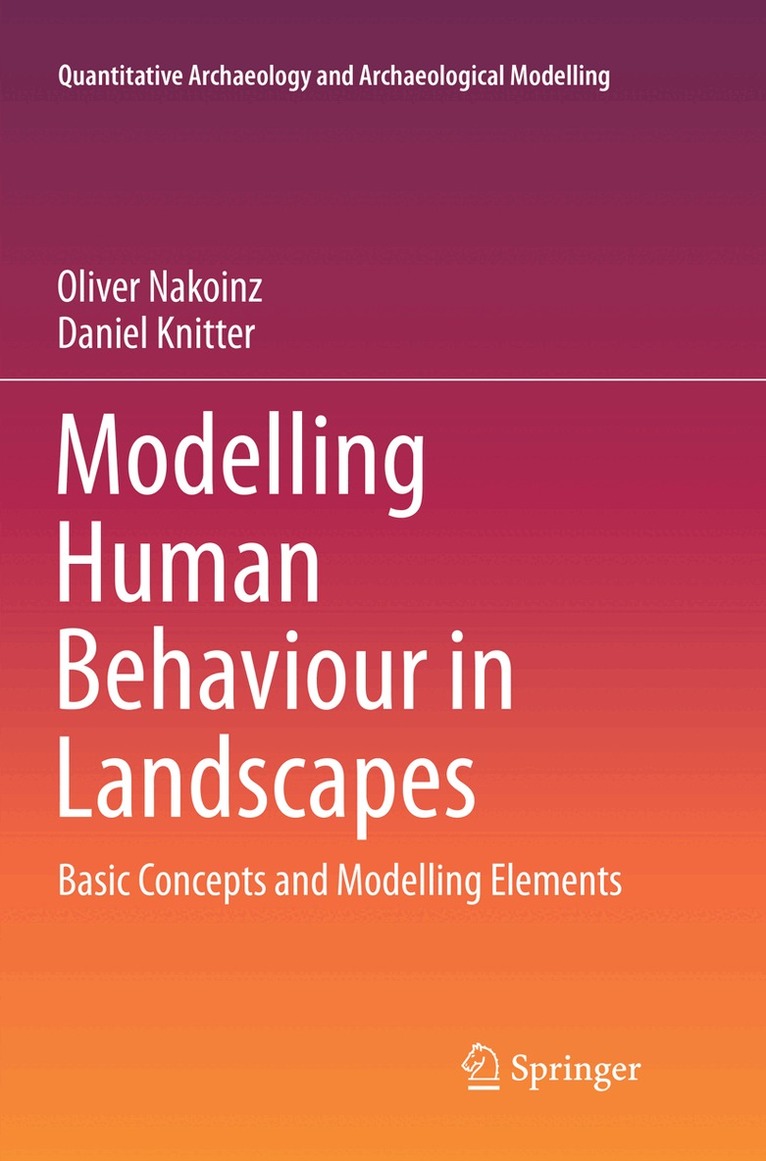
    Modelling Human Behaviour in Landscapes

    Basic Concepts and Modelling Elements

    AvOliver Nakoinz,Daniel Knitter

    Häftad, Engelska, 2018

    Del i serien Quantitative Archaeology and Archaeological Modelling

    673 kr

    Beställningsvara. Skickas inom 10-15 vardagar. Fri frakt över 249 kr.

    Fler format och utgåvor

    Inbunden

    923 kr

    Beskrivning

    This volume is designed as a 12-lecture textbook, which can serve as a course companion, self teaching guide and handbook for basic concepts. Each lecture comprises 20 pages, in which the methods are introduced, examples shown and the code is given. All examples are computed with open source software, mainly R, and with archaeological data available from the book's website.The book does not describe elaborated high-end models but rather very basic modelling concepts that serve as components in more complex models. The book enables the reader to construct such models by themselves and be sensitive for certain problems. In addition it gives hints for the interpretation of the results.Students are usually quick to apply fancy methods yet fail in the proper interpretation due to a lack of understanding of the underlying principles. This problem is addressed by the proposed book through three concepts:1. Command line software forces the students to first learn some details before they are able to produce results on their own.2. The book is focused on principles and methods. When the students understand a few basic principles, they have far better access to a wide range of related methods.3. Examples of poor analysis highlight common pitfalls.The volume attempts to be an applied, minimalistic and efficient textbook and is based upon several successful courses.

    Produktinformation

    • Utgivningsdatum:2018-04-22
    • Mått:155 x 235 x 16 mm
    • Vikt:423 g
    • Format:Häftad
    • Språk:Engelska
    • Serie:Quantitative Archaeology and Archaeological Modelling
    • Antal sidor:255
    • Förlag:Springer International Publishing AG
    • ISBN:9783319805931

    Utforska kategorier

    • Arkeologi inom Historia och arkeologi
    • Systemvetenskap och AI inom Data och IT
    • Sociologi inom Samhälle och politik

    Mer om författaren

    Oliver NakoinzDaniel Knitter

    Innehållsförteckning

    • Chapter 1:Introduction and Mathematics.- Chapter 2: Theory of Modelling.- Chapter 3: Software.- Chapter 4: Density.- Chapter 5: Regression and Interpolation.- Chapter 6: Location and Characterisation.- Chapter 7: Point Pattern.- Chapter 8: Boundaries.- Chapter 9: Networks.- Chapter 10: Interaction.- Chapter 11: Perception of Landscapes.- Chapter 12: Simulations.