• Fri frakt över 249 kr
  • •
  • Snabba leveranser
  • •
  • Billiga böcker
Kundservice

Du är på sajten för privatpersoner.

Företag, bibliotek eller offentlig verksamhet?

Du handlar på classic.bokus.com, där alla dina funktioner finns intakta.
Till classic.bokus.com
Bokus logotyp. Gå till startsidan.
  • Erbjudanden
  • Nyheter
  • Student
  • Topplistor
  • Barn & ungdom
  • Bokus Play
  • E-böcker
  • Pocketböcker
  • Spel & pussel

10% rabatt på allt med kod: NYSTART10 →

Sidfot

Mina sidor

    Hjälp

    • Kundservice
    • Vanliga frågor och svar
    • Frakt och leverans
    • Retur vid ångerrätt
    • Reklamera vara
    • Betalning
    • Köpvillkor
    • Allmänna villkor
    • Information om webbplatsens tillgänglighet

    Om Bokus

    • Om oss
    • Pressrum
    • För studenter
    • För företag
    • För bibliotek och offentlig verksamhet
    • För leverantörer
    • Hållbarhet

    Populärt

    • Aktuella erbjudanden
    • Presentkort
    • Studentlitteratur
    • Nya böcker
    • Topplistor
    • Signerade böcker
    • Engelska böcker

    Inspiration

    • Boktips
    • BookTok
    • Populära bokserier
    • Barnbokskaraktärer
    • Populära författare
    Logotyp för Bokus
    Följ oss på Facebook (extern länk)Följ oss på Instagram (extern länk)Följ oss på YouTube (extern länk)Följ oss på TikTok (extern länk)
    bokus @ CookiesAnpassa cookiesIntegritetspolicyKöpvillkor
    Till Citymail hemsida (extern länk)Till Budbee hemsida (extern länk)Till Postnord hemsida (extern länk)Till Schenker hemsida (extern länk)Till Early Bird hemsida (extern länk)Till Walleys hemsida (extern länk)
    1. Ekonomi och Ledarskap
    2. Nationalekonomi
    3. Ekonomisk politik

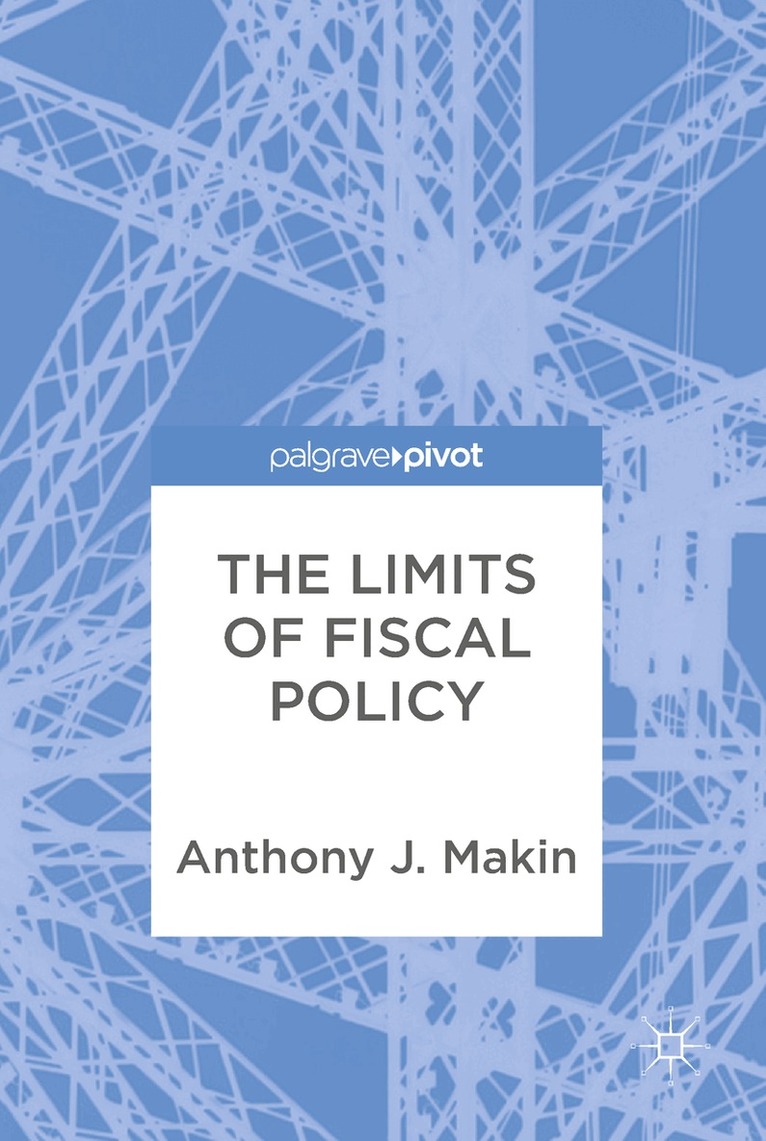
    Limits of Fiscal Policy

    AvAnthony J. Makin

    Inbunden, Engelska, 2018

    674 kr

    Beställningsvara. Skickas inom 10-15 vardagar. Fri frakt över 249 kr.

    Fler format och utgåvor

    E-bok

    894 kr

    Beskrivning

    This book presents alternative macroeconomic perspectives, primarily open economy, on the limitations of discretionary fiscal policy, with a focus on government spending.  Following an overview on the post-crisis Keynesian revival and of the macro-foundations needed for subsequent analysis, different perspectives are expounded that highlight the failings of fiscal activism. These perspectives include extended loanable funds analysis, an expenditure-output related model incorporating money and exchange rates, and a dependent economy framework. The approaches are used to examine investment and net export crowding out effects and their implications for national income, and are then adapted to show the macroeconomic impact of different fiscal consolidation measures, revealing that the nature of fiscal repair is critical. A concluding chapter evaluates the nexus between budgetary policy and confidence, summarises the key failings of fiscal activism, and suggests fiscal policy goals. The book will appeal to university lecturers and researchers in macroeconomics and economists working in government and the private sector.

    Produktinformation

    • Utgivningsdatum:2018-06-07
    • Mått:148 x 210 x 11 mm
    • Vikt:316 g
    • Format:Inbunden
    • Språk:Engelska
    • Antal sidor:121
    • Förlag:Springer International Publishing AG
    • ISBN:9783319901572

    Utforska kategorier

    • Ekonomisk politik inom Ekonomi och Ledarskap
    • Makroekonomi inom Ekonomi och Ledarskap

    Mer om författaren

    Anthony J Makin is Professor of Economics at Griffith University, Australia, and has previously served with the International Monetary Fund and Australian departments of Finance, Foreign Affairs and Trade and The Treasury.  He has published widely and is a member of the National Economic Panel of the Economic Society of Australia.

    Innehållsförteckning

    • 1. The Keynesian Revival.- 2.  Macro-Foundations for Fiscal Analysis.- 3. Budget Deficits, Public Debt and Crowding Out.- 4. Budget Deficits and National Income.- 5. Fiscal Policy, Money and the Exchange Rate.- 6. Fiscal Policy in a Dependent Economy.- 7. Fiscal Consolidation.- 8. Recasting Fiscal Policy.