• Fri frakt över 249 kr
  • •
  • Snabba leveranser
  • •
  • Billiga böcker
Kundservice

Du är på sajten för privatpersoner.

Företag, bibliotek eller offentlig verksamhet?

Du handlar på classic.bokus.com, där alla dina funktioner finns intakta.
Till classic.bokus.com
Bokus logotyp. Gå till startsidan.
  • Erbjudanden
  • Nyheter
  • Student
  • Topplistor
  • Barn & ungdom
  • Bokus Play
  • E-böcker
  • Pocketböcker
  • Spel & pussel

10% rabatt på allt med kod: NYSTART10 →

Sidfot

Mina sidor

    Hjälp

    • Kundservice
    • Vanliga frågor och svar
    • Frakt och leverans
    • Retur vid ångerrätt
    • Reklamera vara
    • Betalning
    • Köpvillkor
    • Allmänna villkor
    • Information om webbplatsens tillgänglighet

    Om Bokus

    • Om oss
    • Pressrum
    • För studenter
    • För företag
    • För bibliotek och offentlig verksamhet
    • För leverantörer
    • Hållbarhet

    Populärt

    • Aktuella erbjudanden
    • Presentkort
    • Studentlitteratur
    • Nya böcker
    • Topplistor
    • Signerade böcker
    • Engelska böcker

    Inspiration

    • Boktips
    • BookTok
    • Populära bokserier
    • Barnbokskaraktärer
    • Populära författare
    Logotyp för Bokus
    Följ oss på Facebook (extern länk)Följ oss på Instagram (extern länk)Följ oss på YouTube (extern länk)Följ oss på TikTok (extern länk)
    bokus @ CookiesAnpassa cookiesIntegritetspolicyKöpvillkor
    Till Citymail hemsida (extern länk)Till Budbee hemsida (extern länk)Till Postnord hemsida (extern länk)Till Schenker hemsida (extern länk)Till Early Bird hemsida (extern länk)Till Walleys hemsida (extern länk)
    1. Ekonomi och Ledarskap
    2. Nationalekonomi
    3. Ekonomisk historia

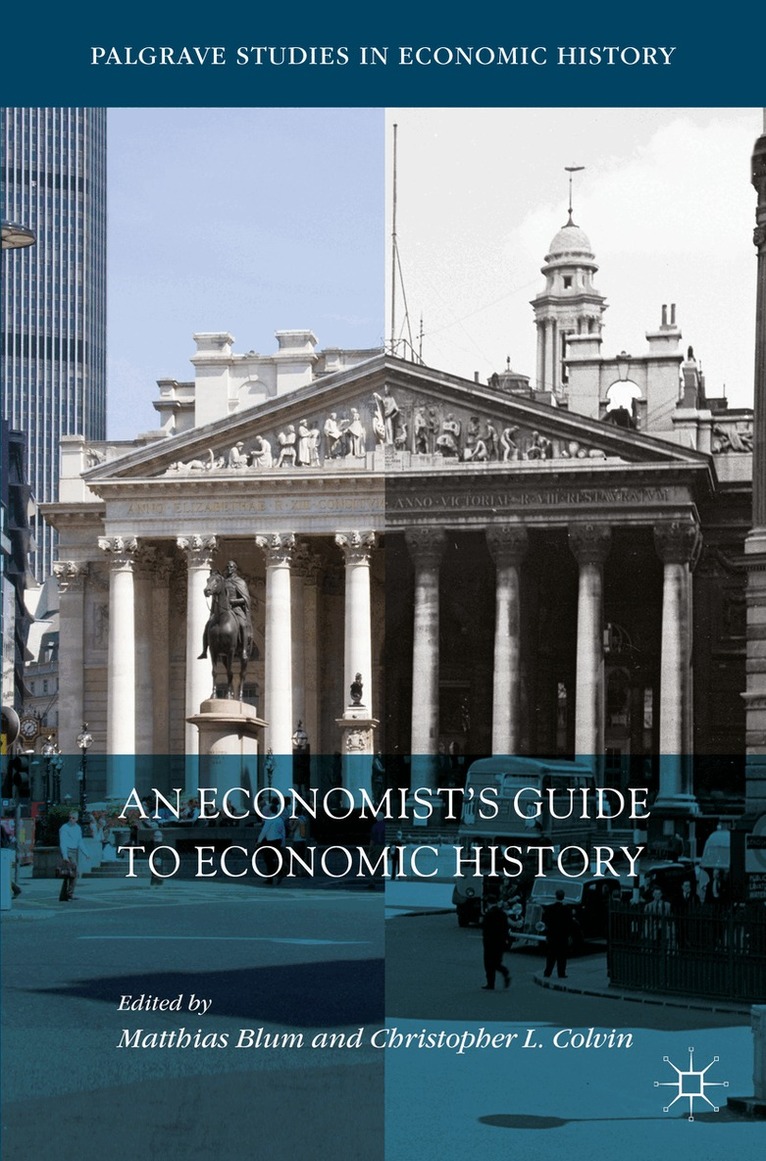
    Economist’s Guide to Economic History

    AvMatthias Blum,Christopher L. Colvin

    Häftad, Engelska, 2018

    Del i serien Palgrave Studies in Economic History

    420 kr

    Beställningsvara. Skickas inom 5-8 vardagar. Fri frakt över 249 kr.

    Beskrivning

    Without economic history, economics runs the risk of being too abstract or parochial, of failing to notice precedents, trends and cycles, of overlooking the long-run and thus misunderstanding ‘how we got here’. Recent financial and economic crises illustrate spectacularly how the economics profession has not learnt from its past.This important and unique book addresses this problem by demonstrating the power of historical thinking in economic research. Concise chapters guide economics lecturers and their students through the field of economic history, demonstrating the use of historical thinking in economic research, and advising them on how they can actively engage with economic history in their teaching and learning.Blum and Colvin bring together important voices in the field to show readers how they can use their existing economics training to explore different facets of economic history. Each chapter introduces a question or topic, historical context or research method and explores how they can be used in economics scholarship and pedagogy. In a century characterised to date by economic uncertainty, bubbles and crashes, An Economist’s Guide to Economic History is essential reading.For further information visit http://www.blumandcolvin.org

    Produktinformation

    • Utgivningsdatum:2018-12-18
    • Mått:155 x 235 x 28 mm
    • Vikt:772 g
    • Format:Häftad
    • Språk:Engelska
    • Serie:Palgrave Studies in Economic History
    • Antal sidor:479
    • Förlag:Springer International Publishing AG
    • ISBN:9783319965673

    Utforska kategorier

    • Ekonomisk historia inom Ekonomi och Ledarskap

    Mer om författaren

    Matthias Blum and Christopher L. Colvin are economic historians based at Queen’s University Belfast, UK. Blum has research interests in measurement, health and wellbeing, and economic development in the long-run. Colvin works on historical banking crises, corporate governance and the economics of religion. Besides teaching and supervising students in economic history, they always make a point of incorporating historical thinking into the other field courses they teach, including econometrics, development economics, industrial organisation and managerial economics.

    Innehållsförteckning

    • Chapter 1: Introduction, or Why We Started This Project.- Part I: Purpose, Philosophy and Pedagogy of Economic History.- Chapter 2: Economics and History.- Chapter 3: Economics, Economic History and Historical Data .- Chapter 4: Economic Theory and Economic History.- Chapter 5: Economic History and the Policymaker.- Chapter 6: Economic History, the History of Economic Thought and Economic Policy.- Chapter 7: Teaching Economics with Economic History.- Part II: Questions and Themes in Economic History.- Chapter 8: Money and Central Banking.- Chapter 9: Globalisation and Trade.- Chapter 10: Migration and Labour Markets.- Chapter 11: Financial Institutions and Markets.- Chapter 12: Bubbles and Crises.- Chapter 13: Sovereign Debt and State Financing.- Chapter 14: Health and Development.- Chapter 15: Education and Human Capital.- Chapter 16: Famine and Disease.- Chapter 17: Women and Children.- Chapter 18: Slavery and Discrimination.- Chapter 19: Crime and Violence.- Chapter 20: Business Ownership and Organisation.- Chapter 21: Competition and Collusion.- Chapter 22: Human Resources and Incentive Contracts.- Chapter 23: Global Divergence and Economic Change.- Chapter 24: Industrial Revolution and British Exceptionalism.- Chapter 25: Innovation and Technological Change.- Chapter 26: Culture and Religion.- Chapter 27: Agriculture and Rural Development.- Chapter 28: Environment and Natural Resources.- Part III: Eras, Regions and Contexts in Economic History.- Chapter 29: Economic Prehistory.- Chapter 30: The World Wars.- Chapter 31: Western Europe.- Chapter 32: Central and Eastern Europe.- Chapter 33: Sub-Saharan Africa.- Chapter 34: South Asia.- Chapter 35: East Asia.- Chapter 36: Australasia.- Chapter 37: North America.- Chapter 38: Latin America.- Part IV: Methods and Techniques in Economic History.- Chapter 39: Impact and Communication.- Chapter 40: Publishing Economic History.- Chapter 41: Archival Evidence.- Chapter 42: Case Studies.- Chapter 43: Analytic Narratives.- Chapter 44: Measurement and Metrics.- Chapter 45: Econometric Identification.- Chapter 46: Historical National Accounting.- Chapter 47: Productivity, Innovation and Social Savings.- Chapter 49: Frontier Analysis.- Chapter 49: Geospatial Information Systems.- Chapter 50: Network Analysis.