• Fri frakt över 249 kr
  • •
  • Snabba leveranser
  • •
  • Billiga böcker
Kundservice

Du är på sajten för privatpersoner.

Företag, bibliotek eller offentlig verksamhet?

Du handlar på classic.bokus.com, där alla dina funktioner finns intakta.
Till classic.bokus.com
Bokus logotyp. Gå till startsidan.
  • Erbjudanden
  • Nyheter
  • Student
  • Topplistor
  • Barn & ungdom
  • Bokus Play
  • E-böcker
  • Pocketböcker
  • Spel & pussel

10% rabatt på allt med kod: NYSTART10 →

Sidfot

Mina sidor

    Hjälp

    • Kundservice
    • Vanliga frågor och svar
    • Frakt och leverans
    • Retur vid ångerrätt
    • Reklamera vara
    • Betalning
    • Köpvillkor
    • Allmänna villkor
    • Information om webbplatsens tillgänglighet

    Om Bokus

    • Om oss
    • Pressrum
    • För studenter
    • För företag
    • För bibliotek och offentlig verksamhet
    • För leverantörer
    • Hållbarhet

    Populärt

    • Aktuella erbjudanden
    • Presentkort
    • Studentlitteratur
    • Nya böcker
    • Topplistor
    • Signerade böcker
    • Engelska böcker

    Inspiration

    • Boktips
    • BookTok
    • Populära bokserier
    • Barnbokskaraktärer
    • Populära författare
    Logotyp för Bokus
    Följ oss på Facebook (extern länk)Följ oss på Instagram (extern länk)Följ oss på YouTube (extern länk)Följ oss på TikTok (extern länk)
    bokus @ CookiesAnpassa cookiesIntegritetspolicyKöpvillkor
    Till Citymail hemsida (extern länk)Till Budbee hemsida (extern länk)Till Postnord hemsida (extern länk)Till Schenker hemsida (extern länk)Till Early Bird hemsida (extern länk)Till Walleys hemsida (extern länk)
    1. Naturvetenskap och teknik
    2. Teknik och industri
    3. Byggnadsteknik

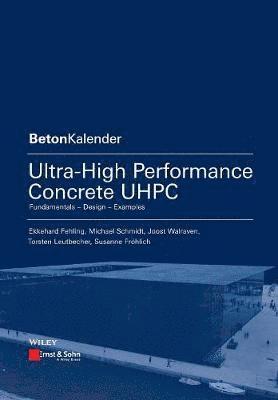
    Ultra-High Performance Concrete UHPC

    Fundamentals, Design, Examples

    AvEkkehard Fehling,Michael Schmidt

    Häftad, Engelska, 2014

    Del i serien Beton-Kalender Series

    599 kr

    Skickas . Fri frakt över 249 kr.

    Beskrivning

    Selected chapters from the German concrete yearbook are now being published in the new English "Beton-Kalender Series" for the benefit of an international audience.Since it was founded in 1906, the Ernst & Sohn "Beton-Kalender" has been supporting developments in reinforced and prestressed concrete. The aim was to publish a yearbook to reflect progress in "ferro-concrete" structures until - as the book's first editor, Fritz von Emperger (1862-1942), expressed it - the "tempestuous development" in this form of construction came to an end. However, the "Beton-Kalender" quickly became the chosen work of reference for civil and structural engineers, and apart from the years 1945-1950 has been published annually ever since.Ultra high performance concrete (UHPC) is a milestone in concrete technology and application. It permits the construction of both more slender and more durable concrete structures with a prolonged service life and thus improved sustainability.This book is a comprehensive overview of UHPC - from the principles behind its production and its mechanical properties to design and detailing aspects. The focus is on the material behaviour of steel fibre-reinforced UHPC. Numerical modelling and detailing of the connections with reinforced concrete elements are featured as well. Numerous examples worldwide - bridges, columns, facades and roofs - are the basis for additional explanations about the benefits of UHPC and how it helps to realise several architectural requirements.The authors are extensively involved in the testing, design, construction and monitoring of UHPC structures. What they provide here is therefore a unique synopsis of the state of the art with a view to practical applications.

    Produktinformation

    • Utgivningsdatum:2014-09-17
    • Mått:173 x 241 x 15 mm
    • Vikt:513 g
    • Format:Häftad
    • Språk:Engelska
    • Serie:Beton-Kalender Series
    • Antal sidor:198
    • Förlag:Wiley-VCH Verlag GmbH
    • ISBN:9783433030875

    Utforska kategorier

    • Byggnadsteknik inom Naturvetenskap och teknik

    Mer om författaren

    Univ.-Prof. Dr.-Ing. Ekkehard Fehling studied civil engineering and gained his doctoral degree at TU Darmstadt in 1990. In 1993 he was awarded the IABSE Prize (International Association for Bridge & Structural Design). Since 1997 he has been a licensed checking engineer for structural design in concrete and steel. In that same year he was appointed professor of concrete construction at the University of Kassel, Institute of Structural Engineering.Univ.-Prof. Dr.-Ing. habil. Michael Schmidt studied civil engineering and gained his doctoral degree at TU Hannover in 1977. After 20 years of R&D in the German cement industry he served as professor of construction materials at the University of Kassel, Institute of Structural Engineering from 1999 to 2012.Prof. Dr. ir. Dr.-Ing. h. c. Joost Walraven studied civil engineering and gained his doctoral degree at Delft University of Technology in 1980. For five years he was professor of concrete technology at TU Darmstadt, and since 1989 he has been professor of structural and building engineering at TU Delft. He is honorary president of the International Federation for Structural Concrete, fib.Univ.-Prof. Dr.-Ing. Torsten Leutbecher studied civil engineering and gained his doctoral degree at the University of Kassel in 2007. For six years he was a research associate at the University of Kassel, Institute of Structural Engineering. In 2014 he was appointed professor of structural concrete at the University of Siegen.Dipl.-Ing. Susanne Fröhlich is a research assistant at the University of Kassel, Institute of Structural Engineering.

    Innehållsförteckning

    • Editorial ix1 Introduction 12 Principles for the production of UHPC 52.1 Development 52.2 Basic material concepts 62.2.1 Microstructure properties 62.2.2 Grading optimization 82.3 Raw materials 122.3.1 Cement 122.3.2 Reactive admixtures 122.3.2.1 Silica fume 122.3.2.2 Ground granulated blast furnace slag 132.3.3 Inert admixtures 142.3.4 Superplasticizers 142.3.5 Steel fibres 142.4 Mix composition 152.5 Mixing 152.6 Curing and heat treatment 172.7 Testing 182.7.1 Fresh concrete 182.7.2 Compressive and flexural tensile strengths 203 Mechanical properties of the hardened concrete 233.1 General 233.2 Behaviour in compression 233.2.1 UHPC without fibres 233.2.2 UHPC with steel fibres 243.2.3 Further factors affecting the compressive strength 273.2.3.1 Geometry of test specimen and test setup 273.2.3.2 Heat treatment 273.3 Behaviour in tension 273.3.1 Axial (concentric) tension loads 273.3.2 Flexural tensile strength 323.3.3 Derivation of axial tensile strength from compressive strength 343.3.4 Derivation of axial tensile strength from bending tests 353.3.5 Splitting tensile strength 363.3.6 How fibre geometry and orientation influence the behaviour of UHPC in tension 363.3.7 Converting the stress–crack width relationship into a stress–strain diagram 393.3.8 Interaction of fibres and bar reinforcement 413.4 Shrinkage 423.5 Creep 433.6 Multi-axial stresses 443.7 Fatigue behaviour 443.8 Dynamic actions 513.9 Fire resistance 533.10 UHPC with combinations of fibres (‘fibre cocktails’) 534 Durability 594.1 Microstructure 594.2 Resistance to aggressive media 594.3 Classification in exposure classes 635 Design principles 655.1 Influence of fibre distribution and fibre orientation 655.2 Analyses for the ultimate limit state 665.2.1 Safety concept 665.2.2 Simplified stress–strain curve for design 675.2.2.1 Compression actions 675.2.2.2 Tension actions 705.2.3 Design for bending and normal force 725.2.4 Design for shear 755.2.4.1 Tests at the University of Kassel 755.2.4.2 Tests at RWTH Aachen University 795.2.4.3 Tests at Delft University of Technology 815.2.5 Punching shear 845.2.6 Strut-and-tie models 855.2.6.1 Load-carrying capacity of struts 865.2.6.2 Load-carrying capacity of ties 875.2.6.3 Load-carrying capacity of nodes 875.2.7 Partially loaded areas 885.2.8 Fatigue 885.3 Analyses for the serviceability limit state 895.3.1 Limiting crack widths 895.3.2 Minimum reinforcement 975.3.3 Calculating deformations 996 Connections 1056.1 General 1056.2 Dry joints 1056.3 Glued joints 1056.4 Wet joints 1086.5 Grouted joints 1116.6 Adding UHPC layers to existing components to upgrade structures 1137 Projects completed 1177.1 Bridges 1177.1.1 Canada 1177.1.1.1 Bridge for pedestrians/cyclists, Sherbrooke (1997) 1177.1.1.2 Glenmore/Legsby footbridge, Calgary (2007) 1177.1.2 France 1187.1.2.1 Road bridge, Bourg-lès-Valence 1187.1.2.2 Pont du Diable footbridge (2005) 1197.1.2.3 Pont de la Chabotte road bridge 1207.1.2.4 Pont Pinel road bridge (2007) 1217.1.2.5 Strengthening the Pont sur l’Huisne, Mans 1247.1.3 Japan 1247.1.3.1 Sakata-Mirai footbridge (2003) 1247.1.3.2 GSE Bridge, Tokyo Airport (2010) 1267.1.3.3 Tokyo Monorail, Haneda Airport line 1287.1.4 South Korea 1297.1.4.1 Seonyu ‘Bridge of Peace’, Seoul 1297.1.4.2 KICT cable-stayed footbridge (2009) 1317.1.4.3 Design for Jobal Bridge (KICT) 1327.1.5 Germany 1337.1.5.1 Bridges over River Nieste near Kassel 1337.1.5.2 Gärtnerplatz Bridge over River Fulda, Kassel (2007) 1347.1.5.3 HSLV pilot project 1377.1.5.4 Bridge for pedestrians/cyclists over River Pleiße, Markkleeberg (2012) 1407.1.6 Austria 1417.1.6.1 Wild Bridge near Völkermarkt 1417.1.6.2 Bridge for pedestrians/cyclists, Lienz 1437.1.6.3 Modular temporary bridge for high-speed rail lines 1447.1.7 Switzerland 1467.1.8 The Netherlands 1477.2 Applications in buildings 1497.2.1 Columns 1497.2.2 Façades 1517.2.3 Stairs and balconies 1527.2.4 Roofs 1557.3 Other applications 1577.3.1 Runway, Haneda Airport, Tokyo, Japan 1577.3.2 Jean Bouin Stadium, Paris 1608 Acknowledgements 163References 165Index 183