Beton-Kalender Series - Böcker
Visar alla böcker i serien Beton-Kalender Series. Handla med fri frakt och snabb leverans.
6 produkter
6 produkter
588 kr
Skickas inom 11-20 vardagar
Due to increasing traffic flows the extension of transport infrastructure with rail roads and high speed lines is an ongoing process worldwide. Ballastless track systems with concrete slabs are used more and more.Following the first trials in the 1970s and more than four decades of R&D work on ballastless track, the level of development is such that it can be confirmed that ballastless track is suitable for use as an alternative to ballasted track. This book makes a contribution to the state of the art of ballastless track by describing the basics for designing the ballastless track. Important advice is provided regarding the construction of ballastless track on earthworks and in tunnels. There is also a description of the technical history of the development of ballastless track on bridges and the ensuing findings for bridge design. The state of the art of ballastless track for switches, important information on details concerning drainage, transitions, accessibility for road vehicles and experience gleaned from maintenance round off the work. Selected chapters from the German concrete yearbook are now being published in the new English "Beton-Kalender Series" for the benefit of an international audience.Since it was founded in 1906, the Ernst & Sohn "Beton-Kalender" has been supporting developments in reinforced and prestressed concrete. The aim was to publish a yearbook to reflect progress in "ferro-concrete" structures until - as the book's first editor, Fritz von Emperger (1862-1942), expressed it - the "tempestuous development" in this form of construction came to an end. However, the "Beton-Kalender" quickly became the chosen work of reference for civil and structural engineers, and apart from the years 1945-1950 has been published annually ever since.
692 kr
Skickas inom 5-8 vardagar
The wind energy industry in Germany has an excellent global standing when it comes to the development and construction of wind turbines. Germany currently represents the world's largest market for wind energy. The ongoing development of ever more powerful wind turbines plus additional requirements for the design and construction of their offshore foundation structures exceeds the actual experiences gained so far in the various disciplines concerned.This book gives a comprehensive overview for planning and structural design analysis of reinforced concrete and pre-stressed concrete wind turbine towers for both, onshore and offshore wind turbines. Wind turbines represent structures subjected to highly dynamic loading patterns. Therefore, for the design of loadbearing structures, fatigue effects - and not just maximum loads - are extremely important, in particular in the connections and joints of concrete and hybrid structures. There multi-axial stress conditions occure which so far are not covered by the design codes. The specific actions, the nonlinear behaviour and modeling for the structural analysis are explained. Design and verification with a focus on fatigue are adressed. The chapter Manufacturing includes hybrid structures, segmental construction of pre-stressed concrete towers and offshore wind turbine foundations. Selected chapters from the German concrete yearbook are now being published in the new English "Beton-Kalender Series" for the benefit of an international audience.Since it was founded in 1906, the Ernst & Sohn "Beton-Kalender" has been supporting developments in reinforced and prestressed concrete. The aim was to publish a yearbook to reflect progress in "ferro-concrete" structures until - as the book's first editor, Fritz von Emperger (1862-1942), expressed it - the "tempestuous development" in this form of construction came to an end. However, the "Beton-Kalender" quickly became the chosen work of reference for civil and structural engineers, and apart from the years 1945-1950 has been published annually ever since.
569 kr
Skickas
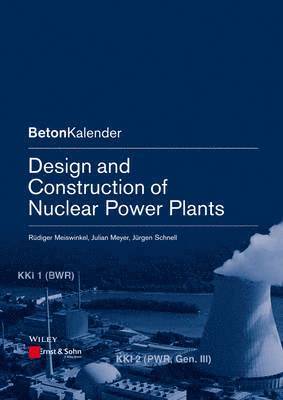
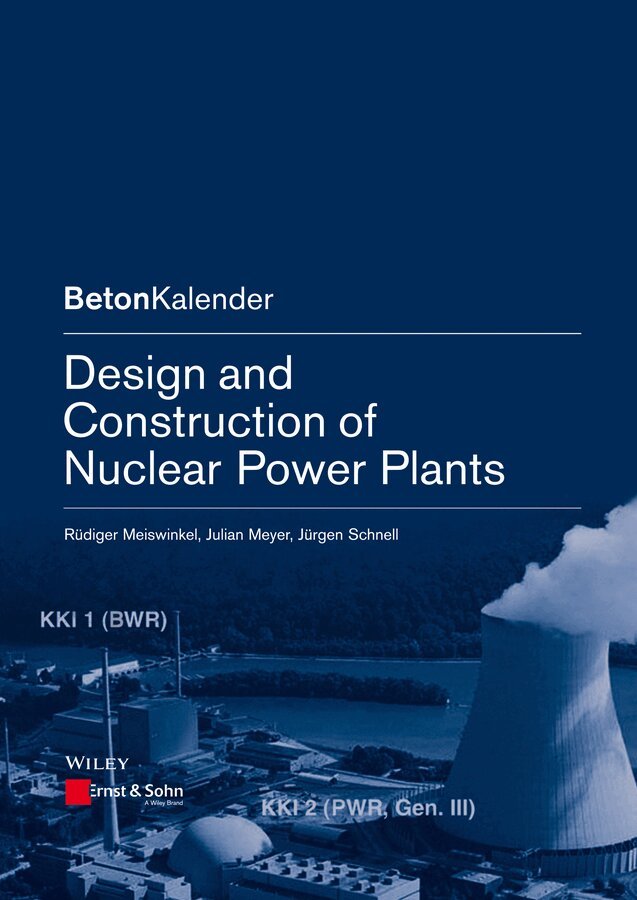
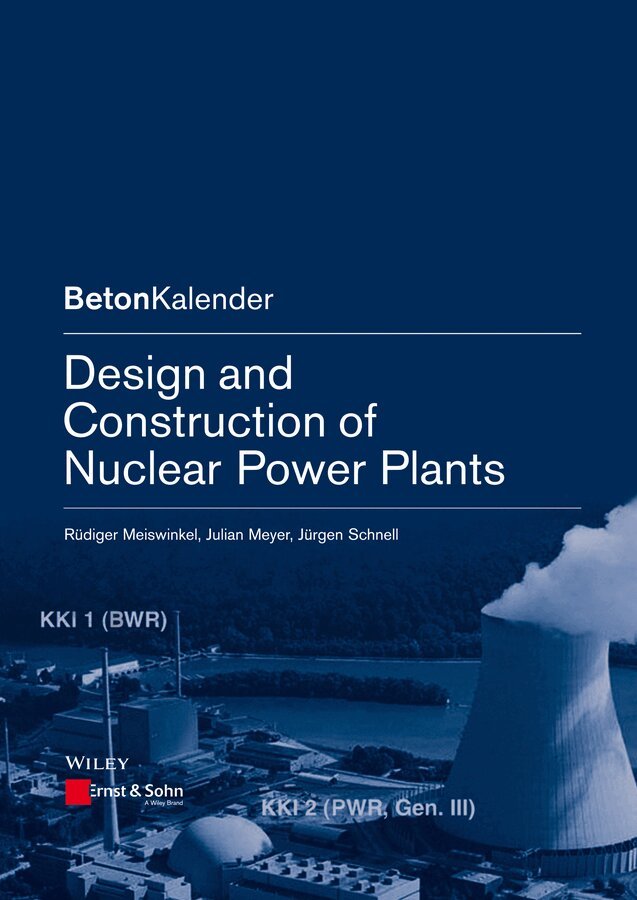
Despite all the efforts being put into expanding renewable energy sources, large-scale power stations will be essential as part of a reliable energy supply strategy for a longer period. Given that they are low on CO2 emissions, many countries are moving into or expanding nuclear energy to cover their baseload supply.Building structures required for nuclear plants whose protective function means they are classified as safety-related, have to meet particular construction requirements more stringent than those involved in conventional construction. This book gives a comprehensive overview from approval aspects given by nuclear and construction law, with special attention to the interface between plant and construction engineering, to a building structure classification. All life cycle phases are considered, with the primary focus on execution. Accidental actions on structures, the safety concept and design and fastening systems are exposed to a particular treatment. Selected chapters from the German concrete yearbook are now being published in the new English "Beton-Kalender Series" for the benefit of an international audience.Since it was founded in 1906, the Ernst & Sohn "Beton-Kalender" has been supporting developments in reinforced and prestressed concrete. The aim was to publish a yearbook to reflect progress in "ferro-concrete" structures until - as the book's first editor, Fritz von Emperger (1862-1942), expressed it - the "tempestuous development" in this form of construction came to an end. However, the "Beton-Kalender" quickly became the chosen work of reference for civil and structural engineers, and apart from the years 1945-1950 has been published annually ever since.
568 kr
Skickas
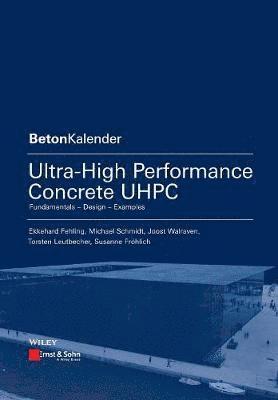
Selected chapters from the German concrete yearbook are now being published in the new English "Beton-Kalender Series" for the benefit of an international audience.Since it was founded in 1906, the Ernst & Sohn "Beton-Kalender" has been supporting developments in reinforced and prestressed concrete. The aim was to publish a yearbook to reflect progress in "ferro-concrete" structures until - as the book's first editor, Fritz von Emperger (1862-1942), expressed it - the "tempestuous development" in this form of construction came to an end. However, the "Beton-Kalender" quickly became the chosen work of reference for civil and structural engineers, and apart from the years 1945-1950 has been published annually ever since.Ultra high performance concrete (UHPC) is a milestone in concrete technology and application. It permits the construction of both more slender and more durable concrete structures with a prolonged service life and thus improved sustainability.This book is a comprehensive overview of UHPC - from the principles behind its production and its mechanical properties to design and detailing aspects. The focus is on the material behaviour of steel fibre-reinforced UHPC. Numerical modelling and detailing of the connections with reinforced concrete elements are featured as well. Numerous examples worldwide - bridges, columns, facades and roofs - are the basis for additional explanations about the benefits of UHPC and how it helps to realise several architectural requirements.The authors are extensively involved in the testing, design, construction and monitoring of UHPC structures. What they provide here is therefore a unique synopsis of the state of the art with a view to practical applications.
1 008 kr
Skickas inom 11-20 vardagar
Building with precast concrete elements is one of the most innovative forms of construction. This book serves as an introduction to this topic, including examples, and thus supplies all the information necessary for conceptual and detailed design.
1 030 kr
Tillfälligt slut
Building with precast concrete elements is one of the most innovative forms of construction. This book serves as an introduction to this topic, including examples, and thus supplies all the information necessary for conceptual and detailed design.