• Fri frakt över 249 kr
  • •
  • Snabba leveranser
  • •
  • Billiga böcker
Kundservice

Du är på sajten för privatpersoner.

Företag, bibliotek eller offentlig verksamhet?

Du handlar på classic.bokus.com, där alla dina funktioner finns intakta.
Till classic.bokus.com
Bokus logotyp. Gå till startsidan.
  • Erbjudanden
  • Student
  • Topplistor
  • Barn & ungdom
  • Bokus Play
  • E-böcker
  • Ljudböcker
  • Pocketböcker
  • Spel och pussel

Skapa nya rutiner – hälsoböcker upp till 50% →

Sidfot

Mina sidor

    Hjälp

    • Kundservice
    • Vanliga frågor och svar
    • Frakt och leverans
    • Retur vid ångerrätt
    • Reklamera vara
    • Betalning
    • Köpvillkor
    • Allmänna villkor
    • Information om webbplatsens tillgänglighet

    Om Bokus

    • Om oss
    • Pressrum
    • För studenter
    • För företag
    • För bibliotek och offentlig verksamhet
    • För leverantörer
    • Hållbarhet

    Populärt

    • Aktuella erbjudanden
    • Presentkort
    • Studentlitteratur
    • Nya böcker
    • Topplistor
    • Signerade böcker
    • Engelska böcker

    Inspiration

    • Boktips
    • BookTok
    • Barnbokskaraktärer
    • Populära författare
    Logotyp för Bokus
    Följ oss på Facebook (extern länk)Följ oss på Instagram (extern länk)Följ oss på YouTube (extern länk)Följ oss på TikTok (extern länk)
    bokus @ CookiesAnpassa cookiesIntegritetspolicyKöpvillkor
    Till Citymail hemsida (extern länk)Till Budbee hemsida (extern länk)Till Postnord hemsida (extern länk)Till Schenker hemsida (extern länk)Till Early Bird hemsida (extern länk)Till Walleys hemsida (extern länk)
    1. Naturvetenskap och teknik
    2. Matematik och naturvetenskap
    3. Kemi
    4. Organisk kemi

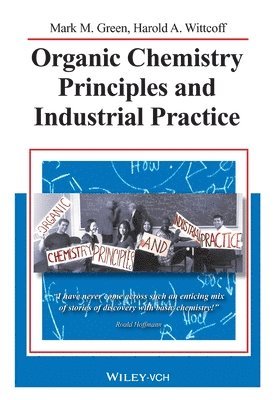
    Organic Chemistry Principles and Industrial Practice

    AvMark M. Green,Harold A. Wittcoff

    Häftad, Engelska, 2006

    Del i serien Chemistry

    962 kr

    Beställningsvara. Skickas inom 5-8 vardagar. Fri frakt över 249 kr.

    Beskrivning

    Nylon, plexiglas, epoxy resin, and Elmer's glue; dynamite, rubber tires, and spandex. These are a few among the multitude of industrial products produced using the principles of organic chemistry, principles that are often taught to students without reference to the commercial and practical importance of the subject. The marvelous theoretical principles on which organic chemistry is based are therefore often not fully appreciated by students of this subject. Organic chemistry can appear dry, meaningless, and seemingly irrelevant. In this textbook, designed to be used in conjunction with classic texts of organic chemistry at the undergraduate level, or standing alone for more advanced students, two experts, M. M. Green and H. A. Wittcoff bring the principles and the practice together. Written for students, and also giving much information that could be used to enhance teaching of the subject, the book, presented in ten concise chapters, combines important industrial processes with the principles of organic chemistry. The result is a source of otherwise barely accessible information. In addition, personal anecdotes from the authors' vast experience make this a fascinating and indispensable textbook for everyone wishing to enhance the appreciation of this subject. "I have never come across such an enticing mix of stories of discovery with basic chemistry!"Roald HoffmannCornell University "Simply put, this book is a gem. The chemistry described is rigorous but the warm, humorous, and conversational writing style makes the book a joy to read." Dasan M. ThamattoorColby College "This is a unique, fascinating book that bridges organic chemistry principles with chemical industrial applications. The story telling style make the reading/learning experience extremely enjoyable." Qiao-Sheng Hu, College of Staten Island, City University of New York

    Produktinformation

    • Utgivningsdatum:2006-04-11
    • Mått:172 x 246 x 18 mm
    • Vikt:539 g
    • Format:Häftad
    • Språk:Engelska
    • Serie:Chemistry
    • Antal sidor:341
    • Upplaga:1
    • Förlag:Wiley-VCH Verlag GmbH
    • ISBN:9783527302895

    Utforska kategorier

    • Organisk kemi inom Naturvetenskap och teknik
    • Naturvetenskap:allmänt inom Naturvetenskap och teknik
    • Tillverkningsteknik inom Naturvetenskap och teknik

    Mer om författaren

    Mark M. Green is Professor in the Herman F. Mark Polymer Research Institute at Polytechnic University.

    Recensioner i media

    "This book is a joy to read (and re-read)."James A. MooreRensselaer Polytechnic Institute "This very interesting book is going to find a unique place in the repertoire of organic textbooks."James Canary New York University "Simply put, this book is a gem. The chemistry describedis rigorous but the warm, humorous, and conversational writing style makes the book a joy to read." Dasan M. ThamattoorColby College "I have never come across such an enticing mix of stories of discovery with basic chemistry!"Roald HoffmannCornell University "This is a highly original book filling an obvious need."Herbert MorawetzPolytechnic University "This book is a delightful contribution to the field of organic chemistry that offers a useful pedagogical approach."Pedro Cintas, Facultad de Ciencias-UEX Badajoz, Spain "What an excellent read! The book, intended for organic chemistry students, is in the style of the first books on organic chemistry by Isaac Asimov which impressed me as a teenager in the 1960´s. It makes the discovery of new chemicals and processes seem exciting, and emphasises the importance of academic understanding in the development of the chemical industry. (...) The book is full of interesting anecdotes, often related to serendiptious discoveries. But, as Louis Pasteur said, "Chance favours the prepared mind". (...) One interesting story on the cracking of petroleum and the subsequent build up of coke deposits relates to a father who was so obsessed with the subject that he called his son Carbon; Carbon then named his own daughters Methyl and Ethyl. In my opinion, any father who saddles his children with such names might be regarded es a well known arsenic heterocycle!In conclusion, all organic chemists should read this book for pleasure, not just to learn new knowledge. I hope the authors can be persuaded to write a second volume which covers the fine chemicals industry."Organic Process Research & Development, Dr. Trevor Laird "This is a unique, fascinating book that bridges organic chemistry principles with chemical industrial applications. The story telling style make the reading/learning experience extremely enjoyable." Qiao-Sheng Hu, College of Staten Island, City University of New York "This is a great book to have on one's shelf. It's interesting to read and useful for teaching at a variety of levels."Chemical & Engineering News "They (authors) also provide insight on how the well-being of corporate enterprise can, through a deep understanding of chemistry, complement the well-being of society and the global environment."C & EN, July 19, 2004 "...a well-structured, easy-to-read introduction to the principles of organic chemistry with a new didactic approach ... offers valuable and new ideas..." Chimie Nouvelle, Vol.23, No.88, March 2005 "As a supplement to teaching, this book is excellent. ... In any case, don't wait, Green and Wittcoff is a great book to have on the shelf now."Angewandte Chemie I.E., Vol.43/No.47, 2004

    Innehållsförteckning

    • Preface xvWhat the Experts Say about this Book xix1 How Petroleum is converted into Useful Materials: Carbocations and Free Radicals are the Keys 11.1 The Conflicting Uses for Petroleum: The Chemical Industry and the Internal Combustion Engine 11.2 How do we achieve these Two Objectives? By Using two different Kinds of Cracking: One depends on Free Radicals and the Other on Carbocations 21.3 What is in Petroleum? 31.4 The Historical Development of Steam Cracking 41.5 What was Available before Thermal and Steam Cracking? 61.6 Acetylene was Widely Available before Steam Cracking and Exceptionally Useful but Everyone wanted to replace this Dangerous Industrial Intermediate. Happily, Double Bonds replaced Triple Bonds 61.7 Petroleum yields Ethylene and lays the Groundwork for a New Kind of Chemical Industry 81.8 But What about that Thirsty Internal Combustion Engine? The Development of Catalytic Cracking 81.9 Discovery of the Proper Catalyst for Catalytic Cracking: From Natural Synthetic Zeolites 101.10 Let’s compare the Mechanisms of Steam and Catalytic Cracking: Free Radicals versus Carbocations 121.11 How are Free Radicals formed in Steam Crackers, and What do they do? 121.12 Now let’s look at Catalytic Cracking and the Essential Role of Carbocations and their Ability to rearrange the Structure of Organic Molecules 151.13 What’s going on inside those Zeolite Pores? 161.14 Why do Steam Cracking and Catalytic Cracking produce such Different Results. Or, in Other Words, Why do Carbocations and Free Radicals behave so Differently? 191.15 Summary 20Study Guide Problems for Chapter 1 212 Polyethylene, Polypropylene and the Principles of Stereochemistry 232.1 The Thermodynamics of Addition Polymerization: the Competition between Enthalpy and Entropy 232.2 Polyethylene is formed via a Free Radical Polymerization that involves the Classic Steps of all Chain Reactions: Initiation, Propagation, and Termination 242.3 Attempted Free Radical Polymerization of Propylene. It fails because of Resonance Stabilization of Allylic Radicals 272.4 So How is Polypropylene made? Organometallic Chemistry can do what Free Radical Chemistry cannot. And the Big Surprise is the Role of Stereochemistry and Specifically Chirality. This is Something No One suspected 292.5 There are More Kinds of Polyethylene than the One produced by the Free Radical Chain Mechanism 292.6 What have we learned from the Organometallic Method for Polymerizing Ethylene that leads to the Possibility of Polymerizing Propylene? 322.7 Do the Methyl Groups on Every Third Carbon on Each Individual Polypropylene Chain all have to be on the Same Side of the Chain? 342.8 What do the Opposite “Faces” of Propylene have to do with the Formation of Isotactic Polypropylene by the Ziegler–Natta Catalyst? 352.9 From the Ziegler–Natta Catalyst to Single-site Catalysts: Creating a Catalyst with a Precisely Known Structure that can Polymerize Propylene to an Isotactic Polypropylene 362.10 How does this Small Molecule Analog of the Ziegler-Natta Catalyst polymerize Popylene? 382.11 An Interesting Story concerning Industrial Conflict 402.12 Summary 41Study Guide Problems for Chapter 2 423 The Central Role of Electrophilic Aromatic Substitution 453.1 Materials derived from Ethylene, Propylene and Benzene are All Around Us 453.2 The Carbon Atoms in Ethylene, Propylene and Benzene find their Way into Polystyrene, Polycarbonate, and Epoxy Resin 463.3 Industrial Synthesis of the Building Blocks of Polystyrene, Polycarbonate, and Epoxy Resin 473.4 How Isopropylbenzene is Industrially produced and the Struggle to reduce the Di- and Triisopropylbenzene Byproducts 493.5 How Ethylbenzene is produced Industrially 523.6 Zeolites and Ethylbenzene 523.7 How does the Zeolite Catalyst repress the Formation of Di- and Triethylbenzene? 543.8 So Why are Zeolites not used for the Formation of Cumene? 543.9 What Role does Cumene play in the Production of Epoxy Resin and Polycarbonate? 563.10 How Phenol and Acetone react together to form an Isomeric Mixture of the Intermediate HOC6H4 C(CH3)2OH, which then goes on to form Isomers of Bisphenol A 563.11 We continue Our Backward Path. How are Phenol and Acetone formed from Cumene? 593.12 A Remarkable Rearrangement 603.13 Summary 62Study Guide Problems for Chapter 3 644 From Nucleophilic Chemistry to Crosslinking, with a Side Trip to Glycerol, in the Synthesis of Commercially Important Plastics 674.1 The Structure and Use of Epoxy Resins 674.2 Epoxy Coatings and their Curing (Crosslinking) and Pot Life 684.3 The Molecular Source of the Toughness of Epoxy Resin 714.4 With Epichlorohydrin and Bisphenol A We are only One Step, a Nucleophilic Step, from Epoxy Resin. It all depends on the Reactivity of the Epoxide Ring 714.5 Just as for Formation of Epoxy Resin, Curing of Epoxy Resin also involves Nucleophilic Chemistry and the Reactivity of the Epoxide Ring 744.6 How Epichlorohydrin is synthesized from Allyl Chloride by a Classic Double Bond Addition Reaction followed by Formation of an Epoxide 764.7 How is Allyl Chloride produced industrially from Propylene? 774.8 A Less Temperature-dependent Way to make Epichlorohydrin 794.9 A Final Note about Epoxy Resins 804.10 What did the Original Shell Method for producing Epichlorohydrin have to do with Glycerol? The Answer is Alkyd Resins and this will teach Us More about Crosslinking and also introduce Nucleophilic Acyl Chemistry 804.11 The Earliest Production of Glycerol arose from Production of Soap 864.12 What Commercial Uses exist for Glycerol? 874.13 The Role of Glycerol in Dynamite, and the Nobel Prize 884.14 Glycerol plays a Role in the Production of Polyurethanes: Nucleophilic Chemistry and Crosslinking 894.15 Polyurethanes are a Product of the Chemical Reactivity of Isocyanates 904.16 A Route to Chemically Crosslinked Polyurethanes 924.17 Polyether Polyols are widely used for forming Crosslinked Polyurethanes. There are many Variations on this Theme 934.18 What About the Foamed Structure of the Polyurethane? Addition of a Small Amount of Water is a Common Answer 944.19 Let’s return again to Bisphenol A and learn about an Entirely Different Kind of Plastic, Polycarbonate, which is Very Different from Epoxy, Alkyd Resins and Polyurethanes 954.20 How Polycarbonates are synthesized and the Unwelcome Role of Phosgene 964.21 Is there a Future in the Chemical Industry for a Chemical as Dangerous as Phosgene? 994.22 A few Remarks about the Double Meaning of Chloride as a Leaving Group 994.23 Summary 101Study Guide Problems for Chapter 4 1035 The Nylon Story 1075.1 What was the World of Polymers like When Carothers entered the Picture? 1075.2 What did Carothers do at DuPont? 1095.3 Carothers’ Work at DuPont had Enormous Consequences for both DuPont and the Chemical Industry? 1115.4 The Similarities and Distinctions of the Various Polyamides that make up the Family of Nylons 1125.5 The Industrial Route to Adipic Acid and Hexamethylene Diamine: the Precursors of Nylon 6,6. Benzene is the Source 1165.6 Hexamethylene Diamine from 1,3-Butadiene. Improving a Route to a New Kind of Rubber led to a Better Way to synthesize Hexamethylene Diamine: Industry and the Principle of Thermodynamic versus Kinetic Control of Reaction Products 1195.7 The Role of Acrylonitrile in the Production of Nylons 1225.8 From the Dicarboxylic Acid and the Diamine to Nylon? 1255.9 Nylons made from a Single Monomer: Nylon 6 1275.10 Another Nylon made from a Single Monomer: Nylon 11 1295.11 Summary 132Study Guide Problems for Chapter 5 1346 Competition for the Best Industrial Synthesis of Methyl Methacrylate 1376.1 Economic and Environmental Factors are Driviing Forces for Industrial Innovation 1376.2 PlexiglasTM 1376.3 The Classical Route to Methyl Methacrylate involves the Essential Role of Cyanohydrins, which can be Easily Converted to Unsaturated Carboxylic Acids 1396.4 Problems in the Classical Approach to Synthesis of Methyl Methacrylate 1426.5 What New Possibilities exist for Replacing the Old Process? Can the Ammonium Bisulfate Disposal Problem be Solved? 1436.6 The Mitsubishi Gas Chemical Company Approach to improving the Synthesis of Methyl Methacrylate 1446.7 The Double Bond still has to be Introduced to form the Final Methyl Methacrylate Product 1466.8 Can Things still be Improved Further? 1466.9 From Isobutene to Methyl Methacrylate: Mitsubishi Rayon versus Asahi 1476.10 How Environmental Reasons stopped the Use of Tetraethyllead as an Octane Improver in Gasoline leading to its Replacement with Methyl Tertiary Butyl Ether (MTBE). But MTBE is synthesized from Isobutene, which could have blocked the Supply of Isobutene for Production of Methyl Methacrylate. But Environmental Concerns about MTBE have caused it to lose Favor as an Octane Improver in Gasoline therefore releasing Isobutene for Production of Methyl Methacrylate. A Story of the Ups and Downs of the Chemical Industry – What a Ride! 1486.11 A Competitive Process for the Synthesis of Methyl Methacrylate based on Ethylene 1506.12 A Competitive Process for Synthesis of Methyl Methacrylate based on Propylene 1516.13 A Possible Commercial Synthesis of Methyl Methacrylate starting from Methyl Acetylene 1526.14 Summary 153Study Guide Problems for Chapter 6 1557 Natural Rubber and Other Elastomers 1577.1 Introduction to Rubber 1577.2 Why are Some Materials Rubbery? 1587.3 The Conformational Basis of Elasticity 1587.4 How does the Structure of Natural Rubber fit into the Theoretical Picture of Elasticity drawn above? 1607.5 Let’s take a Short Diversion from Elastomers 1627.6 Elastomers require Essentially Complete Recoverability from the Stretched State. The Story of Vulcanization and How Sulfur supplies this Characteristic to Hevea Rubber 1637.7 What happens When Sulfur and Natural Rubber are mixed and heated? 1647.8 Hypalon: an Elastomer that can be Crosslinked without the Presence of Double Bonds 1677.9 Many Synthetic Elastomers are produced by the Chemical Industry. In Every Case the Physical Principles are Identical to those at Work in Natural Rubber and the Essential Characteristic of an Elastomer must be present, that is, a Crosslinked Flexible Polymer Chain 1707.10 What Kinds of Polymer Properties will preclude Elastomeric Behavior? What Kinds of Polymers could be called Anti-elastic? 1777.11 Physical Interactions among Polymer Chains can be used to form Elastomers with Unique Properties. How the Polymeric Glassy State can act as a Physical Crosslink 1777.12 Variations on the Block Theme produce Thermoplastic Polyurethane Elastomers including Spandex (Lycra TM), the Elastic Fiber. Here, the Crosslinks involve a Kind of Physical Interaction, which is Different from Glass Formation 1837.13 Spandex: A Possible Synthesis 1857.14 Ionomers: Yet Another Approach to Reversible Cosslinking 1887.15 Summary 190Study Guide Problems for Chapter 7 1918 Ethylene and Propylene: Two Very Different Kinds of Chemistry 1958.1 Ethylene and Propylene 1958.2 The Industrial Importance of Ethylene and Propylene 1958.3 Ethylene Oxide and Propylene Oxide are Very Large Volume Industrial Intermediates derived from Ethylene and Propylene but must be Industrially Synthesized in Entirely Different Ways 1978.4 The Production of Propylene Oxide without using Chlorine 1988.5 Why did Dow maintain the Hypochlorous Route to Propylene Oxide? 2018.6 Before We continue to investigate the Difference in the Industrial Chemistry of Ethylene and Propylene, let’s take a Diversion from the Main Theme of the Chapter. Why are Ethylene Oxide and Propylene Oxide so Important to the Chemical Industry? We find out by adding Water 2018.7 Any Process that could produce Ethylene Glycol without Oligomeric Products would be Highly Desirable 2048.8 We’ve seen the problems arising from the allylic hydrogens in propylene. Does the Reactivity of these Hydrogens bestow any Advantages? 2048.9 The Importance of Polyacrylic Acid and its Esters 2048.10 The Importance of Acrylonitrile and Polyacrylonitrile 2068.11 How was Arylonitrile produced in the “Old Days” before the “Propylene Approach” took over? 2098.12 How was Acrylic Acid produced in the “Old Days” before the “Propylene Approach” took over? 2098.13 An Early Example of Transition Metal Catalysis led to a Direct Route from Acetylene to Acrylic Acid 2118.14 The Oxidation of Propylene to Acrylic Acid and to Acrylonitrile shuts down all Previous Processes. The Catalyst is the Key, but the Allylic Hydrogens are Essential 2128.15 Summary 217Study Guide Problems for Chapter 8 2189 The Demise of Acetaldehyde: A Story of How the Chemical Industry Evolves 2219.1 An Interesting Example of Shutdown Economics 2219.2 An Aspect of the Evolution of the Chemical Industry that begins with World War I 2239.3 The Aldol Condensation leads to n-Butanol 2249.4 Reactivity Principles associated with the Aldol Condensation 2269.5 Pentaerythritol and other Polyhydric Alcohols synthesized via Aldol Condensations 2299.6 A Prominent “Plasticizer” is synthesized via an Aldol Condensation 2329.7 The Grandfather Molecule of the Aldol Condensation is Acetaldehyde. How was and is Acetaldehyde produced? 2349.8 A Palladium-based Process, the Wacker Reaction, shuts down all Older Industrial Methods to Acetaldehyde 2369.9 Hydroformylation – Another Triumph for Transition Metals 2389.10 How is the Other Product, Acetic Acid, which formerly was made from Acetaldehyde, now produced? 2439.11 Summary 244Study Guide Problems for Chapter 9 24610 Doing Well by Doing Good 24910.1 Many Companies in the Chemical Industry have been Amazed to Learn that Replacement of Dangerous and/or Toxic Chemicals Leads not only to Safety, but also to Greater Profit 24910.2 What’s the Problem with Acetylene? First, it is Explosive 24910.3 What Else is Wrong with Acetylene? 25110.4 What is the Precise Chemical Nature of these Carbide Salts? 25210.5 Is Acetylene derived from Calcium Carbide of Commercial Importance? 25410.6 Large-scale Production of Acetylene 25510.7 How was Acetylene Used to Produce Industrial Intermediates? 25810.8 Replacing Acetylene with Ethylene and Zinc with Palladium for the Production of Vinyl Acetate 26010.9 What is Valuable about Vinyl Acetate? 26210.10 Replacing Acetylene with Ethylene for the Production of Vinyl Chloride 26510.11 The Production of 1,4-Butynediol shows an Entirely Different Face of Acetylene Reactivity 26810.12 Phosgene and Chlorine – the Poison Gases of World War I. Can their Replacement for Industrial Processes by Safer Chemicals also be an Example of “Doing Well by Doing Good?” 27310.13 Is there a Way to Eliminate Phosgene in the Industrial Synthesis of Polycarbonate? 27410.14 Let’s look at Another Competition, the Production of Methyl Methacrylate, in Terms of Cash and Finance Costs 28110.15 Reducing the Use of Chlorine in Industrial Processes 28210.16 HCN is a Dangerous Chemical Hastening its Replacement in the Synthesis of Methyl Methacrylate, as we have seen. But its Exquisite Reactivity has Fostered its Use in Other Processes and Particularly in a Potential Process for Getting rid of Ammonium Sulfate as a Byproduct in the Synthesis of Nylon 6 28310.17 Routes to Caprolactam that Avoid Production of Ammonium Sulfate 28410.18 Summary 287Study Guide Problems for Chapter 10 289An Epilogue – The Future 293Index 297
    Hoppa över listan

    Mer från samma författare

    Mark M. Green, R. J. M. Nolte, E. W. Meijer - Materials-Chirality, Inbunden
    Del 24

    Materials-Chirality

    Mark M. Green, R. J. M. Nolte, E. W. Meijer

    Inbunden, 2003

    3 734 kr

    E. W. Meijer, R. J. M. Nolte, Mark M. Green - Materials-Chirality, E-bok

    Materials-Chirality

    E. W. Meijer, R. J. M. Nolte, Mark M. Green

    E-bok
    2004

    4 260 kr

    Mark M. Green - Organic Chemistry Principles in Context: A Story Telling Historical Approach, Häftad

    Organic Chemistry Principles in Context: A Story Telling Historical Approach

    Mark M. Green

    Häftad

    356 kr

    Hoppa över listan

    Mer från samma serie

    Edith Mathiowitz, Edith Mathiowitz - Encyclopedia of Controlled Drug Delivery, 2 Volume Set, Inbunden

    Encyclopedia of Controlled Drug Delivery, 2 Volume Set

    Edith Mathiowitz, Edith Mathiowitz

    Inbunden, 1999

    14 698 kr

    Frederick J. Francis, Frederick J. Francis - Wiley Encyclopedia of Food Science and Technology, 4 Volume Set, Inbunden

    Wiley Encyclopedia of Food Science and Technology, 4 Volume Set

    Frederick J. Francis, Frederick J. Francis

    Inbunden, 1999

    31 165 kr

    Istvan T. Horvath - Encyclopedia of Catalysis, 6 Volume Set, Inbunden

    Encyclopedia of Catalysis, 6 Volume Set

    Istvan T. Horvath

    Inbunden, 2003

    40 657 kr

    V. S. Yungman, V. S. Yungman - Thermal Constants of Substances, 8 Volume Set, Inbunden

    Thermal Constants of Substances, 8 Volume Set

    V. S. Yungman, V. S. Yungman

    Inbunden, 1999

    78 068 kr

    Jeffrey B. Harborne, Jeffrey B. Harborne, Herbert Baxter - Chemical Dictionary of Economic Plants, Inbunden

    Chemical Dictionary of Economic Plants

    Jeffrey B. Harborne, Jeffrey B. Harborne, Herbert Baxter

    Inbunden, 2001

    8 041 kr

    Fred W. McLafferty, Douglas B. Stauffer - Important Peak Index of the Registry of Mass Spectral Data, 3 Volume Set, Inbunden

    Important Peak Index of the Registry of Mass Spectral Data, 3 Volume Set

    Fred W. McLafferty, Douglas B. Stauffer

    Inbunden, 1991

    15 082 kr

    Peter A. Lewis, Peter A. Lewis - Pigment Handbook, 3 Volume Set, Inbunden

    Pigment Handbook, 3 Volume Set

    Peter A. Lewis, Peter A. Lewis

    Inbunden, 1988

    22 440 kr

    Fred McLafferty, Fred W. McLafferty, Douglas B. Stauffer - Wiley / NBS Registry of Mass Spectral Data, 7 Volume Set, Inbunden

    Wiley / NBS Registry of Mass Spectral Data, 7 Volume Set

    Fred McLafferty, Fred W. McLafferty, Douglas B. Stauffer

    Inbunden, 1989

    20 729 kr

    J. W. De Leeuw - Mass Spectra of Geochemicals, Petrochemicals, and Biomarkers, Övrigt

    Mass Spectra of Geochemicals, Petrochemicals, and Biomarkers

    J. W. De Leeuw

    36 418 kr

    James P. Casey, James P. Casey - Pulp and Paper, Inbunden

    Pulp and Paper

    James P. Casey, James P. Casey

    Inbunden, 1984

    24 262 kr

    Hoppa över listan

    Du kanske också är intresserad av

    Mark M. Green, R. J. M. Nolte, E. W. Meijer - Materials-Chirality, Inbunden
    Del 24

    Materials-Chirality

    Mark M. Green, R. J. M. Nolte, E. W. Meijer

    Inbunden, 2003

    3 734 kr

    Jeffery S. Plotkin, Bryan G. Reuben, Harold A. Wittcoff - Industrial Organic Chemicals, E-bok

    Industrial Organic Chemicals

    Jeffery S. Plotkin, Bryan G. Reuben, Harold A. Wittcoff

    E-bok
    2012

    2 130 kr

    Jeffery S. Plotkin, Bryan G. Reuben, Harold A. Wittcoff - Industrial Organic Chemicals, E-bok

    Industrial Organic Chemicals

    Jeffery S. Plotkin, Bryan G. Reuben, Harold A. Wittcoff

    E-bok
    2012

    2 130 kr

    Harold A. Wittcoff, Bryan G. Reuben, Jeffery S. Plotkin - Industrial Organic Chemicals, Inbunden

    Industrial Organic Chemicals

    Harold A. Wittcoff, Bryan G. Reuben, Jeffery S. Plotkin

    Inbunden, 2013

    1 839 kr

    E. W. Meijer, R. J. M. Nolte, Mark M. Green - Materials-Chirality, E-bok

    Materials-Chirality

    E. W. Meijer, R. J. M. Nolte, Mark M. Green

    E-bok
    2004

    4 260 kr

    Mark M. Green - Organic Chemistry Principles in Context: A Story Telling Historical Approach, Häftad

    Organic Chemistry Principles in Context: A Story Telling Historical Approach

    Mark M. Green

    Häftad

    356 kr

    Klara Ingemyr - SIGNERAD - Klaras husman, Kartonnage
    • Signerad!

    SIGNERAD - Klaras husman

    Klara Ingemyr

    Kartonnage, 2026

    269 kr

    Carola Häggkvist - SIGNERAD - Jag är Carola, Inbunden
    • Signerad!

    SIGNERAD - Jag är Carola

    Carola Häggkvist

    Inbunden, 2026

    269 kr

    Marcus Frank - SIGNERAD - Mackans kost : Middagar och matlådor, Inbunden
    • Signerad!

    SIGNERAD - Mackans kost : Middagar och matlådor

    Marcus Frank

    Inbunden, 2026

    269 kr

    Frida Gråsjö - Vatten över huvudet, Pocket
    • -45%
    Del 1

    Vatten över huvudet

    Frida Gråsjö

    Pocket, 2024

    3,4 utav 5 stjärnor. Totalt antal röster:(26)

    49 kr89 kr