• Fri frakt över 249 kr
  • •
  • Snabba leveranser
  • •
  • Billiga böcker
Kundservice

Du är på sajten för privatpersoner.

Företag, bibliotek eller offentlig verksamhet?

Du handlar på classic.bokus.com, där alla dina funktioner finns intakta.
Till classic.bokus.com
Bokus logotyp. Gå till startsidan.
  • Erbjudanden
  • Nyheter
  • Student
  • Topplistor
  • Barn & ungdom
  • Bokus Play
  • E-böcker
  • Pocketböcker
  • Spel & pussel

10% rabatt på allt med kod NYSTART10 →

Sidfot

Mina sidor

    Hjälp

    • Kundservice
    • Vanliga frågor och svar
    • Frakt och leverans
    • Retur vid ångerrätt
    • Reklamera vara
    • Betalning
    • Köpvillkor
    • Allmänna villkor
    • Information om webbplatsens tillgänglighet

    Om Bokus

    • Om oss
    • Pressrum
    • För studenter
    • För företag
    • För bibliotek och offentlig verksamhet
    • För leverantörer
    • Hållbarhet

    Populärt

    • Aktuella erbjudanden
    • Presentkort
    • Studentlitteratur
    • Nya böcker
    • Topplistor
    • Signerade böcker
    • Engelska böcker

    Inspiration

    • Boktips
    • BookTok
    • Populära bokserier
    • Barnbokskaraktärer
    • Populära författare
    Logotyp för Bokus
    Följ oss på Facebook (extern länk)Följ oss på Instagram (extern länk)Följ oss på YouTube (extern länk)Följ oss på TikTok (extern länk)
    bokus @ CookiesAnpassa cookiesIntegritetspolicyKöpvillkor
    Till Citymail hemsida (extern länk)Till Budbee hemsida (extern länk)Till Postnord hemsida (extern länk)Till Schenker hemsida (extern länk)Till Early Bird hemsida (extern länk)Till Walleys hemsida (extern länk)
    1. Naturvetenskap och teknik
    2. Teknik och industri
    3. Tillverkningsteknik

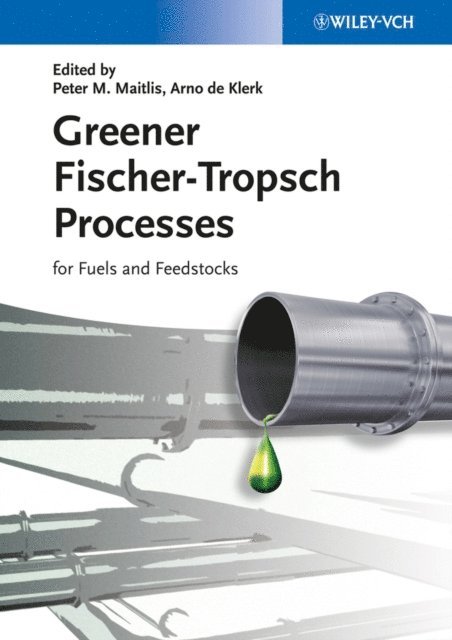
    Greener Fischer-Tropsch Processes

    For Fuels and Feedstocks

    AvPeter M. Maitlis,Peter M. Maitlis

    Inbunden, Engelska, 2013

    1 810 kr

    Beställningsvara. Skickas inom 5-8 vardagar. Fri frakt över 249 kr.

    Beskrivning

    Greener Fischer-Tropsch Processes How can we use our carbon-based resources in the most responsible manner? How can we most efficiently transform natural gas, coal, or biomass into diesel, jet fuel or gasoline to drive our machines? The Big Questions today are energy-related, and the Fischer-Tropsch process provides industrially tested solutions. This book offers a comprehensive and up-to-date overview of the Fischer-Tropsch process, from the basic science and engineering to commercial issues. It covers industrial, economic, environmental, and fundamental aspects, with a specific focus on “green” concepts such as sustainability, process improvement, waste-reduction, and environmental care. The result is a practical reference for researchers, engineers, and financial analysts working in the energy sector, who are interested in carbon conversion, fuel processing or synthetic fuel technologies. It is also an ideal introductory book on the Fischer-Tropsch process for graduate courses in chemistry and chemical engineering.

    Produktinformation

    • Utgivningsdatum:2013-02-13
    • Mått:178 x 249 x 26 mm
    • Vikt:966 g
    • Format:Inbunden
    • Språk:Engelska
    • Antal sidor:390
    • Förlag:Wiley-VCH Verlag GmbH
    • ISBN:9783527329458

    Utforska kategorier

    • Tillverkningsteknik inom Naturvetenskap och teknik

    Mer om författaren

    Peter Maitlis is Professor Emeritus of Inorganic Chemistry at the University of Sheffield. His researches are concerned with the interaction of organic molecules with metals, where he is currently developing a closer understanding of heterogeneously catalyzed reactions. He has co-authored over 350 scientific papers as well as three books on catalysis, and has lectured extensively. His work has been recognized internationally: he was elected FRS in 1984, and was made a Socio of the Accademia dei Lincei in Rome in 1999. He has been President of the Dalton Division of the RSC, Chairman, of the SERC Chemistry Committee in the UK, and has also worked in the USA (Cornell and Harvard), and in Canada (McMaster University).Arno de Klerk holds postgraduate qualifications in both analytical chemistry and chemical engineering. In 2001 he was appointed as research manager of the Fischer-Tropsch Refinery Catalysis group, being responsible for catalysis research related to conversion processes for upgrading Fischer-Tropsch syncrude to fuels and chemicals. In 2009 he relocated from South Africa to Canada and took up his present position at the University of Alberta. He has authored publications in the fields of engineering, catalysis, chemistry and refining. He is author of the book “Fischer-Tropsch Refining” also published by Wiley-VCH (ISBN 978-3-527-32605-1).

    Innehållsförteckning

    • PREFACE PART ONE: Introduction WHAT IS FISCHER -TROPSCH? Feedstocks for Fuel and for Chemicals Manufacture The Problems Fuels for Transportation Feedstocks for the Chemical Industry Sustainability and Renewables: Alternatives to Fossil Fuels The Way Forward XTL and the Fischer -Tropsch Process (FTP) Alternatives to Fischer -Tropsch PART TWO: Industrial and Economics Aspects SYNGAS: THE BASIS OF FISCHER -TROPSCHSyngas as Feedstock 19Routes to Syngas: XTL (X ¼ Gas, Coal, Biomass, and Waste) Water-Gas Shift Reaction (WGSR) Synthesis Gas CleanupThermal and Carbon Efficiency The XTL Gas LoopCO2 Production and CO2 as Feedstock 46 FISCHER -TROPSCH TECHNOLOGYIntroductionIndustrially Applied FT Technologies FT Catalysts Requirements for Industrial Catalysts FT ReactorsSelecting the Right FT Technology Selecting the FT Operating ConditionsSelecting the FT Catalyst TypeOther Factors That Affect FT Technology Selection WHAT CAN WE DO WITH FISCHER -TROPSCH PRODUCTS? IntroductionComposition of Fischer -Tropsch SyncrudeSyncrude Recovery after Fischer -Tropsch SynthesisFuel Products from Fischer -Tropsch Syncrude Lubricants from Fischer -Tropsch Syncrude Petrochemical Products from Fischer -Tropsch Syncrude INDUSTRIAL CASE STUDIES Introduction A Brief History of Industrial FT Development Industrial FT Facilities Perspectives on Industrial Developments OTHER INDUSTRIALLY IMPORTANT SYNGAS REACTIONS Survey of CO Hydrogenation Reactions Syngas to Methanol Syngas to Dimethyl Ether (DME) Syngas to Ethanol Syngas to Acetic Acid Higher Hydrocarbons and Higher OxygenatesHydroformylationOther Reactions Based on Syngas FISCHER -TROPSCH PROCESS ECONOMICS Introduction and Background Market Outlook (Natural Gas) Capital Cost Operating Costs Revenues Economics and Sensitivity Analysis PART THREE: Fundamental Aspects PREPARATION OF IRON FT CATALYSTS Introduction High-Temperature Fischer -Tropsch (HTFT) Catalysts Low-Temperature Catalysts Individual Steps COBALT FT CATALYSTSIntroduction Early German WorkSupport Preparation Addition of Cobalt and PromotersCalcinationReductionCatalyst TransferCatalyst Attrition Addendum Recent Literature Summary OTHER FT CATALYSTSIntroductionNi Catalysts Ruthenium Catalysts Rhodium CatalystsOther Catalysts and Promoters SURFACE SCIENCE STUDIES RELATED TO FISCHER?TROPSCH REACTIONSIntroduction: Surfaces in Catalysts and Catalytic CyclesHeterogeneous Catalyst Characterization Species Detected on Surfaces Theoretical Calculations MECHANISTIC STUDIES RELATED TO THE FISCHER -TROPSCH HYDROCARBON SYNTHESIS AND SOME COGNATE PROCESSES Introduction Basic FT Reaction: Dissociative and Associative Paths Some Mechanisms-Related Experimental StudiesCurrent Views on the Mechanisms of the FT-SNow: Toward a Consensus? Dual FT Mechanisms Cognate Processes: The Formation of Oxygenates in FT-SDual Mechanisms Summary Improvements by Catalyst Modifications Catalyst Activation and Deactivation Processes Desorption and Displacement Effects Directions for Future Researches Caveat PART FOUR: Environmental Aspects FISCHER -TROPSCH CATALYST LIFE CYCLE IntroductionCatalyst ManufacturingCatalyst Consumption Catalyst Disposal FISCHER -TROPSCH SYNCRUDE: TO REFINE OR TO UPGRADE? IntroductionWax Hydrocracking and Hydroisomerization Olefin Dimerization and Oligomerization ENVIRONMENTAL SUSTAINABILITYIntroductionImpact of FT Facilities on the Environment Water and Wastewater Management Solid Waste Management Air Quality Management Environmental Footprint of FT Refineries PART FIVE: Future Prospects NEW DIRECTIONS, CHALLENGES, AND OPPORTUNITIES Introduction Why Go Along the Fischer -Tropsch Route?Considerations against Fischer -Tropsch Facilities Opportunities to Improve Fischer -Tropsch Facilities Fundamental Studies: Keys to Improved FT Processes Challenges for the FutureConclusions GLOSSARY INDEX