• Fri frakt över 249 kr
  • •
  • Snabba leveranser
  • •
  • Billiga böcker
Kundservice

Du är på sajten för privatpersoner.

Företag, bibliotek eller offentlig verksamhet?

Du handlar på classic.bokus.com, där alla dina funktioner finns intakta.
Till classic.bokus.com
Bokus logotyp. Gå till startsidan.
  • Erbjudanden
  • Nyheter
  • Student
  • Topplistor
  • Barn & ungdom
  • Bokus Play
  • E-böcker
  • Pocketböcker
  • Spel & pussel

10% rabatt på allt med kod NYSTART10 →

Sidfot

Mina sidor

    Hjälp

    • Kundservice
    • Vanliga frågor och svar
    • Frakt och leverans
    • Retur vid ångerrätt
    • Reklamera vara
    • Betalning
    • Köpvillkor
    • Allmänna villkor
    • Information om webbplatsens tillgänglighet

    Om Bokus

    • Om oss
    • Pressrum
    • För studenter
    • För företag
    • För bibliotek och offentlig verksamhet
    • För leverantörer
    • Hållbarhet

    Populärt

    • Aktuella erbjudanden
    • Presentkort
    • Studentlitteratur
    • Nya böcker
    • Topplistor
    • Signerade böcker
    • Engelska böcker

    Inspiration

    • Boktips
    • BookTok
    • Populära bokserier
    • Barnbokskaraktärer
    • Populära författare
    Logotyp för Bokus
    Följ oss på Facebook (extern länk)Följ oss på Instagram (extern länk)Följ oss på YouTube (extern länk)Följ oss på TikTok (extern länk)
    bokus @ CookiesAnpassa cookiesIntegritetspolicyKöpvillkor
    Till Citymail hemsida (extern länk)Till Budbee hemsida (extern länk)Till Postnord hemsida (extern länk)Till Schenker hemsida (extern länk)Till Early Bird hemsida (extern länk)Till Walleys hemsida (extern länk)
    1. Naturvetenskap och teknik
    2. Geovetenskap
    3. Geovetenskap

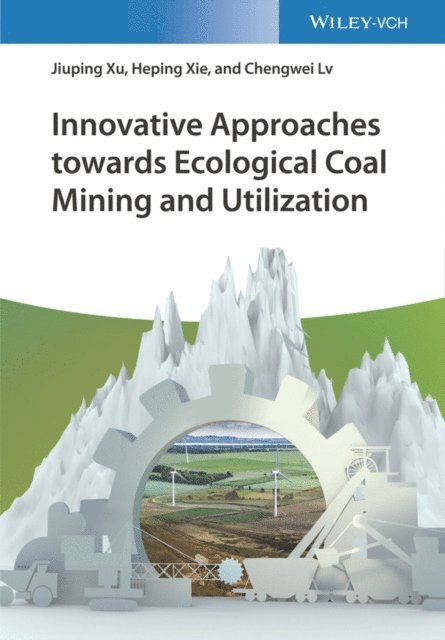
    Innovative Approaches towards Ecological Coal Mining and Utilization

    AvJiuping Xu,Heping Xie

    Inbunden, Engelska, 2021

    1 640 kr

    Beställningsvara. Skickas inom 11-20 vardagar. Fri frakt över 249 kr.

    Beskrivning

    Discover the most cutting-edge solutions to the environmental problems posed by coalIn Innovative Approaches towards Ecological Coal Mining and Utilization, a distinguished team of researchers delivers a comprehensive and fulsome exploration of the ecological problems caused by coal mining and utilization. The book discusses environmental pollution and carbon emissions in the context of modelling coal engineering issues, the design of innovative coal engineering systems, and the evaluation of innovative coal mining systems.The authors consider the technical and economic viability of each proposed solution, making the book ideal reading for environmental and energy researchers in academic and industrial circles. Fully interdisciplinary, Innovative Approaches towards Ecological Coal Mining and Utilization offers readers an integrated look at the management science and policy simulation involved solutions to ecological problems caused by coal mining and utilization.The included resources make full use of expansive case studies to illustrate the concepts discussed in the book, as well as robust economic analyses of the various technologies. Readers will also discover: A thorough introduction to ecological coal mining and developing trends in ecological coal utilizationComprehensive explorations of innovative approaches in coal mining and a multiple coal seams-oriented equilibrium strategy towards coal-water conflict resolutionPractical discussions of seasonal change-oriented dynamic strategies towards coal-water conflict resolution and GIS-oriented equilibrium strategies for coal gangue contamination mitigationIn-depth examinations of carbon dioxide emission reduction in coal-fired power operationsPerfect for environmental and water chemists, mining specialists, and chemical engineers, Innovative Approaches towards Ecological Coal Mining and Utilization will also prove to be an invaluable addition to the libraries of process engineers seeking the latest information on solutions to the environmental problems caused by coal mining and utilization.

    Produktinformation

    • Utgivningsdatum:2021-11-17
    • Mått:178 x 249 x 23 mm
    • Vikt:907 g
    • Format:Inbunden
    • Språk:Engelska
    • Antal sidor:384
    • Förlag:Wiley-VCH Verlag GmbH
    • ISBN:9783527346929

    Utforska kategorier

    • Geovetenskap inom Naturvetenskap och teknik
    • Tillverkningsteknik inom Naturvetenskap och teknik

    Mer om författaren

    Jiuping Xu is Professor at Sichuan University. He obtained his first Ph. D. degree in applied mathematics at Tsinghua University, then obtained his second Ph. D. degree in physical chemistry at Sichuan University. Through combining the theories and methodologies of system science and mathematics, he built the decision and technology innovation paradigm, which is called "Theory Spectrum-Model Group-Algorithm Cluster" ("TS-MG-AC") paradigm, for the complex energy development and environmental protection problems with multivariant subject, multilevel structure, multiplicity objective, and multistage process. He also developed the "multivariant-multilevel-dynamic equilibrium" organization management technology, and has overcome pressing and major problems in the fields of energy related real-world problems. He has published more than 600 peer-reviewed journal articles and over 40 books.Prof. Heping Xie worked as the former president of Sichuan University (2003-2017). He is the Academician of Chinese Academy of Engineering since 2001. He has received over 40 prizes. Until now, he has published more than 100 peer-reviewed research articles and 6 academic monographs in both English and Chinese.Chengwei Lv is a PhD candidate at School of Business, Sichuan University. He is now a visiting scholar at The Joseph M. Katz Graduate School of Business, University of Pittsburgh. His research focuses on integrating game theory and dynamic control theory into coal industry to achieve cleaner production. Until now, he has published 21 peer-reviewed papers.

    Innehållsförteckning

    • Preface xiiiAcknowledgments xvii1 Technical Developing Pathway of Ecological Coal Mining 11.1 Background Introduction 11.2 Coal Mining Technology Development 31.2.1 Literature Analyses 31.2.1.1 Data Analysis System 41.2.1.2 Knowledge Diagram 51.2.2 Three Periods of Coal Mining Technology 71.2.2.1 Competition Phase 81.2.2.2 Diffusion Phase 81.2.2.3 Shift Phase 91.3 Discussion 11References 142 Developing Trending Toward Ecological Coal Utilization 192.1 Background Introduction 192.2 Coal Utilization Evolution 212.2.1 Initial Technological Competition 242.2.2 Fierce Innovative Diffusion 262.3 Coal Utilization Development Trends 282.3.1 Disruptive Integrated Shift 282.3.2 No-Coal-on-Ground Integrated Energy System 302.4 Discussion 32References 333 Multiple Coal Seam Coproduction-Oriented Equilibrium Approach Toward Coal–Water Conflict 373.1 Background Review 383.1.1 Multiple Coal Seam Production System 383.1.2 Mining Quota Allocation Scheme 383.1.3 Uncertain Condition 393.2 Modeling 403.2.1 Motivation for Employing Uncertain Variables 403.2.2 Typical Fuzzy Variables in the Proposed Method 423.2.3 Assumptions and Notations 433.2.3.1 Assumptions 433.2.3.2 Notations 433.2.4 Lower Level Decision-Making Model 433.2.4.1 Objective Function 433.2.4.2 Constraints 453.2.5 Upper Level Decision Making Model 473.2.5.1 Objective 473.2.5.2 Constraints 473.2.6 Global Optimization Model 483.3 Solution Approach 493.3.1 Parameters Defuzzification 503.3.2 KKT Condition Transformation 513.4 Case Study 523.4.1 Presentation of Case Problem 523.4.2 Data Collection 543.4.3 Results for Different Scenarios 553.4.3.1 Scenario 1: Water Quality Standards I 553.4.3.2 Scenario 2: Water Quality Standards II 553.5 Discussion 593.5.1 Propositions and Analysis 593.5.2 Management Recommendations 61References 624 Seasonal Changes-Oriented Dynamic Strategy Toward Coal–Water Conflict Resolutions 634.1 Background Expression 634.2 Methodology 654.2.1 Key Problem Statement 654.2.2 Modeling 664.2.2.1 Assumption 664.2.2.2 Notations 664.2.2.3 Logical Representation for the Collieries 684.2.2.4 Logical Representation for the Authority 714.2.2.5 Global Optimization Model for the EP-MQC 734.2.3 Model Transformation 744.3 Case Study 754.3.1 Presentation of the Case Region 764.3.2 Data Collection 764.3.3 Results Under Different Situations 774.4 Discussion 794.4.1 Propositions and Analysis 794.4.2 Policy Recommendations 84References 865 GIS-Oriented Equilibrium Strategy Toward Coal Gangue Contamination Mitigating 895.1 Review of Background 895.2 Key Problem Statement 925.3 Coal Gangue Facility Siting Method 945.3.1 Identifying Candidate Sites Using GIS Technique 945.3.2 Selecting the Optimal Site Using the Modeling Technique 965.3.2.1 Assumptions 965.3.2.2 Notations 965.3.2.3 Model Formulation 975.3.3 Model Transformation 1035.4 Case Study 1055.4.1 Case Region Presentation 1055.4.2 GIS Technique 1065.4.3 Modeling Technique 1075.4.4 Data Collection 1075.4.5 Computational Results and Analysis 1095.4.5.1 Scenario 1: ;; = 1.0 1095.4.5.2 Scenario 2: ;; = 0.9 1095.4.5.3 Scenario 3: ;; = 0.8 1125.4.5.4 Scenario 4: ;; = 0.7 1125.4.5.5 Scenario 5: ;; = 0.6 1135.5 Discussion 1145.5.1 Propositions 1145.5.2 Management Recommendations 116References 1176 Dynamic Investment Strategy Toward Emissions Reduction and Energy Conservation of Coal Mining 1216.1 Background Review 1216.1.1 Multi-system Consideration of Emission and Energy 1226.1.2 Multidimensional Consideration of Economic and Ecological Benefits 1236.1.3 Multi-stage Consideration of Environmental Investment 1236.2 Modeling 1256.2.1 Assumptions 1256.2.2 Notations 1256.2.3 Colliery Economic Benefit: Profit Objective 1276.2.4 Colliery Ecological Benefit: Emission Reduction and Energy Conservation 1286.2.5 Coal Production and Environmental Investment Activities 1286.2.6 State Process Control Colliery Operations 1296.2.7 Ecological Coal Mining Economic-Ecological Equilibrium Model 1306.3 Economic-Ecological Equilibrium Model Solution Approach 1316.3.1 General Parameterization 1316.3.2 Fuzzy Goals for the Multiobjective Model 1326.3.3 Standard and AM-Based PSO for Nonlinear Dynamic Model 1336.4 Case Study 1356.4.1 Case Description 1356.4.2 Parametrization 1356.4.3 Data Collection 1366.4.4 Results and Different Scenarios 1386.4.4.1 Results Analysis 1386.4.4.2 Sensitivity Analysis 1386.5 Discussion and Analysis 1436.5.1 Comprehensive Discussion for Results 1436.5.2 Management Implications 148References 1497 Carbon Dioxide Emissions Reduction-Oriented Integrated Coal-Fired Power Operation Method 1537.1 Background Review 1537.2 Key Problem Statement 1557.3 Modeling 1577.3.1 Assumptions 1577.3.2 ICPBD Strategy Intentions 1577.3.2.1 Maximizing Economic Benefit 1577.3.2.2 Minimizing CO2 Emissions 1607.3.3 ICPBD Strategy Limitations 1607.3.3.1 Coal Purchase Phase Restriction 1607.3.3.2 Coal Storage Phase Restrictions 1607.3.3.3 Coal Blending Phase Restrictions 1617.3.3.4 Coal Distribution Phase Restrictions 1637.3.4 Global Model 1637.4 Case Study 1657.4.1 Presentation of Case Region 1657.4.2 Model Transformation 1657.4.3 Data Collection 1677.5 Results and Discussion 1677.5.1 Results for Different Scenarios 1677.5.2 Propositions and Analysis 1737.5.3 Management Recommendations 181References 1838 Equilibrium Coal Blending Method Toward Multiple Air Pollution Reduction 1878.1 Background Presentation 1878.1.1 Relationship Among All the Stakeholders 1898.1.2 Decision Carrier Between All the Stakeholders 1908.1.3 Modeling 1928.1.3.1 Notations 1928.1.3.2 Objectives of the Authority 1938.1.3.3 Constrains of the Authority 1958.1.3.4 Objectives of the CPPs 1968.1.3.5 Constraints of the CPPs 1978.1.3.6 Global Optimization Model 1988.2 Case Study 1998.2.1 Presentation of the Case Region 2008.2.2 Model Transformation and Solution Approach 2008.2.3 Data Collection 2018.3 Results and Discussion 2038.3.1 Results Under Different Scenarios 2038.3.2 Propositions and Analysis 2068.3.3 Management Recommendations 221References 2219 Equilibrium Biomass–Coal Blending Method Toward Carbon Emissions Reduction 2259.1 Background Review 2259.2 Key Problem Statement 2279.3 Modeling 2289.3.1 Assumption 2299.3.2 Notations 2299.3.3 Model for the Local Authority 2309.3.3.1 Objective 1: Maximizing Financial Revenue 2309.3.3.2 Objective 2: Minimizing Carbon Emissions 2319.3.3.3 Limitation on the CPPs’ Operations 2319.3.3.4 Power Supply Demand Restriction 2319.3.3.5 Limitation on the Different Between the Quota and the Actual Emission 2319.3.4 Model for CPPs 2339.3.4.1 Objective: Maximizing Economic Benefits 2339.3.4.2 Combustion Efficiency Constraint 2339.3.4.3 Limitations on Fuel Quantities and Qualities 2349.3.4.4 Technical Constraint 2349.3.4.5 Social Responsibility Limitation 2349.3.4.6 Carbon Emissions Quota Constraint 2349.3.4.7 Fuel Resources Storage Limitation 2359.3.5 Global Model 2359.4 Case Study 2369.4.1 Case Description 2369.4.2 Model Transformation and Solution Approach 2369.4.3 Data Collection 2389.5 Results and Discussion 2409.5.1 Results Under Different Scenarios 2439.5.2 Propositions and Analyses 2439.5.3 Policy Implications 251References 25110 Carbon Emission Reduction-Oriented Equilibrium Strategy for Thermal–Hydro–Wind Generation System 25510.1 Background Introduction 25510.2 Modeling 25910.2.1 Notations 25910.2.2 Objectives 26110.2.2.1 Carbon Emissions Reduction 26110.2.2.2 Water Resources Wastes 26110.2.2.3 Wind Power Utilization 26210.2.2.4 Power Supply Balance 26210.2.3 Constraint 26310.2.3.1 Constraints of Wind Power 26310.2.3.2 Constraints of Coal-Combusted Power Plants 26310.2.3.3 Constraint of Hydropower Station 26410.2.3.4 Constraints of Hybrid Generation System 26510.2.3.5 Global Model 26510.3 Case Study 26710.3.1 Case Description 26710.3.2 Model Transformation 26710.4 Data Collection 26910.5 Result and Discussion 27010.5.1 Result Under Different Scenarios 27110.5.2 Comprehensive Discussion of Results 27110.5.3 Management Recommendations 280References 28111 Economic-Environmental Equilibrium-Based Wind–Solar–Thermal Power Generation System 28511.1 Background Introduction 28511.2 Key Problem Statement 28711.3 Modeling 29011.3.1 Notations 29011.3.2 Objectives 29011.3.2.1 Economic Profits 29011.3.2.2 Carbon Emissions 29111.3.2.3 Renewable Energy Utilization 29111.3.3 Constraints 29311.3.3.1 Constraints of Hybrid System 29311.3.3.2 Constraints of Thermal Power Plant 29411.3.3.3 Constraints of Wind Power Plant 29611.3.3.4 Constraints of Solar Power Plant 29611.3.4 Global Model 29611.4 Case Study 29811.4.1 Case Description 29811.4.2 Model Transformation 29911.4.3 Data Collection 30111.4.4 Results and Analysis 30311.5 Discussion 31511.5.1 Propositions and Analysis 31511.5.2 Management Recommendations 316References 31712 Carbon Emissions Reductions-Oriented Equilibrium Strategy for Municipal Solid Waste with Coal Co-combustion 32112.1 Background Introduction 32112.2 Key Problem Statement 32312.2.1 Conflict and Cooperation Between the Decision-Makers 32312.2.2 Trade-Off Between the Economy and the Environment 32412.2.3 Problem Analysis for MSW/Coal Co-combustion 32412.3 Modeling 32612.3.1 Assumptions 32612.3.2 Notations 32612.3.3 Allocation Scheme for the Authority 32612.3.3.1 Maximizing Financial Revenue 32612.3.3.2 Minimizing Carbon Emissions 32712.3.3.3 Electricity Supply Meeting Demand 32712.3.3.4 Requirements for the MSWACPPs’ Operating Rights 32812.3.4 Production Strategy for MSWACPPs 32912.3.4.1 Pursuing Maximum Profits 32912.3.4.2 Coal’s Inhibitory Effect on Dioxin Emissions 32912.3.4.3 Dioxin Emissions Risk Control 33012.3.4.4 Limited Carbon Emissions Quota 33012.3.4.5 Social Responsibility 33012.3.4.6 Fuel Quality Required by the Incinerators 33112.3.4.7 Limited Fuel Quantity 33112.3.5 Global Model 33112.4 Case Study 33312.4.1 Case Description 33312.4.2 Model Transformation and Solution Approach 33312.4.3 Data Collection 33512.4.4 Results Under Different Scenarios 33612.5 Discussion 34412.5.1 Propositions and Analysis 34412.5.2 Management Recommendations 345References 349Index 353