Inbunden, Engelska, 2005
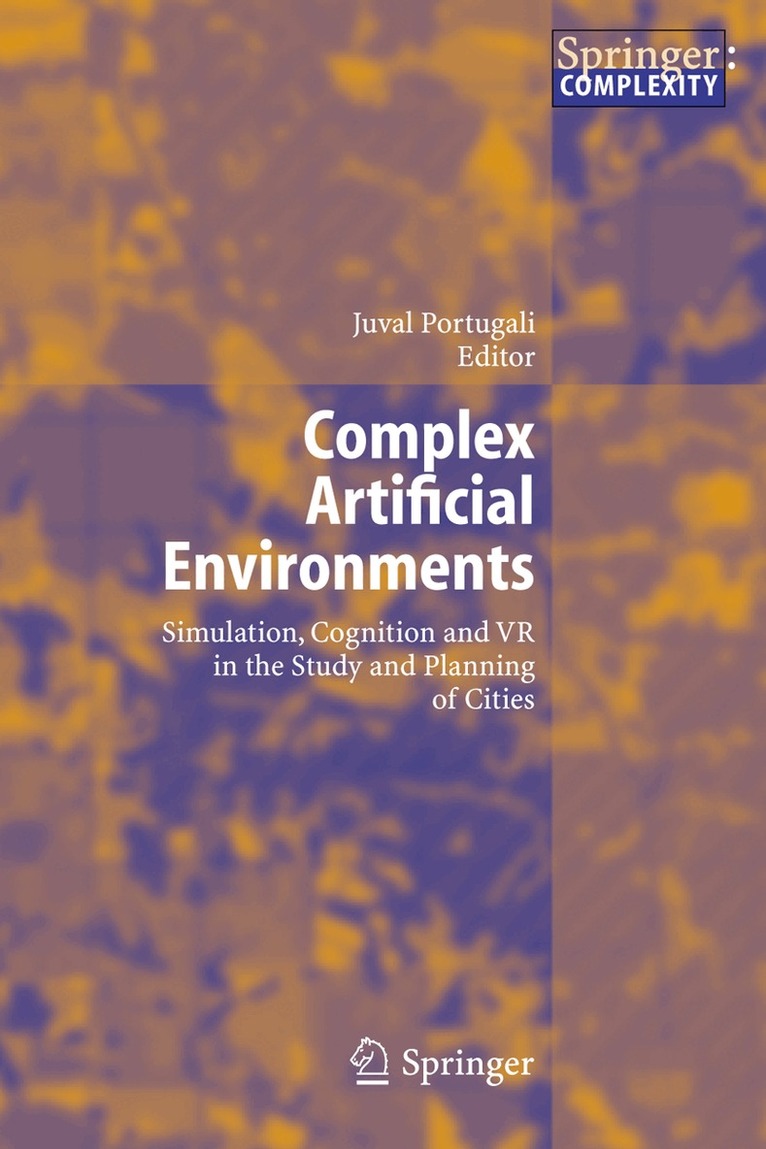
Complex Artificial Environments
1636 kr
Beställningsvara. Skickas inom 10-15 vardagar. Fri frakt över 249 kr.
Beskrivning
Juval Portugali The notion of complex artificial environments (CAE) refers to theories of c- plexity and self-organization, as well as to artifacts in general, and to artificial - vironments, such as cities, in particular. The link between the two, however, is not trivial. For one thing, the theories of complexity and self-organization originated in the “hard” science and by reference to natural phenomena in physics and bi- ogy. The study of artifacts, per contra, has traditionally been the business of the “soft” disciplines in the humanities and social sciences. The notion of “complex artificial environments” thus implies the supposition that the theories of compl- ity and self-organization, together with the mathematical formalisms and meth- ologies developed for their study, apply beyond the domain of nature. Such a s- st position raises a whole set of questions relating to the nature of 21 century cities and urbanism, to philosophical issues regarding the natural versus the artificial, to the methodological legitimacy of interdisciplinary transfer of theories and me- odologies and to the implications that entail the use of sophisticated, state-of-t- art artifacts such as virtual reality (VR) cities and environments. The three-day workshop on the study of complex artificial environments that took place on the island of San Servolo, Venice, during April 1-3, 2004, was a gathering of scholars engaged in the study of the various aspects of CAE.
Produktinformation
- Utgivningsdatum: 2005-11-16
- Mått: 155 x 235 x undefined mm
- Format: Inbunden
- Språk: Engelska
- Antal sidor: 322
- Förlag: Springer-Verlag Berlin and Heidelberg GmbH & Co. KG
- ISBN: 9783540259176
Utforska kategorier
Betyg & recensioner
0 recensioner
Inga recensioner tillgängliga.