• Fri frakt över 249 kr
  • •
  • Snabba leveranser
  • •
  • Billiga böcker
Kundservice

Du är på sajten för privatpersoner.

Företag, bibliotek eller offentlig verksamhet?

Du handlar på classic.bokus.com, där alla dina funktioner finns intakta.
Till classic.bokus.com
Bokus logotyp. Gå till startsidan.
  • Erbjudanden
  • Nyheter
  • Student
  • Topplistor
  • Barn & ungdom
  • Bokus Play
  • E-böcker
  • Pocketböcker
  • Spel & pussel

10% rabatt på allt med kod: NYSTART10 →

Sidfot

Mina sidor

    Hjälp

    • Kundservice
    • Vanliga frågor och svar
    • Frakt och leverans
    • Retur vid ångerrätt
    • Reklamera vara
    • Betalning
    • Köpvillkor
    • Allmänna villkor
    • Information om webbplatsens tillgänglighet

    Om Bokus

    • Om oss
    • Pressrum
    • För studenter
    • För företag
    • För bibliotek och offentlig verksamhet
    • För leverantörer
    • Hållbarhet

    Populärt

    • Aktuella erbjudanden
    • Presentkort
    • Studentlitteratur
    • Nya böcker
    • Topplistor
    • Signerade böcker
    • Engelska böcker

    Inspiration

    • Boktips
    • BookTok
    • Populära bokserier
    • Barnbokskaraktärer
    • Populära författare
    Logotyp för Bokus
    Följ oss på Facebook (extern länk)Följ oss på Instagram (extern länk)Följ oss på YouTube (extern länk)Följ oss på TikTok (extern länk)
    bokus @ CookiesAnpassa cookiesIntegritetspolicyKöpvillkor
    Till Citymail hemsida (extern länk)Till Budbee hemsida (extern länk)Till Postnord hemsida (extern länk)Till Schenker hemsida (extern länk)Till Early Bird hemsida (extern länk)Till Walleys hemsida (extern länk)
    1. Djur och Natur
    2. Naturböcker
    3. Växtböcker

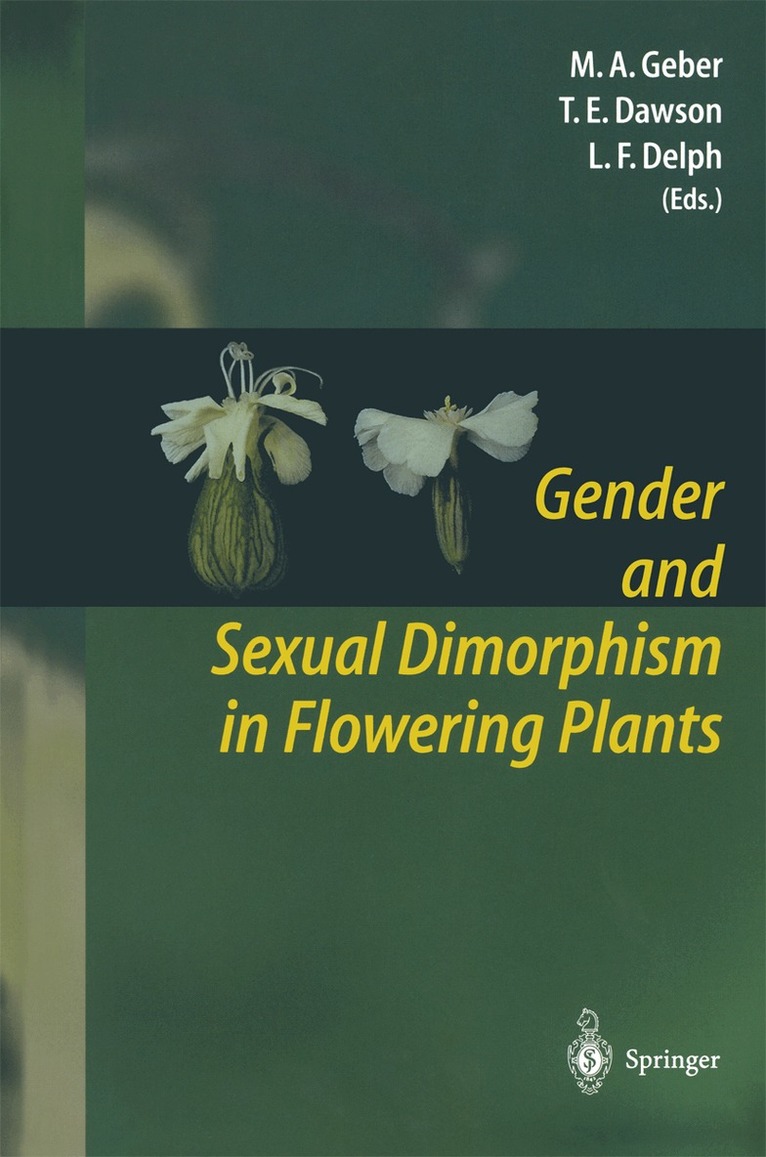
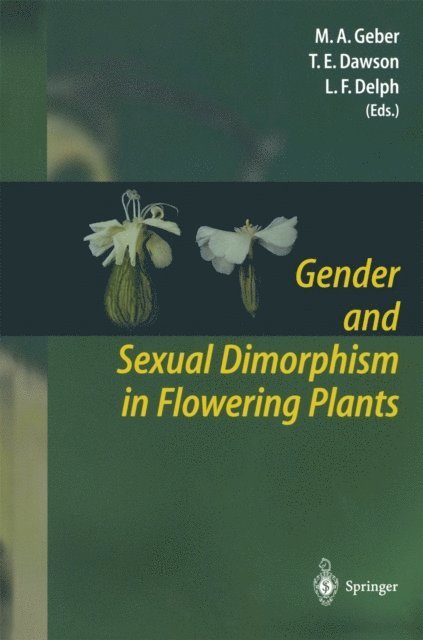
    Gender and Sexual Dimorphism in Flowering Plants

    AvMonica A. Geber,Todd E. Dawson

    Inbunden, Engelska, 1998

    547 kr

    Beställningsvara. Skickas inom 10-15 vardagar. Fri frakt över 249 kr.

    Beskrivning

    While the majority of flowering plant species are hermaphroditic, gender di­ morphism, or the occurrence of two sexual morphs, has, nevertheless, evolved on repeated occasions. Gender dimorphism is found in nearly half of all angio­ sperm families and in approximately 10% of flowering plant species. Where plants are dimorphic in gender, they can also be dimorphic in secondary sex characters. We refer to dimorphism of the latter kind as sexual dimorphism, in keeping with the term's usage by most zoologists. This book is about the evolution of both forms of dimorphism -hence the book's lengthy title. Gender dimorphism in plants has been an active topic of research from theoretical and empirical perspectives, and has been the focus of several re­ cent reviews and book chapters. By contrast, sexual dimorphism in plants is of the much less widely appreciated. Indeed, the last comprehensive review subject dates back to Lloyd and Webb's 1977 paper on "Secondary Sex Char­ we first spoke of editing a book on sexual acters in Plants. " In addition, when dimorphism in plants, some people doubted that there was enough material to justify the effort. We hope that this book not only provides an update to Lloyd and Webb's seminal work but also dispels doubts about the widespread nature of sexual dimorphism in plants. We decided to combine reviews of both gender and sexual dimorphism in a single book, because each form of dimorphism can provide the evolutionary impetus for the other.

    Produktinformation

    • Utgivningsdatum:1998-11-27
    • Mått:155 x 235 x 23 mm
    • Vikt:664 g
    • Format:Inbunden
    • Språk:Engelska
    • Antal sidor:305
    • Upplaga:1999
    • Förlag:Springer-Verlag Berlin and Heidelberg GmbH & Co. KG
    • ISBN:9783540645979

    Utforska kategorier

    • Växtböcker inom Djur och Natur
    • Botanik inom Naturvetenskap och teknik

    Innehållsförteckning

    • 1 Gender and Sexual Dimorphism in Flowering Plants: A Review of Terminology, Biogeographic patterns, Ecological Correlates, and Phylogenetic Approaches.- 1.1 Introduction.- 1.2 Terminology.- 1.3 Incidence of Dioecy.- 1.4 Importance of Phylogenetic Approaches.- 1.5 Using Phylogenies to Understand Process and Pattern.- 1.6 Conclusions.- References.- 2 Theories of the Evolution of Dioecy.- 2.1 Introduction.- 2.2 Importance of Theoretical Models.- 2.3 Pathways to Dioecy.- 2.4 Theoretical Relationships Between Allocation of Reproductive Resources and Invasion of Populations by New Sex Morphs.- 2.5 Testing the Theory.- 2.6 Conclusions.- 2.7 References.- 3 Empirical Studies: Evolution and Maintenance of Dimorphic Breeding Systems.- 3.1 Introduction.- 3.2 Evolutionary Pathways to Gender Dimorphism.- 3.3 Maintenance of Gender Dimorphism in Natural Populations.- 3.4 Directions for Future Research.- 3.5 Conclusions.- References.- 4 Theories of the Evolution of Sexual Dimorphism.- 4.1 Introduction.- 4.2 Models of Sexual Dimorphism.- 4.3 The Biology of Sexual Dimorphism.- 4.4 Conclusions.- References.- 5 Sexual Dimorphism in Flowers and Inflorescences.- 5.1 Introduction.- 5.2 Patterns.- 5.3 Evolutionary Hypotheses.- 5.4 Conclusions.- References.- 6 Sexual Dimorphism in Live History.- 6.1 Introduction.- 6.2 Predictions Based on Sex-Differential Reproductive Investment.- 6.3 Patterns of Sexual Dimorphism in Life-History Traits.- 6.4 Factors Offsetting Between-Sex Differences in the Cost of Reproduction.- 6.5 The Contrary Case of Silene latifolia.- 6.6 Conclusions.- References.- 7 Dimorphism in Physiology and Morphology.- 7.1 Introduction.- 7.2 History of Studies on Sexual Dimorphism in Plants.- 7.3 Sexual Dimorphism in Plant Form and Function in Species with SSS.- 7.4 Sexual Dimorphism in Plant Form and Function in Species Without SSS.- 7.5 Conclusions and Future Directions.- References.- 8 Sexual Dimorphism and Biotic Interactions.- 8.1 Introduction.- 8.2 Sexual Differences in Competitive Ability.- 8.3 Sexual Differences in Herbivory.- 8.4 Sexual Differences in Parasitism.- 8.5 General Discussion.- References.- 9 Genetics of Gender Dimorphism in Higher Plants.- 9.1 Introduction.- 9.2 Monoecious Plants.- 9.3 Multigenic gender determination systems in dioecious plants.- 9.4 Expression of MADS-box genes in unisexual flowers.- 9.5 Conclusions.- References.- 10 Quantitative Genetics of Sexual Dimorphism.- 10.1 Introduction.- 10.2 Quantitative Genetic Models of Sexual Dimorphism.- 10.3 Integration of Quantitative Genetics with Sexual Selection.- 10.4 Correlated Evolution and Divergence of Male and Female Traits in Dioecious Plants.- 10.5 Correlated Evolution and Divergence of Male and Female Function in Hermaphroditic Plants.- 10.6 Conclusions.- 10.7 References.- Taxonomic Index.