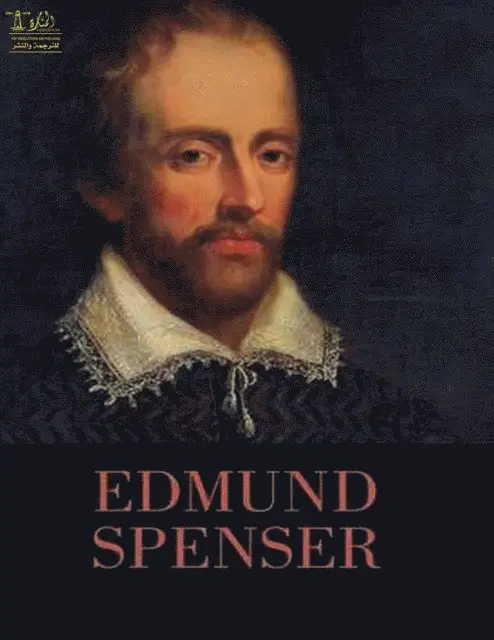
E-bok, Engelska, 2019
Complete Works of Edmund Spenser
Av Edmund Spenser, Jumana Saarawi
348 kr
Läs direkt i Bokus Reader – eller ladda ned till din enhet
Beskrivning
Edmund Spenser, (born 1552/53, London, England—died January 13, 1599, London), English poet whose long allegorical poem The Faerie Queene is one of the greatest in the English language. It was written in what came to be called the Spenserian stanza.
Youth and education
Little is certainly known about Spenser. He was related to a noble Midlands family of Spencer, whose fortunes had been made through sheep raising. His own immediate family was not wealthy. He was entered as a “poor boy” in the Merchant Taylors’ grammar school, where he would have studied mainly Latin, with some Hebrew, Greek, and music.
In 1569, when Spenser was about 16 years old, his English versions of poems by the 16th-century French poet Joachim du Bellay and his translation of a French version of a poem by the Italian poet Petrarch appeared at the beginning of an anti-Catholic prose tract, A Theatre for Voluptuous Worldlings; they were no doubt commissioned by its chief author, the wealthy Flemish expatriate Jan Baptista van der Noot. (Some of these poems Spenser later revised for his Complaints volume.)
From May 1569 Spenser was a student in Pembroke Hall (now Pembroke College) of the University of Cambridge, where, along with perhaps a quarter of the students, he was classed as a sizar—a student who, out of financial necessity, performed various menial or semi-menial duties. He received a Bachelor of Arts degree in 1573. Because of an epidemic, Spenser left Cambridge in 1574, but he received the Master of Arts degree in 1576.
His best-known friend at Cambridge was the slightly older Gabriel Harvey, a fellow of Pembroke, who was learned, witty, and enthusiastic for ancient and modern literature but also pedantic, devious, and ambitious. There is no reason to believe that Spenser shared the most distasteful of these qualities, but, in the atmosphere of social mobility and among the new aristocracy of Tudor England, it is not surprising that he hoped for preferment to higher position.
Spenser’s period at the University of Cambridge was undoubtedly important for the acquisition of his wide knowledge not only of the Latin and some of the Greek classics but also of the Italian, French, and English literature of his own and earlier times. His knowledge of the traditional forms and themes of lyrical and narrative poetry provided foundations for him to build his own highly original compositions. Without the Roman epic poet Virgil’s Aeneid, the 15th-century Italian Ludovico Ariosto’s Orlando furioso, and, later, Torquato Tasso’s Gerusalemme liberata (1581), Spenser could not have written his heroic, or epic, poem The Faerie Queene. Without Virgil’s Bucolics and the later tradition of pastoral poetry in Italy and France, Spenser could not have written The Shepheardes Calender. And without the Latin, Italian, and French examples of the highly traditional marriage ode and the sonnet and canzone forms of Petrarch and succeeding sonneteers, Spenser could not have written his greatest lyric, Epithalamion, and its accompanying sonnets, Amoretti. The patterns of meaning in Spenser’s poetry are frequently woven out of the traditional interpretations—developed through classical times and his own—of pagan myth, divinities, and philosophies and out of an equally strong experience of the faith and doctrines of Christianity; these patterns he further enriched by the use of medieval and contemporary story, legend, and folklore.
Produktinformation
- Utgivningsdatum: 2019-02-22
- Språk: Engelska
- Antal sidor: 2 012
- Filformat: EPUB
- Kopieringsskydd: LCP
- ISBN: 9783598301230
- Förlag: Lighthouse Books for Translation Publishing
Utforska kategorier
Betyg & recensioner
0 recensioner
Inga recensioner tillgängliga.