Jumana Saarawi – författare
298 kr
Läs direkt efter köp
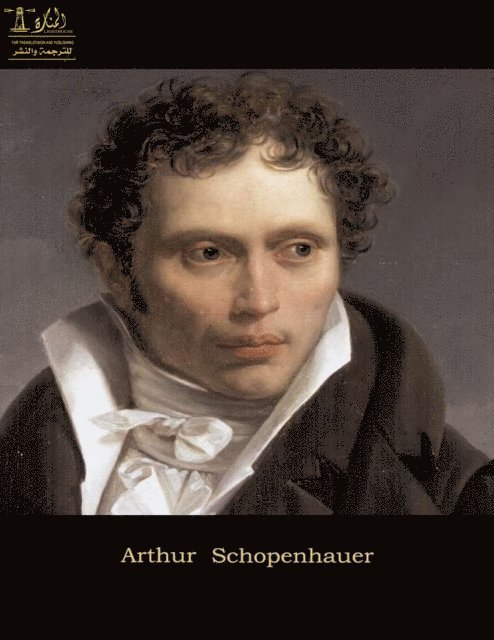
Arthur Schopenhauer was a German philosopher best known for his book The World as Will and Representation, and for his pessimistic views of human nature.
Synopsis
Arthur Schopenhauer was born in Danzig, Poland, on February 22, 1788. His most famous book, The World as Will and Representation, argued that human action is driven by the dissatisfied will and is ultimately directionless. He was a devotee of Plato and Immanuel Kant, and a rival of Georg Wilhelm Friedrich Hegel. He died at his home in Frankfurt, Germany, on September 21, 1860.
Early Life
Arthur Schopenhauer was born in Danzig, Poland, on February 22, 1788. He was a descendant of two wealthy German families. Schopenhauer's parents relocated to Hamburg after Prussia annexed Danzig in 1793. Schopenhauer's father died in 1805, possibly as the result of a suicide. His mother, Johanna, was a writer and intellectual who started a literary salon in Weimar after her husband's death.
Schopenhauer enrolled at the University of Gottingen in 1809. There, he focused on philosophy, studying the ideas of Plato and Immanuel Kant. In 1819, Schopenhauer published The World as Will and Representation (Die Welt als Wille und Vorstellung), which would establish his career as a philosopher. He subsequently accepted a position at the University of Berlin, where he initiated a rivalry with fellow lecturer Georg Wilhelm Friedrich Hegel that ultimately drove him from academia.
Conflict followed Schopenhauer beyond his professional life. While living in Berlin, he was convicted of assaulting a woman named Caroline Marquet after she refused to leave his doorway, and would make payments to Marquet for the rest of her life.
Later Life
In 1833, Schopenhauer relocated to Frankfurt following a cholera outbreak in Berlin. He lived alone there for the next three decades, kept company by pet poodles and cats. His collected writings on aging were eventually published under the title Senilia.
Arthur Schopenhauer died of heart failure on September 21, 1860, at the age of 72, at his home in Frankfurt.
329 kr
Läs direkt efter köp
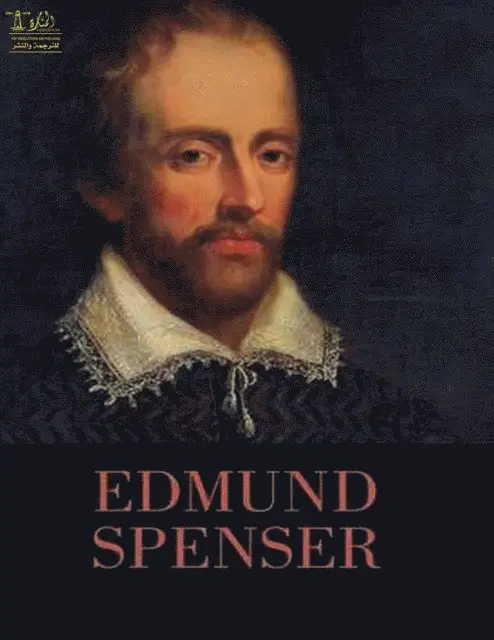
Edmund Spenser, (born 1552/53, London, England—died January 13, 1599, London), English poet whose long allegorical poem The Faerie Queene is one of the greatest in the English language. It was written in what came to be called the Spenserian stanza.
Youth and education
Little is certainly known about Spenser. He was related to a noble Midlands family of Spencer, whose fortunes had been made through sheep raising. His own immediate family was not wealthy. He was entered as a “poor boy” in the Merchant Taylors’ grammar school, where he would have studied mainly Latin, with some Hebrew, Greek, and music.
In 1569, when Spenser was about 16 years old, his English versions of poems by the 16th-century French poet Joachim du Bellay and his translation of a French version of a poem by the Italian poet Petrarch appeared at the beginning of an anti-Catholic prose tract, A Theatre for Voluptuous Worldlings; they were no doubt commissioned by its chief author, the wealthy Flemish expatriate Jan Baptista van der Noot. (Some of these poems Spenser later revised for his Complaints volume.)
From May 1569 Spenser was a student in Pembroke Hall (now Pembroke College) of the University of Cambridge, where, along with perhaps a quarter of the students, he was classed as a sizar—a student who, out of financial necessity, performed various menial or semi-menial duties. He received a Bachelor of Arts degree in 1573. Because of an epidemic, Spenser left Cambridge in 1574, but he received the Master of Arts degree in 1576.
His best-known friend at Cambridge was the slightly older Gabriel Harvey, a fellow of Pembroke, who was learned, witty, and enthusiastic for ancient and modern literature but also pedantic, devious, and ambitious. There is no reason to believe that Spenser shared the most distasteful of these qualities, but, in the atmosphere of social mobility and among the new aristocracy of Tudor England, it is not surprising that he hoped for preferment to higher position.
Spenser’s period at the University of Cambridge was undoubtedly important for the acquisition of his wide knowledge not only of the Latin and some of the Greek classics but also of the Italian, French, and English literature of his own and earlier times. His knowledge of the traditional forms and themes of lyrical and narrative poetry provided foundations for him to build his own highly original compositions. Without the Roman epic poet Virgil’s Aeneid, the 15th-century Italian Ludovico Ariosto’s Orlando furioso, and, later, Torquato Tasso’s Gerusalemme liberata (1581), Spenser could not have written his heroic, or epic, poem The Faerie Queene. Without Virgil’s Bucolics and the later tradition of pastoral poetry in Italy and France, Spenser could not have written The Shepheardes Calender. And without the Latin, Italian, and French examples of the highly traditional marriage ode and the sonnet and canzone forms of Petrarch and succeeding sonneteers, Spenser could not have written his greatest lyric, Epithalamion, and its accompanying sonnets, Amoretti. The patterns of meaning in Spenser’s poetry are frequently woven out of the traditional interpretations—developed through classical times and his own—of pagan myth, divinities, and philosophies and out of an equally strong experience of the faith and doctrines of Christianity; these patterns he further enriched by the use of medieval and contemporary story, legend, and folklore.
338 kr
Läs direkt efter köp
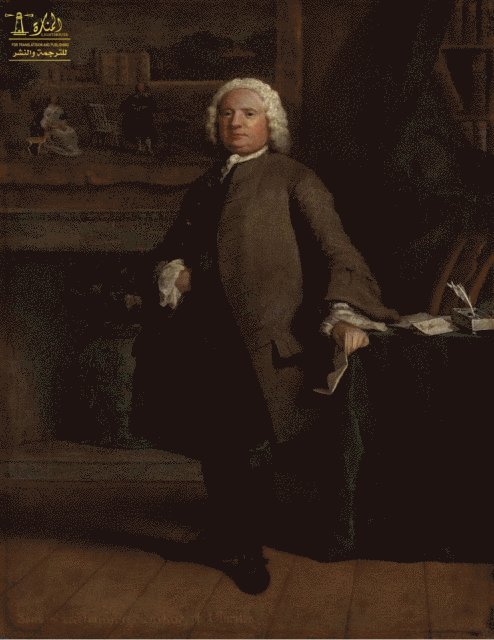
Samuel Richardson, (baptized Aug. 19, 1689, Mackworth, near Derby, Derbyshire, Eng.—died July 4, 1761, Parson’s Green, near London), English novelist who expanded the dramatic possibilities of the novel by his invention and use of the letter form (“epistolary novel”). His major novels were Pamela (1740) and Clarissa (1747–48).
Richardson was 50 years old when he wrote Pamela, but of his first 50 years little is known. His ancestors were of yeoman stock. His father, also Samuel, and his mother’s father, Stephen Hall, became London tradesmen, and his father, after the death of his first wife, married Stephen’s daughter, Elizabeth, in 1682. A temporary move of the Richardsons to Derbyshire accounts for the fact that the novelist was born in Mackworth. They returned to London when Richardson was 10. He had at best what he called “only Common School-Learning.” The perceived inadequacy of his education was later to preoccupy him and some of his critics.
Richardson was bound apprentice to a London printer, John Wilde. Sometime after completing his apprenticeship he became associated with the Leakes, a printing family whose presses he eventually took over when he set up in business for himself in 1721 and married Martha Wilde, the daughter of his master. Elizabeth Leake, the sister of a prosperous bookseller of Bath, became his second wife in 1733, two years after Martha’s death. His domestic life was marked by tragedy. All six of the children from his first marriage died in infancy or childhood. By his second wife he had four daughters who survived him, but two other children died in infancy. These and other bereavements contributed to the nervous ailments of his later life.
In his professional life Richardson was hardworking and successful. With the growth in prominence of his press went his steady increase in prestige as a member, an officer, and later master, of the Stationers’ Company (the guild for those in the book trade). During the 1730s his press became known as one of the three best in London, and with prosperity he moved to a more spacious London house and leased the first of three country houses in which he entertained a circle of friends that included Dr. Johnson, the painter William Hogarth, the actors Colley Cibber and David Garrick, Edward Young, and Arthur Onslow, speaker of the House of Commons, whose influence in 1733 helped to secure for Richardson lucrative contracts for government printing that later included the journals of the House.