• Fri frakt över 249 kr
  • •
  • Snabba leveranser
  • •
  • Billiga böcker
Kundservice

Du är på sajten för privatpersoner.

Företag, bibliotek eller offentlig verksamhet?

Du handlar på classic.bokus.com, där alla dina funktioner finns intakta.
Till classic.bokus.com
Bokus logotyp. Gå till startsidan.
  • Erbjudanden
  • Nyheter
  • Student
  • Topplistor
  • Barn & ungdom
  • Bokus Play
  • E-böcker
  • Pocketböcker
  • Spel & pussel

10% rabatt på allt med kod NYSTART10 →

Sidfot

Mina sidor

    Hjälp

    • Kundservice
    • Vanliga frågor och svar
    • Frakt och leverans
    • Retur vid ångerrätt
    • Reklamera vara
    • Betalning
    • Köpvillkor
    • Allmänna villkor
    • Information om webbplatsens tillgänglighet

    Om Bokus

    • Om oss
    • Pressrum
    • För studenter
    • För företag
    • För bibliotek och offentlig verksamhet
    • För leverantörer
    • Hållbarhet

    Populärt

    • Aktuella erbjudanden
    • Presentkort
    • Studentlitteratur
    • Nya böcker
    • Topplistor
    • Signerade böcker
    • Engelska böcker

    Inspiration

    • Boktips
    • BookTok
    • Populära bokserier
    • Barnbokskaraktärer
    • Populära författare
    Logotyp för Bokus
    Följ oss på Facebook (extern länk)Följ oss på Instagram (extern länk)Följ oss på YouTube (extern länk)Följ oss på TikTok (extern länk)
    bokus @ CookiesAnpassa cookiesIntegritetspolicyKöpvillkor
    Till Citymail hemsida (extern länk)Till Budbee hemsida (extern länk)Till Postnord hemsida (extern länk)Till Schenker hemsida (extern länk)Till Early Bird hemsida (extern länk)Till Walleys hemsida (extern länk)
    1. Samhälle och politik
    2. Politik och statsskick

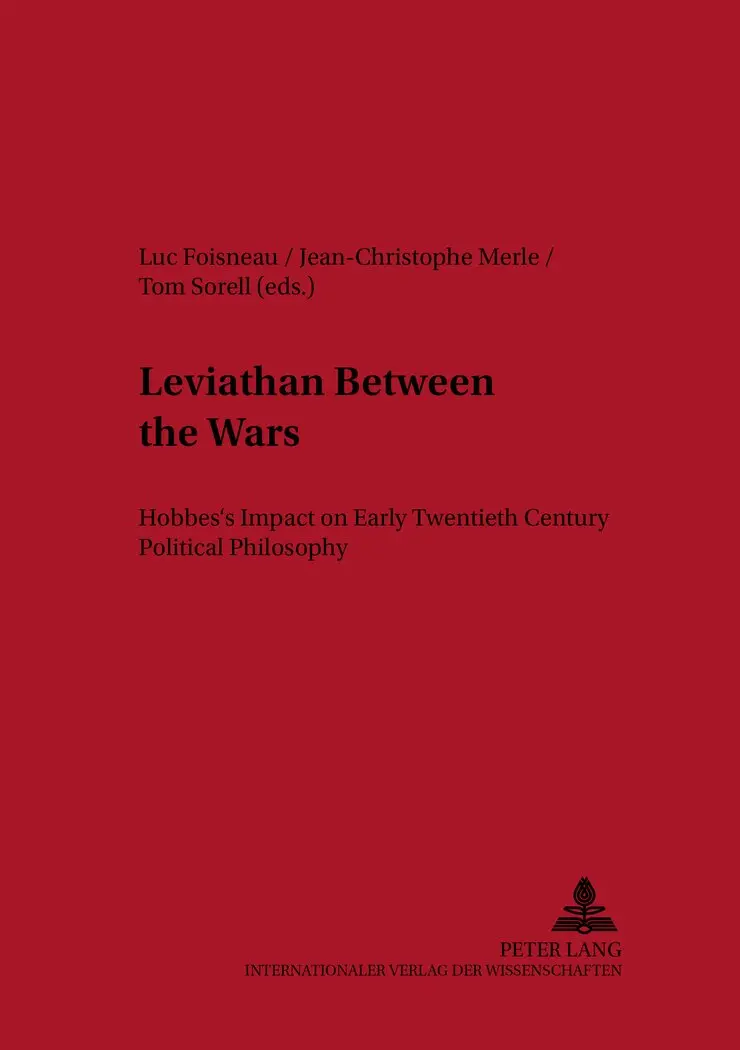
    «Leviathan-» Between the Wars

    Hobbes’ Impact on Early Twentieth Century Political Philosophy

    AvLuc Foisneau,Jean-Christophe Merle

    Häftad, Engelska, 2005

    Del 11 i serien Rechtsphilosophische Hefte

    631 kr

    Beställningsvara. Skickas inom 5-8 vardagar. Fri frakt över 249 kr.

    Beskrivning

    The symbol of the Leviathan came to the forefront in political theory, as the structure and the ideological justification of the state underwent radical change in at least three European countries from the early 1920s to the 1940s. Thus, the terrifying image of Leviathan has sometimes given rise to a surprising historiography of twentieth-century totalitarian states, tracing them back to the origins of modern political thought, as if there were a direct line of descent from Hobbes to Mussolini, Hitler and Stalin, or, worse still, as if Hobbes’s Leviathan (1651) were an exact anticipation of twentieth-century political catastrophes. The differing interpretations of Hobbes proposed by Strauss, Tönnies, Schmitt, Vialatoux, Capitant, Pareto, Collingwood, and Oakeshott, are here interpreted in the perspective of the interwar transformation of Europe. The contributors, who are German, British and French political philosophers, analyse the conditions which have made possible conflicting readings of Hobbes’s political philosophy, and explain why they sometimes don’t do justice to Leviathan.

    Produktinformation

    • Utgivningsdatum:2005-06-15
    • Mått:148 x 210 x 10 mm
    • Vikt:240 g
    • Format:Häftad
    • Språk:Engelska
    • Serie:Rechtsphilosophische Hefte
    • Antal sidor:168
    • Upplaga:5001
    • Förlag:Peter Lang AG
    • ISBN:9783631512395

    Utforska kategorier

    • Politik och statsskick inom Samhälle och politik
    • Historia inom Historia och arkeologi
    • Filosofiska discipliner inom Filosofi och religion

    Mer om författaren

    The Editors: Luc Foisneau is a Senior research fellow at the French national centre for scientific research (CNRS, Maison française, Oxford).Jean-Christophe Merle is Professor at the University of Tours (France). Tom Sorell is Professor at Essex University (UK).

    Innehållsförteckning

    • Contents: Luc Foisneau: Introduction: Hobbes between Enlightenment and Darkness – Martine Pécharman: Strauss: the search for the hidden foundation of modernity in the political philosophy of Hobbes – Jean-Christophe Merle: Tönnies’s view on Hobbes as a theorist of liberal society – Emmanuel Bernard Picavet: The significance of Pareto’s attack on Hobbes and natural-law theorists – Jean-Fabien Spitz: Carré de Malberg’s unHobbesian theory of sovereignty – Luc Foisneau: Authoritarian state vs totalitarian state: Leviathan in an early twentieth-century French debate – Ulrich Steinvorth: On Carl Schmitt’s interpretation of Hobbes – Iain Hampsher-Monk/Keith Zimmerman: Schmitt’s critique of rule-of-law liberalism – Tom Sorell: Schmitt’s unHobbesian politics of emergency – G.A.J. Rogers: Collingwood’s New Leviathan – John Horton: Oakeshott, Hobbes and the politics of scepticism.