
Unbundling territoriality in the era of real time cyberspace
E-bok
PDF, Engelska, 2008167 kr
Läs direkt i Bokus Reader – eller ladda ned till din enhet (PDF kräver ofta zoom och scroll på små skärmar).
Beskrivning
Seminar paper from the year 2006 in the subject Politics - Topic: Globalization, Political Economics, grade: 1.5, The Australian National University, language: English, abstract: 1993 when Ruggie termed the ‘unbundling of territoriality’ was a year in whichknowledge and communication that is its accessibility and dissemination entered anew realm of space and time. On the 30th of April 1993 the World Wide Web and itsunderlying technology was made freely available to use by anyone. Today over onebillion people use the Internet, or every sixth person on the planet. A collective brainone might say is forming in front of our eyes growing with every new person enteringthree W’s into a web browser.While Ruggie aimed to search for, and investigate into, a fundamental transformationof the modern system of states, he emphasized that such an analysis would find afruitful starting point in the [re]conceptualisation of territoriality. This paper willutilize Ruggie’s concept, by applying its analysis to the emerging and manifestingspace-time implosion driven by the Internet and other communication technologies.Therefore, it is argued that Cyberspace provides a practical sphere to investigate intothe unbundling of territoriality in a postmodern world. In the first section the impact on territoriality resulting from the emergence of theCyberspace will be discussed. Ruggie’s model of differentiation between systems ofrule and territory is applied to explain the transformation of territory in thepostmodern era of Cyberspace. It is followed by an investigation into theconsequences of Cyberspace on sovereignty. Showing that Cyberspace does indeedprovide a new stage in Ruggie’s terms, facilitating an unbundling and relocation ofsovereignty away from state territory. The third section discusses the implication ofthe virtual space on the rise and acceleration of globalisation. It is argued thatglobalisation, could not be perceived as a postmodern phenomenon without theCyberspace revolution. The last part of the paper, proposes the need to rethink thenotion of movement in the age of virtual and real spaces. Cyberspace allows ‘tourists’in line with Bauman’s description to choose between virtual and real movement. Thepreceding discussion will finally lead to the conclusion that the conceptualisation ofCyberspace as one aspect responsible for the unbundling of territory provides animportant explanatory insight into the transformation from modernity topostmodernity.
Produktinformation
Utforska kategorier
Hoppa över listan

Mer från samma författare
- Nyhet
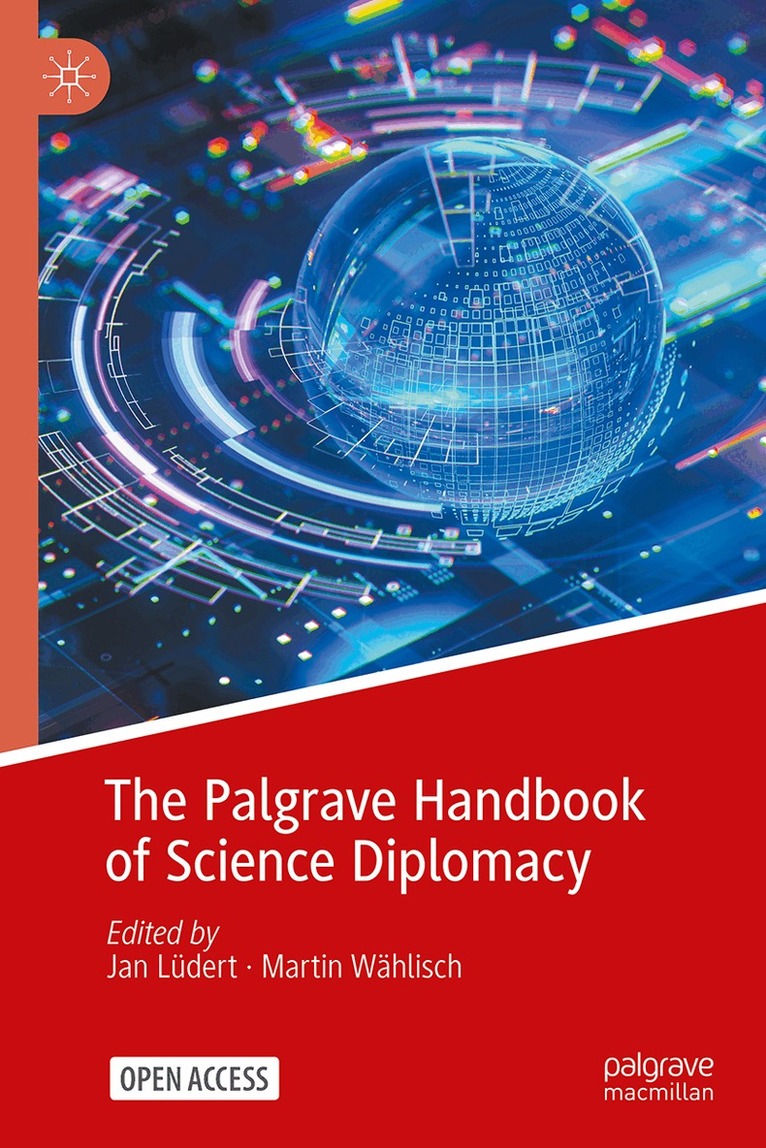
Palgrave Handbook of Science Diplomacy
Martin Wählisch, Jan Lüdert, Martin Wählisch
Inbunden, 2026
554 kr
Hoppa över listan



Du kanske också är intresserad av

Global Civil Society - Third force in which direction? Or,the implicit contradiction of an idea
Jan Ludert
E-bok
200872 kr