
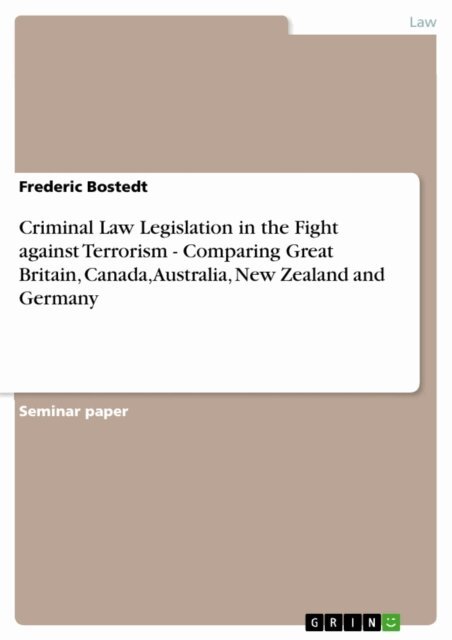
Can the United Nations Human Rights Committee Evolve into an Effective 'Court' of Human Rights?
E-bok
PDF, Engelska, 2007333 kr
Läs direkt i Bokus Reader – eller ladda ned till din enhet (PDF kräver ofta zoom och scroll på små skärmar).
Fler format och utgåvor
Beskrivning
Master's Thesis from the year 2003 in the subject Law - European and International Law, Intellectual Properties, grade: A, Victoria University of Wellington (Victoria Law School), course: International Law, language: English, abstract: The United Nations Human Rights Committee, established under the International Covenant of Civil and Political Rights, has the power to examine individual complaints on alleged human rights violations. It is noted, however, that the Committee lacks important powers to be as effective as the regional human rights courts in Europe and the Americas. The paper assesses the effectiveness of the Committee by means of a comparative analysis. The comparison takes place within four criteria that are essential in an assessment of a court's effectiveness: the visibility of the court in the public domain, the adoption of interim measures to hinder the aggravation of the violation, the fact-finding capacity of the court, and the enforcement of the final decisions and the follow-ups thereto. The paper argues that despite the statutory deficiencies of the Covenant and the Optional Protocol, the Committee can be as effective as the regional courts even without an amendment to these instruments. This would be possible if the Committee successfully argues for a binding nature of its interim measures; further, it can overcome the lack of its independent fact-finding capacity through a - thoroughly argued - reversal of burden of proof. If it could also augment its own visibility and the publicity of its decisions, the Committee will finally enhance states' compliance with its final, non-legally binding 'views'. The Committee may welll be able to become as effective as the regional courts of human rights, and could in fact evolve into an effective court of human rights on a global level.
Produktinformation
Utforska kategorier
Hoppa över listan
Mer från samma författare
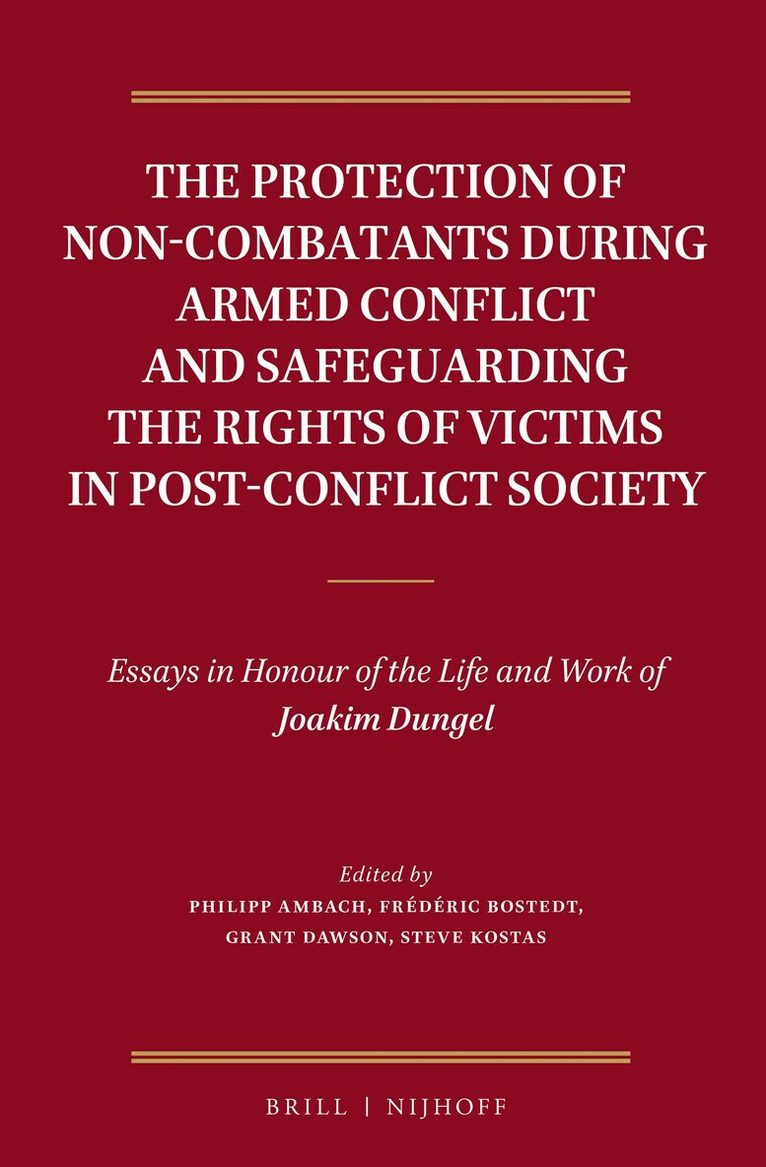
Protection of Non-Combatants During Armed Conflict and Safeguarding the Rights of Victims in Post-Conflict Society
Philipp Ambach, Frédéric Bostedt, Grant Dawson, Steve Kostas
Inbunden, 2015
2 947 kr
Hoppa över listan


Du kanske också är intresserad av

Can the United Nations Human Rights Committee Evolve into an Effective 'Court' of Human Rights?
Frederic Bostedt
Häftad, 2007
760 kr
Protection of Non-Combatants During Armed Conflict and Safeguarding the Rights of Victims in Post-Conflict Society
Philipp Ambach, Frédéric Bostedt, Grant Dawson, Steve Kostas
Inbunden, 2015
2 947 kr
- 10% rabatt på allt
- Signerad!
Del 3
- 10% rabatt på allt
Del 11
- 10% rabatt på allt
Del 7
- Nyhet