
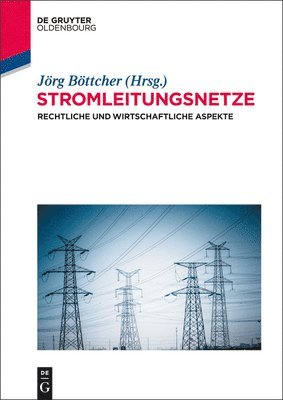
ability of young children to distinguish between morality and convention
E-bok
PDF, Engelska, 2008431 kr
Läs direkt i Bokus Reader – eller ladda ned till din enhet (PDF kräver ofta zoom och scroll på små skärmar).
Fler format och utgåvor
Beskrivning
Diploma Thesis from the year 2001 in the subject Psychology - Developmental Psychology, grade: 1,0, Free University of Berlin, language: English, abstract: In this diploma thesis I want to consider several approaches in the area of moral development research.Given the theory of Lawrence Kohlberg, young children (younger than 10 years of age) seem to stay completely under the constraints of authorities and rules. According to Kohlberg, children’s social judgments and behaviors are determined by instrumental aims to satisfy their own needs and wishes, or to avoid punishment. In this regard, the helping of others or meeting the needs of others is only motivated by instrumental considerations. Thus, in Kohlberg’s view young children are not able to think or to act in a genuinely moral way. In reaction to Kohlberg, other researchers have suggested that young children are capable to make genuinely moral judgments and to act in a moral way. Eisenberg (e.g. 1986) has suggested that young children can have empathic or altruistic feelings which lead them to conduct prosocial acts. Other researchers (e.g. Keller, 1996; Nunner-Winkler, 1993) assert that children under the age of ten years are able to understand and feel moral emotions, which they consider as constitutive or as indicators for morality. Turiel and his associates (e.g. Turiel, 1983) suggest that even children at about 2 years of age are able to differentiate between a moral, conventional, and personal domain of social knowledge, and that children subordinate the importance of personal and conventional rules under the importance of moral rules. These approaches to the morality of young children revealed differing results to differing aspects of morality.The aim of my work is to examine the above mentioned approaches in order to evaluate the obvious differences between their obtained results and the results of Kohlberg.My questions are: Is Kohlberg’s approach of using authority dilemmas appropriate to investigate children’s moral reasoning? To what extent do the results of the researchers, who claim an early emergence of morality in children’s development, disprove Kohlberg’s claims of children’s dependency and moral immaturity with regard to authority rules? Where are the boundaries of the presented approaches?
Produktinformation
Utforska kategorier




Hoppa över listan






Du kanske också är intresserad av
ability of young children to distinguish between morality and convention
Joerg Boettcher
Häftad, 2008
802 kr
Biokraftstoffe und Biokraftstoffprojekte
Jörg Böttcher, Nina Hampl, Martin Kügemann, Florian Lüdeke-Freund
Häftad, 2014
479 kr