• Fri frakt över 249 kr
  • •
  • Snabba leveranser
  • •
  • Billiga böcker
Kundservice

Du är på sajten för privatpersoner.

Företag, bibliotek eller offentlig verksamhet?

Du handlar på classic.bokus.com, där alla dina funktioner finns intakta.
Till classic.bokus.com
Bokus logotyp. Gå till startsidan.
  • Erbjudanden
  • Nyheter
  • Student
  • Topplistor
  • Barn & ungdom
  • Bokus Play
  • E-böcker
  • Pocketböcker
  • Spel & pussel

10% rabatt på allt med kod: NYSTART10 →

Sidfot

Mina sidor

    Hjälp

    • Kundservice
    • Vanliga frågor och svar
    • Frakt och leverans
    • Retur vid ångerrätt
    • Reklamera vara
    • Betalning
    • Köpvillkor
    • Allmänna villkor
    • Information om webbplatsens tillgänglighet

    Om Bokus

    • Om oss
    • Pressrum
    • För studenter
    • För företag
    • För bibliotek och offentlig verksamhet
    • För leverantörer
    • Hållbarhet

    Populärt

    • Aktuella erbjudanden
    • Presentkort
    • Studentlitteratur
    • Nya böcker
    • Topplistor
    • Signerade böcker
    • Engelska böcker

    Inspiration

    • Boktips
    • BookTok
    • Populära bokserier
    • Barnbokskaraktärer
    • Populära författare
    Logotyp för Bokus
    Följ oss på Facebook (extern länk)Följ oss på Instagram (extern länk)Följ oss på YouTube (extern länk)Följ oss på TikTok (extern länk)
    bokus @ CookiesAnpassa cookiesIntegritetspolicyKöpvillkor
    Till Citymail hemsida (extern länk)Till Budbee hemsida (extern länk)Till Postnord hemsida (extern länk)Till Schenker hemsida (extern länk)Till Early Bird hemsida (extern länk)Till Walleys hemsida (extern länk)
    1. Naturvetenskap och teknik
    2. Matematik och naturvetenskap
    3. Biologi
    4. Biokemi

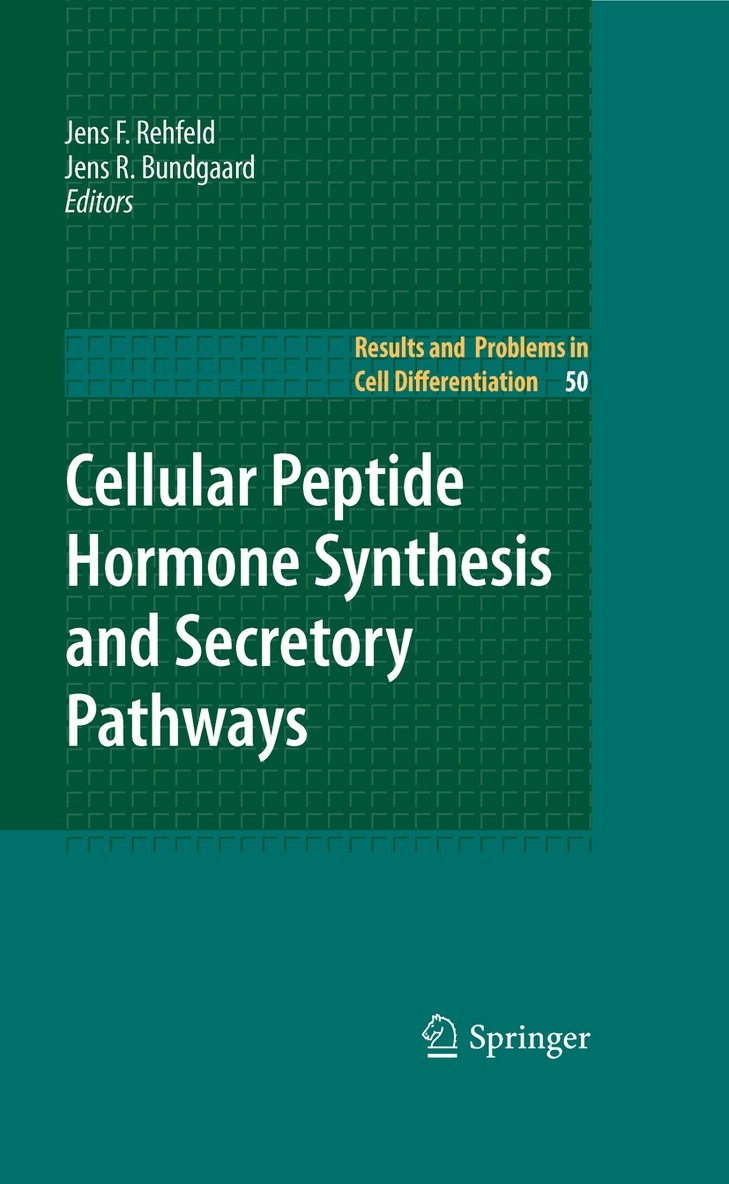
    Cellular Peptide Hormone Synthesis and Secretory Pathways

    AvJens F. Rehfeld,Jens R. Bundgaard

    Häftad, Engelska, 2012

    Del 50 i serien Results and Problems in Cell Differentiation

    2 165 kr

    Beställningsvara. Skickas inom 10-15 vardagar. Fri frakt över 249 kr.

    Beskrivning

    The concept of hormonal regulation using intercellular peptide messengers dates back to the discovery of secretin in 1902. The concept was simple: A peptide is released from specific hormone producing cells, endocrine cells, into circulation upon stimulation of the cells. The peptide hormone travels via blood to its target, the cells of which are equipped with specific receptors for high-affinity binding of the particular peptide hormone. Receptor binding subsequently elicits action of the target cells. This concept has been seriously challenged by modern biochemistry and cell biology. Thus, it is now well established that the gene of a specific peptide hormone may be expressed in different types of endocrine cells, in neurons, and in some instances also in adipocytes, myocytes, osteoblasts, and immune cells. Today, only a few hormones – including the old master hormone insulin – represent the original endocrine paradigm. Instead, the widespread cellular synthesis now raises the qu- tion of how the body maintains the regulation of its functions by peptide hormones when a hormone may originate from a variety of cells.

    Produktinformation

    • Utgivningsdatum:2012-05-04
    • Mått:155 x 235 x 14 mm
    • Vikt:382 g
    • Format:Häftad
    • Språk:Engelska
    • Serie:Results and Problems in Cell Differentiation
    • Antal sidor:239
    • Upplaga:2010
    • Förlag:Springer-Verlag Berlin and Heidelberg GmbH & Co. KG
    • ISBN:9783642262760

    Utforska kategorier

    • Biokemi inom Naturvetenskap och teknik
    • Cellbiologi inom Naturvetenskap och teknik

    Innehållsförteckning

    • VIP and PACAP.- Biosynthesis of Cardiac Natriuretic Peptides.- Chromogranins A and B and Secretogranin II as Prohormones for Regulatory Peptides from the Diffuse Neuroendocrine System.- Neurotensin and Neuromedin N Are Differentially Processed from a Common Precursor by Prohormone Convertases in Tissues and Cell Lines.- Ghrelin: From Gene to Physiological Function.- Somatostatin and Somatostatin Receptors.- ACTH: Cellular Peptide Hormone Synthesis and Secretory Pathways.- Maturation of Secretory Granules.- Cell-Specific Precursor Processing.- Posttranslational Processing of Progastrin.- Glucagon and Glucagon-Like Peptides 1 and 2.