E-bok, Engelska, 2012
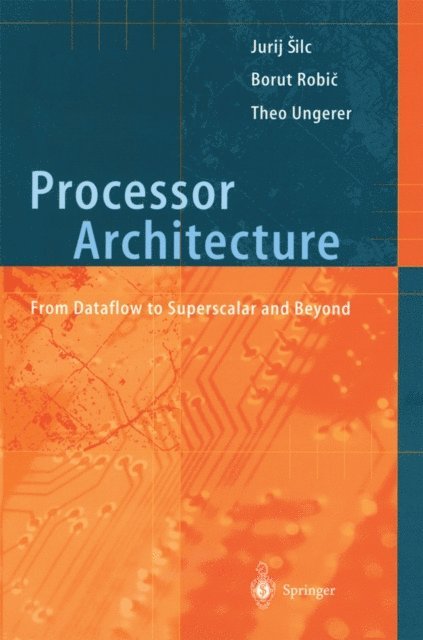
Processor Architecture
Av Theo Ungerer, Borut Robic, Jurij Silc
1335 kr
Läs direkt i Bokus Reader – eller ladda ned till din enhet (PDF kräver ofta zoom och scroll på små skärmar).
Beskrivning
Today''s microprocessors are the powerful descendants of the von Neumann 1 computer dating back to a memo of Burks, Goldstine, and von Neumann of 1946. The so-called von Neumann architecture is characterized by a se quential control flow resulting in a sequential instruction stream. A program counter addresses the next instruction if the preceding instruction is not a control instruction such as, e. g. , jump, branch, subprogram call or return. An instruction is coded in an instruction format of fixed or variable length, where the opcode is followed by one or more operands that can be data, addresses of data, or the address of an instruction in the case of a control instruction. The opcode defines the types of operands. Code and data are stored in a common storage that is linear, addressed in units of memory words (bytes, words, etc. ). The overwhelming design criterion of the von Neumann computer was the minimization of hardware and especially of storage. The most simple implementation of a von Neumann computer is characterized by a microar chitecture that defines a closely coupled control and arithmetic logic unit (ALU), a storage unit, and an I/O unit, all connected by a single connection unit. The instruction fetch by the control unit alternates with operand fetches and result stores for the AL U.
Produktinformation
- Utgivningsdatum: 2012-12-06
- Språk: Engelska
- Filformat: PDF
- Kopieringsskydd: LCP
- ISBN: 9783642585890
- Förlag: Springer Berlin Heidelberg
Utforska kategorier
Betyg & recensioner
0 recensioner
Inga recensioner tillgängliga.